Kerala’s Maritime Ambitions Expand — But Are Ports and Waterways Moving at the Same Speed?
Maritime News, New Delhi / Thiruvananthapuram, Kerala, India: Kerala’s maritime infrastructure is entering a new phase of expansion, led by the operationalisation of Vizhinjam International Seaport and continued investments in inland waterways. Yet as capital flows into capacity augmentation, questions are emerging over execution pace, fiscal exposure and balanced growth between deep-sea port ambitions and inland transport systems.
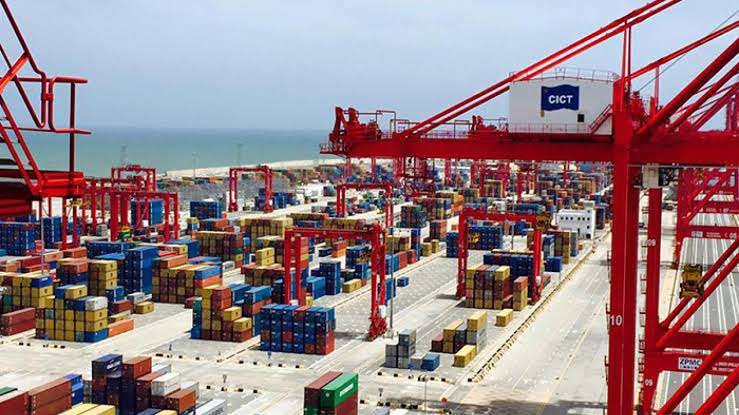
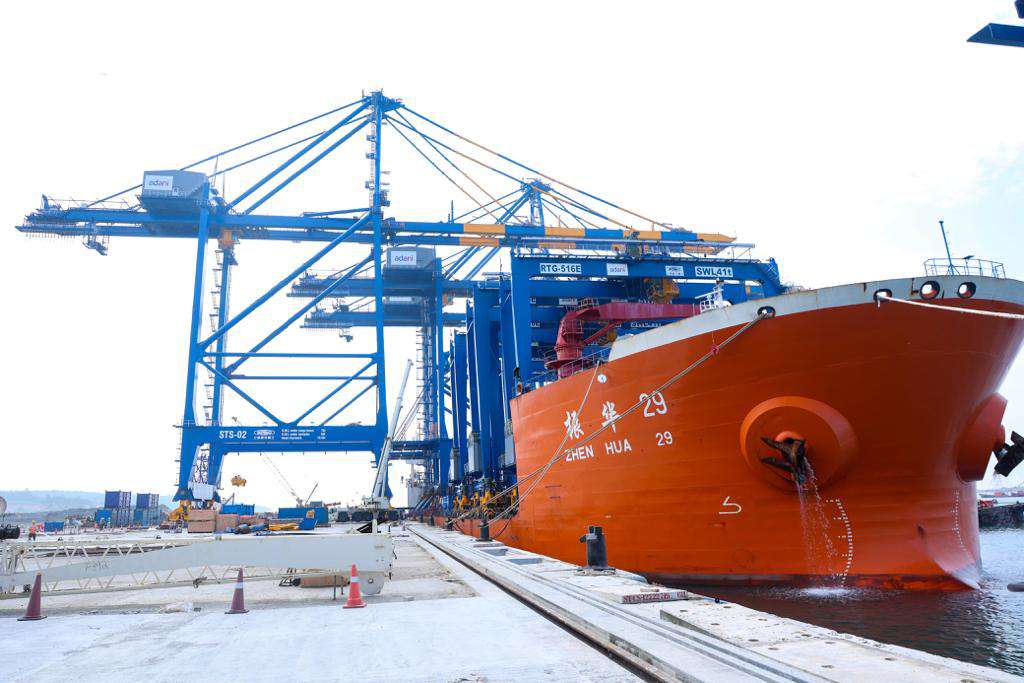
The Vizhinjam International Seaport Project — developed under a Public-Private Partnership (PPP) model between the Government of Kerala and Adani Vizhinjam Port Private Limited — began Phase I operations on December 3, 2024, with an initial capacity of 1 million TEUs annually.
Under a supplementary concession agreement signed in November 2024, Phases II, III and IV are being consolidated into a single expansion phase, targeting completion by December 2028. Once completed, total capacity is projected to reach 3 million TEUs per annum, with potential scalability to 5.7 million TEUs through automation and efficiency enhancements.
Public Funds, Private Port
The financial structure of Vizhinjam underscores the scale of public backing behind the privately operated port.
The Union Government has provided ₹817.80 crore in Viability Gap Funding (VGF), fully disbursed. Additional support under the Special Assistance to States for Capital Investment scheme includes:
- ₹145.07 crore (FY 2023–24) — fully spent
- ₹1,134.52 crore (FY 2024–25) — nearly fully spent
- ₹341.30 crore sanctioned in FY 2025–26, with ₹225.25 crore released so far
While proponents argue that such funding is necessary to establish India’s first dedicated deep-water transshipment hub, critics question whether the financial risk-sharing balance between public investment and private returns is sufficiently transparent.
Kerala has long sought to reduce its reliance on foreign transshipment hubs such as Colombo. Yet port analysts note that competing against established transshipment giants requires sustained cargo capture from global shipping lines — not merely capacity creation.
Capacity Is One Thing. Cargo Is Another.
Vizhinjam’s long-term success will hinge on its ability to secure consistent mainline calls and transshipment volumes.
Industry observers caution that transshipment is a highly competitive and price-sensitive business. With neighbouring hubs aggressively defending market share, Kerala’s port must deliver efficiency, scale and cost competitiveness simultaneously.
The central question remains:
Will Vizhinjam evolve into a true transshipment hub — or remain partially dependent on feeder cargo?
Inland Waterways: Slow Momentum
While Vizhinjam represents Kerala’s maritime ambition at sea, inland waterways tell a more restrained story.
The Inland Waterways Authority of India (IWAI) expenditure in Kerala over the last five years shows fluctuating investment:
- ₹21.52 crore (2020–21)
- ₹10.83 crore (2021–22)
- ₹3.82 crore (2022–23)
- ₹4.76 crore (2023–24)
- ₹15.26 crore (2024–25)
Though works are underway in National Waterways 3, 8 and 9 — including lock reconstruction, bridge construction and dredging — several projects remain partially complete, with progress levels ranging from 15% to 80%.
Critics argue that if Kerala is to position itself as a multimodal logistics hub, inland water transport (IWT) must move beyond incremental upgrades toward systemic cargo integration.
Ro-Ro and Urban Transport: Impact Still Limited
IWAI has constructed nine inland terminals and two Ro-Ro terminals in NW-3, alongside deployment of Ro-Ro vessels between Bolgatty and Willingdon Island to ease Kochi’s road congestion.
While the initiative has improved urban mobility, transport economists note that cargo volumes on inland waterways remain modest compared to road and rail dominance.
Feasibility studies for urban water transport in Alappuzha and Kollam are underway, but measurable modal shift will depend on sustained policy incentives and industrial usage.
Green and Cruise Potential
Kerala’s waterways offer strong potential for river cruise tourism. Plans to develop additional floating jetties and expand cruise connectivity could strengthen the tourism economy.
However, tourism-led maritime growth is inherently seasonal and vulnerable to economic cycles.
The Broader Equation
Kerala is pursuing a two-pronged maritime strategy — deep-sea transshipment through Vizhinjam and inland connectivity through waterways.
Yet the divergence in scale is stark. Vizhinjam attracts thousands of crores in public and private capital. Inland waterways receive comparatively modest allocations.
The long-term test will be integration.
Can Vizhinjam’s container flows connect efficiently to Kerala’s hinterland through waterways?
Will inland transport reduce logistics costs meaningfully?
And will public investment in a privately operated mega-port deliver equitable long-term returns?
Kerala’s maritime future is being built — but its balance sheet, cargo flows and execution timelines will determine whether ambition translates into sustainable advantage.