
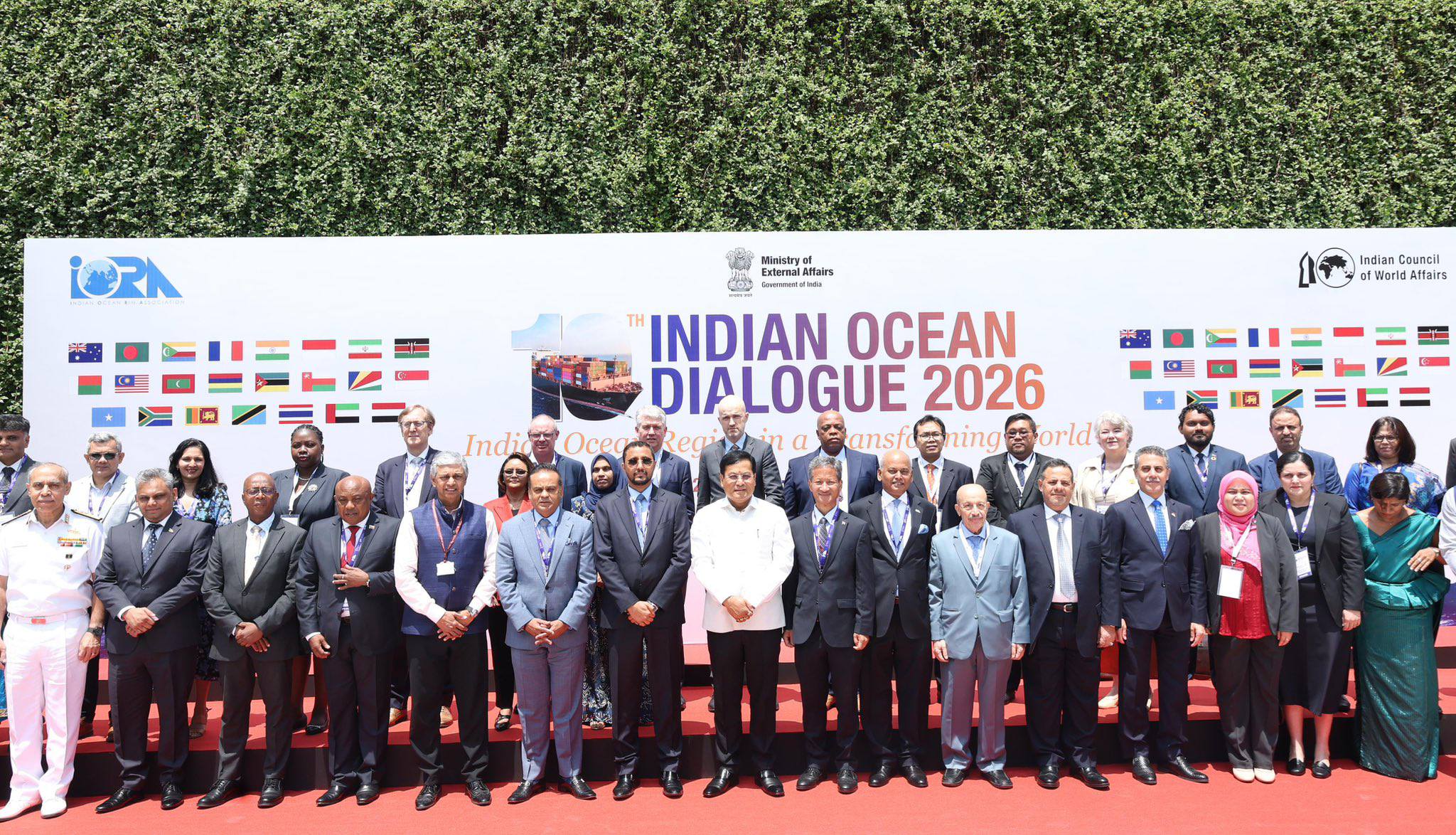
Maritime News, New Delhi, India : Women’s participation in India’s maritime sector has witnessed a remarkable 340 percent increase since 2020, Union Minister for Ports, Shipping and Waterways Sarbananda Sonowal said while addressing the 10th Indian Ocean Dialogue (IOD) in New Delhi.
The minister described women-led participation, inclusion and workforce transformation as central pillars of India’s evolving maritime growth strategy under the leadership of Prime Minister Narendra Modi.
The dialogue brought together ministers, policymakers, maritime experts and industry leaders from across the Indian Ocean Region to discuss maritime security, blue economy cooperation, climate resilience and regional stability.
‘Nari Shakti’ Emerging as Maritime Growth Driver
Highlighting the government’s “Nari Shakti” initiatives, Sonowal said programmes such as Sagar Mein Samman are helping create leadership opportunities and improving inclusivity across India’s maritime ecosystem.
“Through initiatives like Sagar Mein Samman, we are advancing dignity, inclusion and leadership opportunities for women in the maritime sector,” Sonowal stated.
The minister said the transformation is contributing to the creation of a more resilient and future-ready maritime workforce for the Indian Ocean Region.
Industry observers note that traditionally, women’s participation in shipping, port operations and maritime logistics has remained significantly low globally, making India’s reported growth figures particularly notable.
Indian Ocean Remains Global Trade Lifeline
Calling the Indian Ocean a “global lifeline,” Sonowal highlighted its critical role in:
- global energy transportation
- international trade
- maritime supply chains
- strategic shipping corridors
Nearly 95 percent of India’s trade by volume moves through maritime routes, while a substantial portion of global oil shipments transit through the Indian Ocean and key chokepoints such as the Strait of Hormuz.
“The Indian Ocean is not just a geographic space, but a global lifeline,” Sonowal said, stressing the need for stronger maritime cooperation and resilience.
India Pushes SAGAR and MAHASAGAR Maritime Vision
Sonowal reiterated India’s commitment towards regional maritime frameworks such as:
- SAGAR (Security and Growth for All in the Region)
- MAHASAGAR
These initiatives aim to strengthen:
- regional maritime cooperation
- blue economy development
- disaster response coordination
- maritime connectivity
- security collaboration
The minister also stressed that no single country can independently address emerging maritime challenges, calling for collective action based on transparency and international law.
Indian Ocean Dialogue Focuses on Maritime Security and Women Empowerment
The 10th Indian Ocean Dialogue, hosted by India as Chair of the Indian Ocean Rim Association (IORA) for 2025–27, is themed:
Indian Ocean Region in a Transforming World
The forum includes discussions on:
- maritime security
- blue economy
- disaster risk management
- climate change
- women’s economic empowerment
IORA currently comprises:
- 23 member states
- 12 dialogue partners
Women’s economic empowerment has been identified as one of the organisation’s key cross-cutting priorities.
India Expands Role as Net Security Provider
Sonowal also highlighted India’s growing role as a “net security provider” in the Indian Ocean Region through initiatives involving:
- humanitarian assistance
- maritime surveillance
- naval cooperation
- disaster response operations
The remarks come at a time when the Indian Ocean Region is witnessing rising geopolitical competition, maritime security concerns and operational pressure on major shipping routes.
India, according to the minister, remains committed to ensuring a safe, secure and stable maritime environment in collaboration with regional partners.
Maritime Industry Sees Workforce Shift
Maritime analysts believe the sharp rise in women’s participation reflects broader structural changes underway in India’s maritime ecosystem, including:
- increasing digitalisation
- maritime education reforms
- skill development initiatives
- expanding port and logistics infrastructure
- policy-driven workforce diversification
However, experts also point out that greater participation must be matched with:
- leadership representation
- onboard opportunities
- equal access to technical roles
- long-term workforce retention measures
to ensure sustainable inclusion across the maritime sector.


