The deployment highlights India’s use of naval training diplomacy to strengthen maritime partnerships across the Indian Ocean
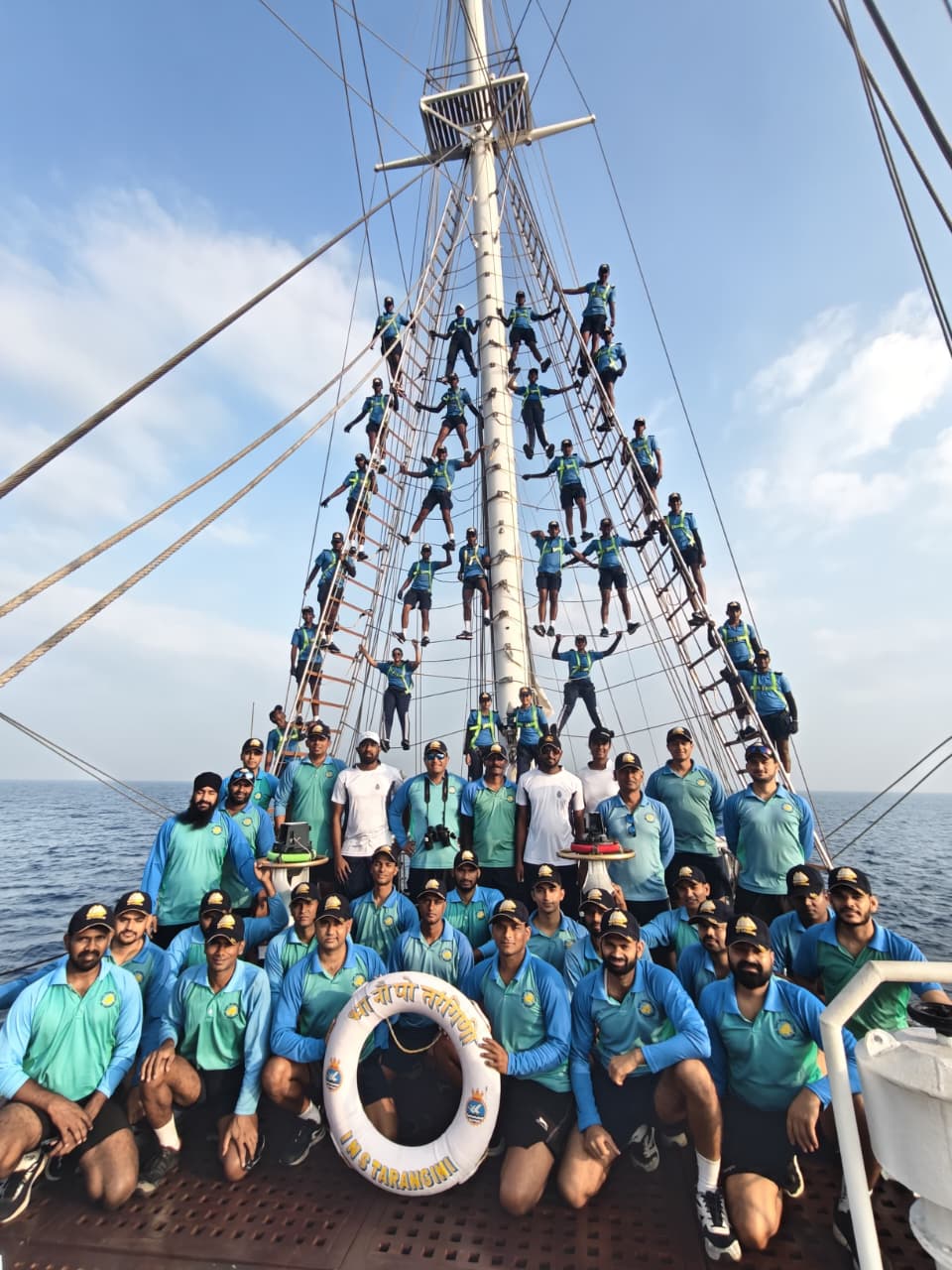
Maritime News Colombo : The Indian Navy’s sail training ship INS Tarangini arrived at Colombo after completing a joint sail training deployment with trainees from the Sri Lanka Navy, highlighting continued maritime cooperation between the two neighbours.
The voyage saw three officers and 26 trainees from the Sri Lanka Naval and Maritime Academy embark the ship at Trincomalee for an intensive sea-training programme. During the sortie, the trainees were introduced to traditional sail navigation, watchkeeping procedures and hands-on ship handling under sail — a training format increasingly rare in modern navies but still valued for building seamanship fundamentals.
Indian naval instructors guided the trainees through manoeuvres and operational drills, offering practical exposure to sail management and maritime discipline during extended sea passage.
Maritime Training Diplomacy
The initiative reflects India’s broader strategy of strengthening naval partnerships in the Indian Ocean through training exchanges and operational engagement.
By hosting Sri Lankan naval trainees aboard INS Tarangini, the Indian Navy seeks to promote interoperability and professional familiarity between the two maritime forces. Defence analysts note that such training deployments serve both operational and diplomatic objectives, reinforcing regional maritime security cooperation.
However, some observers argue that while training exchanges are symbolically important, sustained collaboration will ultimately depend on deeper operational coordination, intelligence sharing and joint maritime domain awareness across the region.
Port Call and Bilateral Engagements
Upon arrival in Colombo, the ship was welcomed by representatives of the Sri Lanka Navy along with officials from the Indian High Commission.
The Commanding Officer of INS Tarangini met Rear Admiral Jagath Kumara, Commander of the Western Naval Area of Sri Lanka, to discuss future avenues for naval cooperation and knowledge exchange.
During the ship’s three-day port visit, both navies will conduct professional exchanges, training interactions and friendly engagements including sports events, yoga sessions and outreach activities designed to strengthen camaraderie between personnel.
Training Begins at Trincomalee
The training programme began earlier at Trincomalee, where Commodore Dinesh Bandara, Commandant of the Sri Lanka Naval and Maritime Academy, visited the ship and interacted with the crew and embarked trainees before the sea deployment.
For young officers and cadets, the experience offered rare exposure to sail-powered navigation — a demanding form of seamanship that requires constant coordination, manual skill and situational awareness.
Strategic Significance in the Indian Ocean
India and Sri Lanka share a long history of maritime cooperation, ranging from naval training exchanges to coordinated patrols and humanitarian missions.
Sail training missions such as this are often viewed as “soft power” naval diplomacy, aimed at strengthening trust and operational familiarity among regional partners.
Yet maritime analysts caution that the evolving security dynamics of the Indian Ocean — including rising naval presence of extra-regional powers — require cooperation to move beyond symbolic engagements toward sustained maritime security frameworks.