Over 100 Hectares Proposed for Industrial Use as India’s Largest Container Gateway Expands Its Footprint
Maritime News, Navi Mumbai: A proposal by the Jawaharlal Nehru Port Authority (JNPA) to convert more than 100 hectares of residential and commercial land into industrial use has triggered important questions about the future balance between industrial growth, urban development, environmental sustainability and community interests in Navi Mumbai’s rapidly evolving port region.
Through a recent public notice, JNPA has invited objections and suggestions on proposed modifications to the approved land-use plan covering parcels in Funde, Jaskhar, Savarkhar and Jasai villages. The proposed changes would convert large portions of land currently earmarked for commercial and residential purposes into industrial zones.
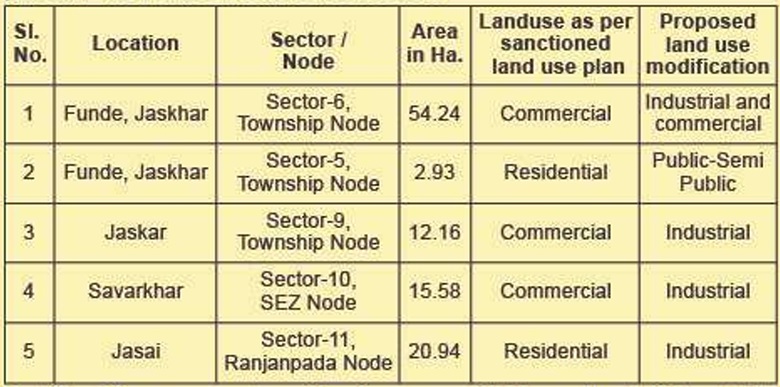
According to the proposal, nearly 105.85 hectares of land are proposed for modification, including:
- 54.24 hectares at Funde-Jaskhar from Commercial to Industrial & Commercial
- 12.16 hectares at Jaskhar from Commercial to Industrial
- 15.58 hectares at Savarkhar from Commercial to Industrial
- 20.94 hectares at Jasai from Residential to Industrial
- 2.93 hectares at Funde-Jaskhar from Residential to Public-Semi Public use
The proposal comes at a time when Navi Mumbai is witnessing unprecedented infrastructure growth driven by JNPA, the upcoming Navi Mumbai International Airport, the Mumbai Trans Harbour Link, Dedicated Freight Corridor connectivity and a series of logistics and industrial projects.
Industrial Growth is Important — But What is Driving the Demand?
Few would dispute the need for industrial expansion around India’s busiest container port.
JNPA remains the country’s largest container gateway and is expected to play a central role in India’s Maritime Amrit Kaal Vision 2047 and ambitions to become a global manufacturing and logistics hub.
However, the public notice leaves several key questions unanswered.
What specific industrial demand is driving the proposed land-use change?
Are existing industrial zones operating at full capacity?
How much vacant industrial land already exists within the JNPA influence area?
Will the proposed land be used for logistics parks, warehousing, manufacturing units, port-related industries or other commercial activities?
Without clarity on these questions, stakeholders may find it difficult to fully assess the long-term implications of the proposal.
Residential Land Giving Way to Industry
Among the proposed changes, the conversion of nearly 21 hectares of residential land at Jasai into industrial use could attract particular attention.
The region surrounding JNPA is expected to witness significant population growth in the coming years as the airport, logistics parks and industrial developments generate new employment opportunities.
Urban planning experts have long argued that industrial growth must be supported by adequate housing, social infrastructure and public services.
The question some stakeholders may ask is whether reducing residential land today could create housing pressures tomorrow.
As thousands of workers move into the region, where will future housing be developed?
Port Growth and Community Concerns
The affected villages, including Funde, Jaskhar, Savarkhar and Jasai, have already experienced decades of transformation due to port-led development.
Residents may seek greater clarity on:
- Future traffic volumes
- Employment opportunities for local communities
- Impact on village infrastructure
- Pressure on water and civic services
- Changes to land values and livelihoods
For fishing and coastal communities, concerns may also extend beyond land use to the cumulative impact of industrialisation on the wider coastal ecosystem.
Environmental Questions Likely to Surface
The proposed land-use modifications are also likely to attract scrutiny from environmental groups and sustainability experts.
The JNPA region is situated within a sensitive coastal landscape that includes creeks, mangroves and ecologically important habitats.
While the current proposal relates to land-use planning rather than specific industrial projects, future development arising from these changes could increase:
- Truck movement
- Freight traffic
- Energy consumption
- Air emissions
- Pressure on local infrastructure
This raises an important ESG question: How can industrial expansion be balanced with environmental stewardship and climate resilience?
As global ports increasingly adopt sustainability frameworks, stakeholders may expect greater transparency regarding the cumulative environmental impact of future industrial growth.
Logistics Boom or Planning Challenge?
Supporters of the proposal are likely to argue that additional industrial land is essential if Navi Mumbai is to capitalize on emerging opportunities in manufacturing, warehousing, multimodal logistics and international trade.
The region is increasingly positioning itself as one of India’s most important logistics and supply-chain hubs.
Yet rapid industrialisation also brings planning challenges.
More industrial land could mean:
- Increased cargo movement
- Additional truck traffic
- Higher demand for supporting infrastructure
- Greater pressure on urban services
The success of the proposal may therefore depend not only on industrial investment but also on parallel investments in roads, housing, public transport, utilities and environmental safeguards.
A Defining Debate for Port-Led Development
The proposed land-use changes reflect a broader national trend in which ports are evolving beyond cargo gateways into integrated industrial and logistics ecosystems.
The economic benefits of such growth can be substantial, generating jobs, investment and trade opportunities.
However, the proposal also raises a larger question that many rapidly developing port cities around the world have faced:
Can industrial growth, environmental sustainability and community development move forward together?
As JNPA seeks public feedback on the proposed modifications, the discussion is likely to extend beyond zoning maps and land parcels.
For many stakeholders, the debate will ultimately be about the future identity of Navi Mumbai’s port region — and whether the next phase of growth can balance economic ambition with social and environmental responsibility.