India Reveals Scale of Maritime Impact from West Asia Crisis, Government Discloses Scale of Maritime Crisis as Attacks on Merchant Vessels Raise Concerns Over Seafarer Safety, Energy Security and Global Trade
Maritime News, New Delhi, India: The ongoing conflict in West Asia has evolved into a major maritime security challenge for India, with three merchant vessel incidents involving Indian crew members reported within days, leaving three Indian seafarers dead, affecting 68 crew members and triggering the repatriation of more than 3,537 Indian maritime workers from the Gulf region.
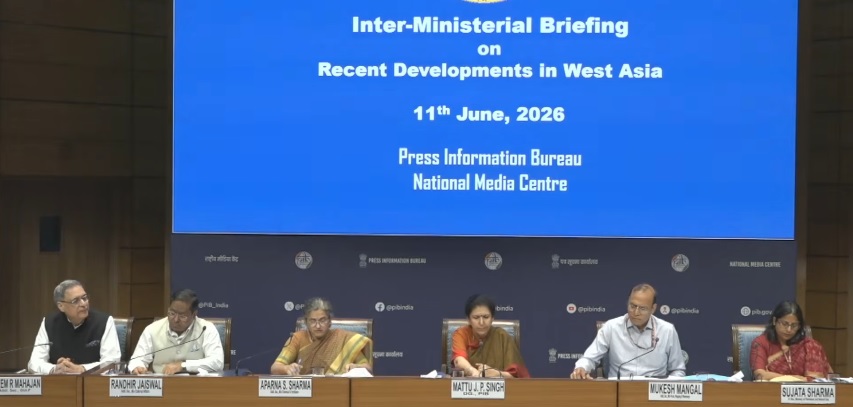
The figures, disclosed during an Inter-Ministerial briefing at the National Media Centre in New Delhi, provide the clearest picture yet of how escalating tensions in the Gulf are impacting merchant shipping, seafarer welfare, maritime trade and India’s energy security.
While government officials assured that fuel supplies, fertilizer availability and trade logistics remain stable, the briefing revealed an unprecedented level of maritime distress management involving the Ministry of Ports, Shipping and Waterways, Directorate General of Shipping (DG Shipping), Ministry of External Affairs and Indian missions across the region.
Three Merchant Vessel Incidents in Four Days
According to government officials, three separate merchant vessels carrying Indian seafarers have been involved in maritime security incidents near Oman since June 8.
The first incident involved the Palau-flagged tanker MT Marivex, where a fire was reported onboard off the Omani coast. All 24 Indian crew members were successfully rescued by Omani authorities.
The second incident involved the tanker MT Settebello, which became the most serious maritime casualty event of the current crisis. The vessel was carrying 24 Indian seafarers when it came under attack. Twenty-one crew members were rescued, while three Indian seafarers lost their lives despite extensive search and rescue efforts.
The third incident involved the Guinea-Bissau flagged tanker MT Jalveer near Shinas Port, Oman. All 20 Indian crew members onboard were reported safe.
Collectively, the three incidents directly affected 68 Indian seafarers, highlighting the growing risks faced by civilian maritime personnel operating in conflict-sensitive waters.
Human Cost of a Geopolitical Conflict
The deaths of three Indian seafarers aboard MT Settebello have become a stark reminder of the human consequences of instability in one of the world’s busiest maritime regions.
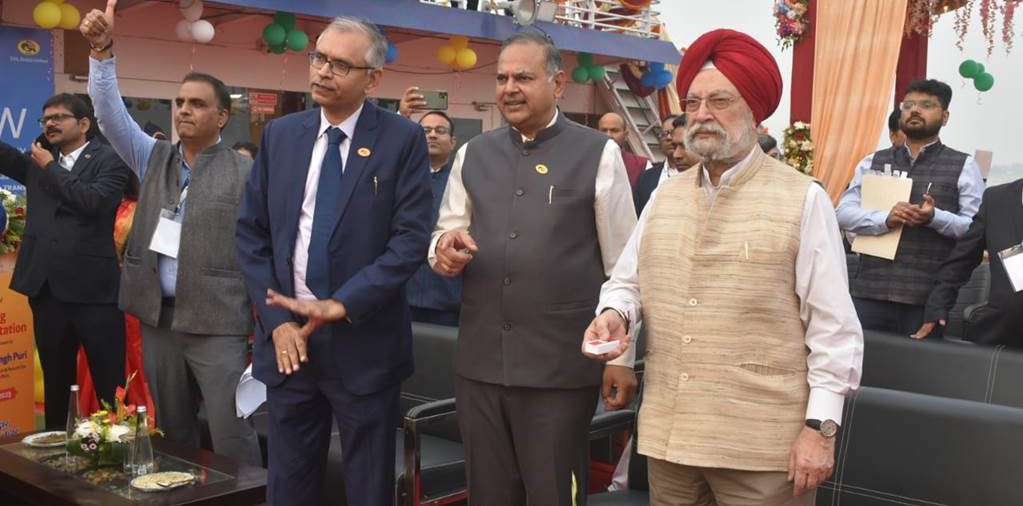
Union Minister for Ports, Shipping and Waterways Sarbananda Sonowal described the deaths as a profound loss to India’s maritime community and announced that the Government would provide all necessary support to the affected families.
The Seaman Welfare Fund Society (SWFS) has been directed to provide ₹10 lakh compensation to the next of kin of each deceased seafarer, while arrangements are being made for the repatriation of surviving crew members and the mortal remains of the victims.
For India’s maritime sector, the tragedy has reignited discussions on crew safety, welfare protection and the growing exposure of civilian seafarers to geopolitical conflicts.
DG Shipping Handles Over 39,000 Distress Communications
One of the most striking disclosures during the briefing was the scale of the response being managed by DG Shipping.
Officials stated that the DG Shipping Control Room has processed:
- 12,331 calls
- 27,515 emails
- 311 calls in the last 72 hours
- 683 emails in the last 72 hours
The figures indicate the level of concern among seafarers, shipowners, crewing agencies and family members seeking information and assistance as the regional security situation continues to evolve.
The Government also confirmed that more than 3,537 Indian seafarers have been repatriated, including 31 in the previous 72 hours.
Industry observers describe the operation as one of the largest maritime assistance and welfare exercises undertaken by India in recent years.
Threat to Sea Lanes of Communication
The incidents have renewed concerns about the security of critical Sea Lanes of Communication (SLOCs) connecting Asia, Europe and the Middle East.
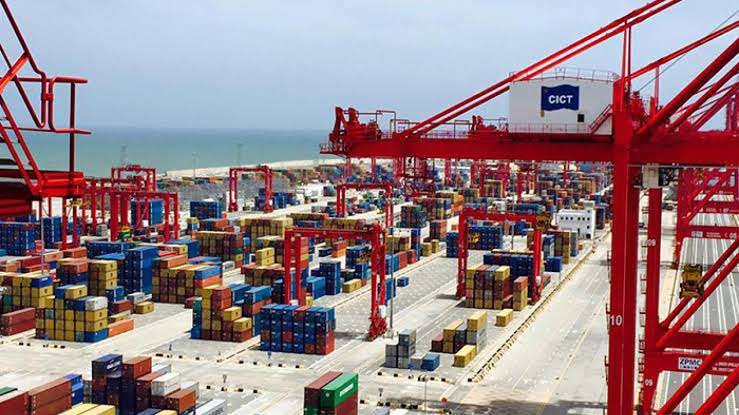
The waters around Oman and the Strait of Hormuz form one of the world’s most important maritime corridors, carrying nearly 20 per cent of global oil trade and a substantial share of international commerce.
Any disruption to these routes can have immediate consequences for:
- Global energy markets
- Shipping schedules
- Marine insurance premiums
- Freight rates
- Port operations
- International supply chains
For India, which depends heavily on Gulf energy imports and maritime trade routes, the stability of these waterways remains a strategic necessity.
India Raises Concern Over Merchant Shipping Safety
India has responded strongly to the attacks.
The Government formally protested the attack on MT Settebello by summoning the United States Chargé d’Affaires in New Delhi and has repeatedly called for the protection of merchant shipping and civilian maritime personnel.
At the United Nations Security Council, India also expressed concern over attacks on merchant vessels and critical sea lanes, warning that continued instability threatens international commerce, freedom of navigation and regional economic activity.
Officials reiterated that civilian seafarers should never become casualties of geopolitical conflicts and called for the restoration of safe and unimpeded navigation through international waterways.
Energy and Supply Chains Remain Resilient
Despite the maritime challenges, the Government maintained that India’s strategic supply chains remain secure.
Officials reported that:
- 153.79 lakh metric tonnes of fertilizers have been secured through domestic production and imports.
- More than 50 lakh metric tonnes of Urea and P&K fertilizers have been arranged through international sourcing.
- Refineries continue to operate normally.
- Adequate stocks of petrol, diesel and LPG remain available across the country.
The assurances are aimed at preventing concerns over shortages while reinforcing confidence in India’s ability to manage disruptions arising from regional instability.
A Maritime Challenge With Global Implications
The latest figures reveal that the West Asia conflict is no longer solely a diplomatic or military issue. It has become a maritime crisis affecting seafarers, shipping companies, ports, insurers, energy markets and global supply chains.
For India, one of the world’s largest suppliers of merchant navy manpower and a major trading nation dependent on maritime connectivity, the consequences are particularly significant.
The deaths of three Indian seafarers, the rescue of dozens more and the repatriation of thousands of maritime workers underscore the growing human and economic costs of instability in a region that remains central to global trade.
As governments continue diplomatic efforts to reduce tensions, the maritime industry is watching closely, aware that the safety of seafarers and the security of international shipping routes remain essential to the functioning of the global economy.