

Fair-Trade Measures Play Growing Role in Protecting Indian Industry, Exporters and Supply Chains
Maritime News, New Delhi: As global trade faces increasing uncertainty from geopolitical tensions, supply chain disruptions and rising protectionist measures, India’s Directorate General of Trade Remedies (DGTR) is emerging as a key institution in protecting domestic industries and exporters while maintaining compliance with World Trade Organization (WTO) rules.
During a media briefing in New Delhi, Additional Secretary and Director General Trade Remedies Amitabh Kumar highlighted DGTR’s role as India’s integrated trade remedy authority, responsible for conducting anti-dumping, anti-subsidy and safeguard investigations aimed at ensuring fair competition in domestic markets.
The briefing formed part of the Department of Commerce’s outreach initiative to explain how trade remedy measures help create a level playing field for Indian industries facing unfair trade practices.
Why Trade Remedies Matter to Ports and Shipping
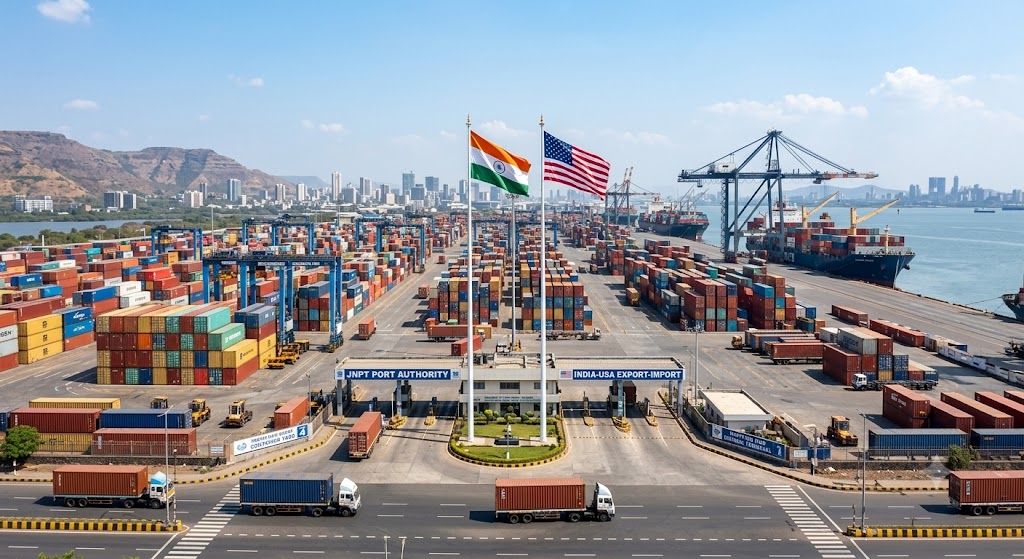
While trade remedy investigations are often viewed as technical trade matters, their impact extends directly to India’s maritime and logistics sectors.
Imports and exports handled through ports are heavily influenced by anti-dumping duties, safeguard measures and trade defence actions.
Products frequently subject to trade remedy investigations include:
- Steel
- Chemicals
- Petrochemicals
- Engineering goods
- Solar equipment
- Industrial raw materials
- Manufacturing inputs
Changes in import duties or trade restrictions can alter cargo volumes, shipping patterns and supply chains, affecting ports, freight forwarders, logistics operators and shipping lines.
Industry experts note that trade remedies have become an increasingly important policy tool as countries seek to protect domestic manufacturing while maintaining open trade channels.
Fair Trade, Not Trade Barriers
According to DGTR, trade remedy measures are designed to address unfair trade practices rather than restrict legitimate imports.
The authority investigates cases involving:
- Dumped imports sold below fair market value
- Subsidised imports receiving unfair government support
- Sudden import surges causing injury to domestic industries
Officials stressed that the objective is to restore fair competition while allowing genuine imports to continue at competitive prices.
DGTR follows the internationally recognised Lesser Duty Rule, under which duties are imposed only to the extent necessary to remove injury suffered by domestic producers.
Trade Defence Wing Protecting Indian Exporters
A major focus of the briefing was the role of DGTR’s Trade Defence Wing (TDW), established in 2016 to assist Indian exporters facing anti-dumping and safeguard investigations overseas.
As Indian exports continue expanding into global markets, trade disputes involving Indian products have increased in several jurisdictions.
The Trade Defence Wing acts as a coordination platform involving:
- Central Ministries
- State Governments
- Indian Missions Abroad
- Export Promotion Councils
- Commodity Boards
- Exporters
- Legal Advisors
The mechanism helps Indian exporters defend their interests in foreign investigations and maintain access to international markets.
Digital Transformation Through SETU
DGTR also highlighted the progress of its digital platform, System for Ensuring Fair Trade through Unified Digital Platform (SETU), launched in October 2025.
The platform enables:
- Online filing of applications
- Digital submission of evidence
- Secure document management
- Electronic communication
- Single-window access for stakeholders
The digitalisation initiative is expected to improve transparency and reduce procedural delays in trade remedy investigations.
Relief for MSMEs and Fragmented Industries
One of the key challenges in trade remedy investigations has traditionally been the participation of fragmented sectors and MSMEs.
To address this, DGTR has introduced:
- Simplified application formats
- Trade Remedies Advisory Cell (TRAC)
- Dedicated Helpdesk and Facilitation Centre
- Industry outreach programmes
Officials stated that these measures have significantly reduced procedural barriers and improved access to trade remedy mechanisms for smaller businesses.
Growing Importance Amid Global Trade Uncertainty
The briefing comes at a time when global trade is increasingly influenced by geopolitical tensions, supply chain realignments and economic security concerns.
For India, trade remedy measures are becoming an important instrument in balancing domestic manufacturing growth with participation in global trade.
For the maritime sector, the implications extend beyond trade policy.
Changes in trade flows directly influence cargo volumes, shipping demand, port utilisation and logistics activity, making DGTR’s role increasingly relevant to the broader maritime and supply-chain ecosystem.
As India pursues its ambitions of becoming a global manufacturing and export hub, the effectiveness of its trade defence framework could play a critical role in shaping future trade competitiveness.