

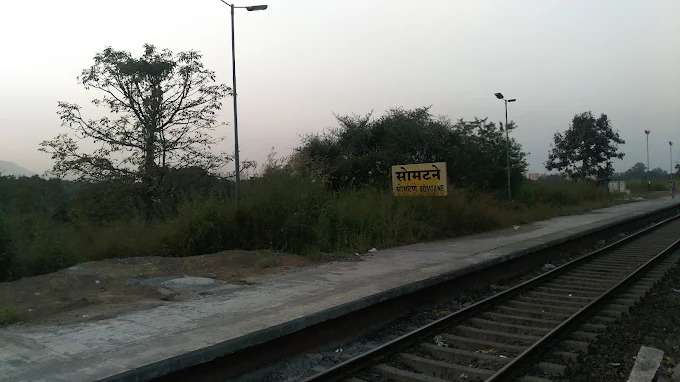
Indian Railways approves critical missing freight link expected to save 110 minutes per train, support 9 MTPA additional traffic and improve cargo movement linked to India’s busiest container gateway
Make us preferred source on Google
MaritimeNews Summary
Indian Railways has approved the ₹172 crore Somtane–Chikhli Chord Line project in Maharashtra, creating a direct rail connection between the Karjat and Roha corridors without passing through congested Panvel Junction. The 3.7-km link is expected to reduce freight train detention by approximately 110 minutes, strengthen connectivity to JNPA, facilitate an additional 9 million tonnes of cargo annually and improve logistics efficiency across western India.
Key Takeaways
- Indian Railways has approved a ₹172 crore chord line between Somtane and Chikhli.
- The project will eliminate the need for freight trains to enter Panvel Junction and undergo engine reversal.
- Freight train detention time is expected to reduce by around 110 minutes per train.
- The line will support cargo movement linked to JNPA, India’s largest container gateway.
- Additional freight capacity of 9 MTPA is expected after project completion.
- The project complements the Panvel Elevated Chord Line initiatives already approved on JNPA–Karjat and JNPA–Roha sections.
- The new link could significantly improve rail logistics efficiency in western India.
Missing Link in Western India’s Freight Network Finally Approved
Raigad, Maharashtra / Delhi, India, June 19 (Maritime News) – In a move that could significantly improve rail freight efficiency in Maharashtra, Indian Railways has approved the construction of the Somtane–Chikhli Chord Line on Central Railway at an estimated cost of ₹172 crore.
The 3.7-kilometre project will connect Chikhli on the Karjat route with Somtane on the Roha route, creating a direct rail connection between the two corridors. Currently, freight trains moving between these routes are required to enter Panvel Junction and perform engine reversals before continuing their journey, adding delays and operational complexity.
The new chord line will remove this bottleneck by allowing trains to bypass Panvel entirely, resulting in faster and more efficient freight movement.
Also Read: CIDCO’s Mega Logistics Park Vision Faces Infrastructure Reality Check
Why Panvel Has Become a Strategic Bottleneck
Panvel Junction has evolved into one of the most critical rail nodes in the Mumbai Metropolitan Region. The junction handles traffic from multiple directions, including JNPA, Roha, Karjat and Diva.
As cargo volumes linked to JNPA continue to grow, Panvel has increasingly become a pressure point in the rail logistics network. Freight trains entering the junction not only consume valuable rail capacity but also contribute to operational delays that can ripple across the broader network.
By creating a direct connection between the Karjat and Roha corridors, the Somtane–Chikhli Chord Line aims to reduce congestion while freeing up capacity at Panvel for other rail operations.
Also Read: JNPA’s Industrial Expansion Plan Raises Questions Over Navi Mumbai’s Port Region
Major Significance for JNPA Cargo Movement
The project has particular importance for freight traffic associated with Jawaharlal Nehru Port Authority (JNPA), which handles nearly 60 per cent of India’s container traffic.
At present, freight trains moving between Karjat, Jasai and Roha corridors must enter Panvel Junction and undergo locomotive reversal procedures before proceeding further. This process increases transit times, reduces network efficiency and affects freight train turnaround.
With the new chord line in place, trains will be able to move directly between corridors, reducing detention by approximately 110 minutes per freight train.
For a port handling millions of containers annually, such time savings can translate into substantial operational and economic benefits.
Why 110 Minutes Matters
The headline figure of 110 minutes may appear modest, but in freight logistics, time directly influences network productivity.
Reducing detention time means:
- Faster wagon turnaround.
- Improved locomotive utilisation.
- Better network capacity.
- Lower operational costs.
- Increased reliability for cargo owners.
- More efficient evacuation of port cargo.
As India seeks to lower logistics costs as a percentage of GDP, projects that improve rail freight productivity become strategically important.
Additional Capacity for Future Growth
Indian Railways expects the project to facilitate movement of an additional nine Million Tonnes Per Annum (MTPA) of freight traffic.
The approval also complements previously sanctioned Panvel Elevated Chord Line projects on the JNPA–Karjat and JNPA–Roha routes, helping complete a crucial freight connectivity network serving western India.
Taken together, these investments indicate a broader effort to strengthen multimodal connectivity between ports, industrial corridors and hinterland markets.
Why It Matters
India’s logistics competitiveness depends not only on port expansion but also on the efficiency of hinterland connectivity.
While ports can increase capacity through terminal development, cargo evacuation remains dependent on road and rail networks. Delays at critical junctions can reduce the benefits of large infrastructure investments.
The Somtane–Chikhli Chord Line addresses one such bottleneck and supports India’s broader objective of creating faster, more reliable and more cost-effective freight corridors.
Also Read: CBIC Pushes Unified Customs System as India Targets Faster Cargo Clearance and Lower Logistics Costs
Economic Impact
The project’s direct investment value is ₹172 crore, but its long-term economic impact may be significantly larger.
Expected benefits include:
- Lower freight operating costs.
- Faster cargo evacuation from JNPA.
- Improved rail asset utilisation.
- Increased freight carrying capacity.
- Reduced network congestion.
- Better support for industrial and export growth.
The ability to move an additional 9 MTPA of cargo could provide substantial economic value to western India’s manufacturing and logistics ecosystem.
What Happens Next
Following approval, detailed project execution activities including engineering design, land requirements, tendering and construction planning are expected to proceed.
Industry stakeholders will closely watch:
- Construction timelines.
- Project completion schedule.
- Integration with existing freight corridors.
- Impact on JNPA cargo evacuation.
- Capacity utilisation after commissioning.
The effectiveness of the project will ultimately be measured by reductions in freight transit times and improvements in network performance.
Recommendations & Preparedness Matrix
Government Recommendations
Ensure timely project execution and alignment with broader freight corridor development plans.
Regulatory Recommendations
Monitor freight performance metrics before and after commissioning to quantify benefits.
Industry Recommendations
Logistics operators and cargo owners should prepare to leverage improved rail connectivity and optimise freight planning.
Stakeholder Preparedness
Port operators, container train operators and logistics companies should assess future capacity planning opportunities arising from improved rail connectivity.
Also Read: Critical Minerals Race Reshaping Global Shipping, Ports and Trade Corridors
MaritimeNews Insight
The Somtane–Chikhli Chord Line is far more significant than its 3.7-kilometre length suggests. The project removes a long-standing operational inefficiency at one of western India’s most important freight junctions. As JNPA continues to expand capacity and attract additional cargo volumes, the importance of seamless hinterland connectivity will only increase.
MaritimeNews Critique
While the project addresses an important missing link, the larger question remains whether future cargo growth linked to JNPA, Dedicated Freight Corridors and industrial expansion will require additional rail capacity upgrades beyond this intervention. A single bottleneck removal may improve efficiency today, but sustained growth will demand continuous network augmentation.
Risk Assessment
Potential risks include:
- Project execution delays.
- Construction challenges.
- Future capacity constraints elsewhere in the network.
- Cargo growth outpacing infrastructure expansion.
Opportunity Assessment
The project creates opportunities to:
- Improve rail freight competitiveness.
- Strengthen port connectivity.
- Support export growth.
- Increase modal shift from road to rail.
- Enhance western India’s logistics ecosystem.
Also Read: DGTR Strengthens India’s Trade Defence Framework as Global Trade Disputes Intensify
Stakeholder Impact Matrix
Who Benefits and How?
JNPA
Improved cargo evacuation and network efficiency.
Container Train Operators
Faster turnaround and improved utilisation.
Exporters and Importers
More reliable freight movement.
Logistics Companies
Reduced delays and improved planning.
Who Is Impacted and How?
Road-Based Freight Operators
May face increased competition from rail.
Congested Rail Sections
Could experience traffic redistribution.
What Must They Do to Remain Unimpacted?
Adapt operations to evolving freight flows and leverage multimodal logistics opportunities.
Who Should Watch and Why?
- JNPA
- Central Railway
- Container Train Operators
- Logistics Parks
- Manufacturing Clusters
Because the project could influence cargo movement patterns across western India.
What Preparations Should They Make?
Review freight routing strategies and future capacity requirements.
MaritimeNews Stakeholder Impact Pyramid
Grassroots Stakeholders
Potential employment benefits through logistics growth and increased cargo handling activity.
Operational Stakeholders
Rail operators, terminal staff and logistics coordinators benefit from improved operational efficiency.
Professional Stakeholders
Freight planners, supply chain managers and rail logistics professionals gain greater network predictability.
Business Stakeholders
Exporters, importers and logistics firms benefit from lower transit times and improved reliability.
Industry Leaders
Major ports, logistics providers and freight operators gain stronger network connectivity.
Strategic Investors
Infrastructure and logistics investors may view the project as a positive signal of continued freight corridor development.
Industry Impact
The project strengthens the broader freight ecosystem linking ports, industrial clusters and logistics hubs across western India.
Policy Implications
The approval reflects India’s continued focus on capacity augmentation, multimodal integration and logistics cost reduction under national infrastructure and trade competitiveness objectives.
FAQ
What is the Somtane–Chikhli Chord Line?
A 3.7-km rail link connecting the Karjat and Roha corridors in Maharashtra.
How much is the project worth?
₹172 crore.
How much time will freight trains save?
Approximately 110 minutes per train.
How much additional cargo can it support?
Around 9 Million Tonnes Per Annum (MTPA).
Why is JNPA important to this project?
JNPA handles nearly 60% of India’s container traffic and relies heavily on efficient hinterland connectivity.
Make us preferred source on Google
Source: PIB Delhi
Reporting by MaritimeNews Bureaus, Writing by Harpal S Naol; Editing by Jaspal Singh Naol

One thought on “₹172 Crore Somtane–Chikhli Chord Line to Strengthen JNPA Hinterland Connectivity”