
India Faces Strategic Maritime Challenge: UNCTAD
Maritime News, India: The global race for critical minerals is rapidly transforming international shipping patterns, port investments and maritime trade corridors, creating new strategic challenges and opportunities for India, according to a new policy report released by the United Nations Conference on Trade and Development (UNCTAD).
The report, The Shifting Dynamics of Critical Minerals Trade, highlights how soaring demand for lithium, cobalt, nickel, copper, graphite and rare earth elements is driving a fundamental reconfiguration of global supply chains as countries compete to secure resources essential for electric vehicles, renewable energy systems, semiconductors, defence technologies and advanced manufacturing.
While the debate around critical minerals is often centred on mining, the maritime sector is emerging as one of the biggest beneficiaries—and potential victims—of the global scramble for supply security.
Critical Minerals Are Becoming Maritime Cargoes of Strategic Importance
UNCTAD projects significant growth in demand for critical energy transition minerals by 2040, with lithium demand expected to rise by 353%, graphite by 131%, nickel by 69%, cobalt by 49% and copper by 28%.
Such growth will inevitably generate massive demand for maritime transportation, specialised bulk carriers, containerised cargo movements, mineral terminals, processing hubs and logistics infrastructure across major global trade routes.
For ports worldwide, critical minerals are becoming the equivalent of what crude oil and iron ore represented during previous industrial eras—a cargo category with the power to reshape trade flows and determine future port competitiveness.
China Continues to Dominate Critical Mineral Supply Chains
The report warns that critical mineral supply chains remain heavily concentrated geographically.
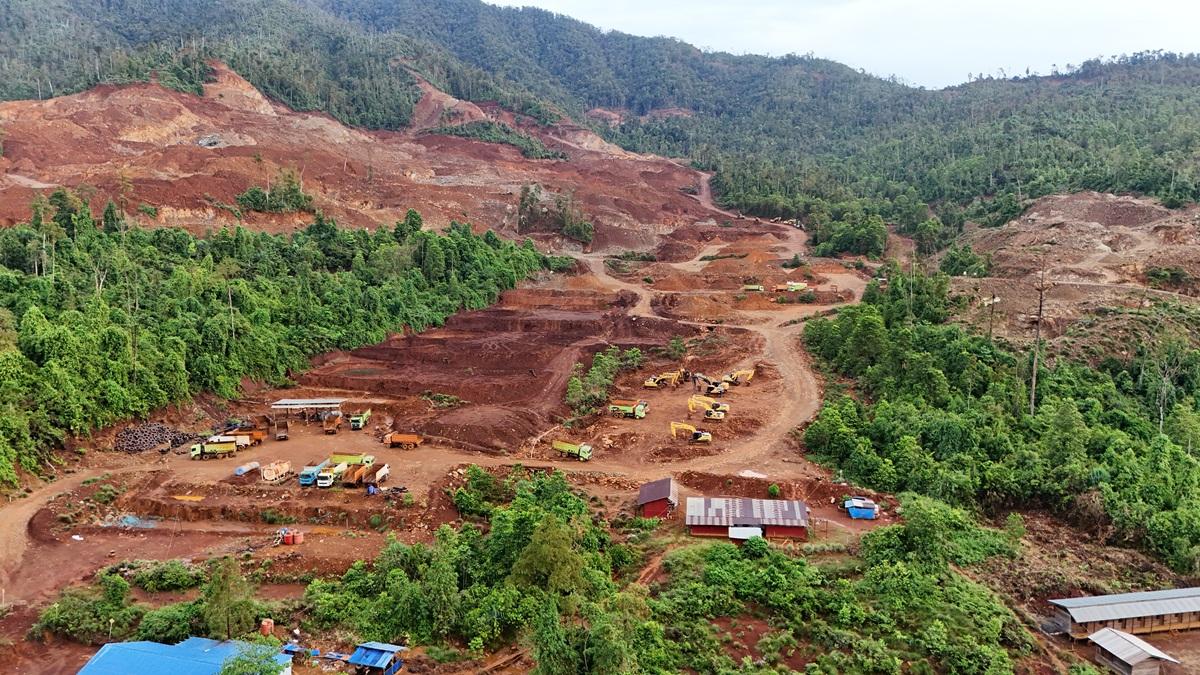
According to UNCTAD, the Democratic Republic of Congo accounts for around 74% of global cobalt mine production, Indonesia contributes about 67% of global nickel mine production, while China controls approximately 69% of rare earth production and 78% of natural graphite production. Australia, Chile and China together account for nearly 72% of global lithium production.
Even more significant is China’s dominance in refining and downstream processing, where much of the value addition occurs. The report notes that refining activities remain highly concentrated, giving a small number of countries disproportionate influence over global supply chains.
For the maritime industry, this concentration means shipping routes, port investments and logistics networks are increasingly being shaped by geopolitical considerations rather than traditional market economics.
Trade Restrictions Are Changing Global Shipping Routes
UNCTAD notes that governments are increasingly using tariffs, export controls, licensing requirements, investment restrictions and other trade measures to secure critical mineral supplies and strengthen domestic industries.
Since 2020, the number of export restrictions on critical minerals has risen significantly as resource-rich nations seek to retain greater value within their domestic economies.
For shipping companies, freight forwarders and port operators, such measures could alter cargo flows, redirect vessel movements and create new logistics hubs closer to processing and manufacturing centres.
Industry experts believe future competition among ports may increasingly depend on their ability to support critical mineral supply chains through specialised storage, handling, processing and multimodal connectivity.
India’s Maritime Opportunity and Strategic Vulnerability
For India, the report carries important implications.
India is pursuing ambitious electric mobility, renewable energy and manufacturing targets while simultaneously expanding its maritime infrastructure through initiatives such as Sagarmala, major port modernisation programmes and logistics corridor development.
However, India’s dependence on imported critical minerals creates a strategic vulnerability that extends beyond mining into shipping, logistics and energy security.
Any disruption in maritime trade routes connecting Africa, Australia, Southeast Asia and Latin America could directly affect India’s industrial growth, clean-energy transition and manufacturing ambitions.
The Strait of Hormuz, Red Sea, Bab-el-Mandeb, Malacca Strait and Indian Ocean shipping lanes therefore assume greater importance as critical mineral trade volumes increase.
Indian Ports Must Prepare for the Next Cargo Revolution
The report indirectly raises questions about India’s preparedness to handle future critical mineral cargo volumes.
As countries worldwide compete to secure access to mineral resources, Indian ports may need to develop dedicated infrastructure for:
- Critical mineral imports
- Strategic stockpiling facilities
- Processing and value-addition zones
- Multimodal logistics connectivity
- Mineral export and re-export hubs
- Specialised warehousing and handling systems
The emergence of integrated logistics parks, port-led industrial clusters and free-trade warehousing zones could play a vital role in positioning India within future critical mineral supply chains.
Maritime Security Emerging as a Critical Factor
The growing strategic importance of critical minerals also elevates maritime security concerns.
As supply chains become concentrated and geopolitical competition intensifies, shipping routes carrying critical minerals could become increasingly sensitive from a national security perspective.
Recent disruptions in the Red Sea, Gulf region and other major sea lanes have already demonstrated how geopolitical tensions can impact global trade and freight costs.
For India, ensuring secure sea lanes of communication, strengthening naval capabilities and enhancing maritime domain awareness may become as important as securing mineral resources themselves.
The Bigger Question
While the world focuses on mines, batteries and electric vehicles, the real battle may be unfolding across ports, shipping lanes and logistics corridors.
The UNCTAD report highlights that critical minerals are no longer merely commodities—they are becoming strategic assets capable of influencing trade policy, industrial competitiveness, national security and maritime power.
For India, the challenge is not only securing access to critical minerals but also ensuring that its ports, shipping sector and logistics ecosystem are positioned to capture a larger share of the value generated by the global energy transition.
In the coming decades, the nations that control critical mineral supply chains may shape the future of global trade. Equally important will be the ports and maritime corridors through which those minerals move.