
At IPRD 2026, Defence Minister Rajnath Singh calls for stronger regional cooperation, diversified supply chains and technology-sharing. The challenge is turning strategic commitments into operational resilience
Key Takeaways
- Defence Minister Rajnath Singh has called for more resilient maritime interdependence through diversified supply chains, reliable maritime infrastructure and stronger regional cooperation.
- He warned about deliberate trade disruptions, challenges to freedom of navigation and the weaponisation of strategically important maritime passages.
- Artificial intelligence, autonomous systems, advanced sensors and data analytics are changing maritime security, but technological inequality could weaken regional resilience.
- Chief of the Naval Staff Admiral Krishna Swaminathan called for greater cooperation in ocean science, research infrastructure, scientific data-sharing and technology capacity-building.
- The discussions at the Indo-Pacific Regional Dialogue (IPRD) 2026 covered maritime awareness, climate resilience, oceanographic science and institutional cooperation.
- The central policy challenge is converting regional dialogue into practical systems, shared capabilities and measurable outcomes.
New Delhi, India, November 5, 2026 | Maritime News: India has called for a more resilient maritime order in the Indo-Pacific, linking supply chain diversification, freedom of navigation, maritime security and technological cooperation as interconnected priorities.
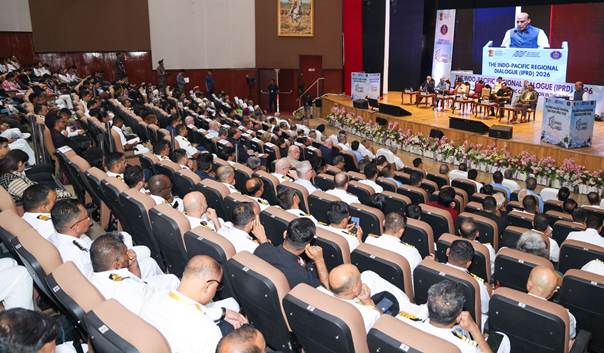
Defence Minister Rajnath Singh delivered this message on November 4, 2026, while addressing the commemorative session of the Indo-Pacific Regional Dialogue (IPRD) 2026 in New Delhi.
The annual strategic conference, organised by the Indian Navy in association with the National Maritime Foundation (NMF), is being held from November 3 to 5.
The Defence Minister argued that globalisation cannot be abandoned whenever disruptions occur. Instead, countries must make their interdependence more secure by diversifying supply chains, strengthening maritime infrastructure, improving maritime awareness and developing the capacity to withstand disruptions.
His remarks reflect a broader change in the way maritime security is being understood. The security of shipping routes, ports, logistics networks, maritime infrastructure and ocean resources can no longer be considered separate policy concerns.
For India, whose international trade and energy supplies depend substantially on maritime transportation, this has direct implications for economic security.
The question is whether regional cooperation can translate into stronger operational arrangements before the next major disruption occurs.
Freedom of Navigation and the Weaponisation of Maritime Chokepoints
Rajnath Singh identified deliberate trade disruptions, challenges to freedom of navigation and the weaponisation of narrow maritime passages as concerns affecting the international maritime environment.
His warning highlights the strategic importance of maritime chokepoints.
Major international shipping routes depend on a limited number of geographically important passages. Disruptions in these locations can affect vessel movements, cargo schedules, energy supplies, insurance costs and the reliability of international trade.
For India, the implications extend beyond naval security.
A disruption affecting shipping routes in the Persian Gulf, the Red Sea, the Strait of Hormuz or other strategic passages can have consequences for:
- Crude oil and petroleum product imports.
- LNG and other energy supplies.
- Containerised exports and imports.
- Fertiliser and industrial raw material movements.
- Shipping schedules and freight costs.
- Indian seafarers working on international vessels.
- Port operations and logistics networks.
Maritime News has previously examined these vulnerabilities in its reports on India’s maritime monitoring amid West Asia tensions and India’s enhanced monitoring of ships and seafarers in the Persian Gulf.
The earlier reporting demonstrated that geopolitical instability can require coordinated action involving maritime authorities, shipping companies, ports, foreign affairs officials and trade stakeholders.
The latest IPRD address takes this discussion further by emphasising that resilience must be developed before disruptions occur.
Diversifying suppliers, maintaining alternative transport arrangements, strengthening port infrastructure and improving maritime awareness are therefore not merely commercial considerations. They are increasingly part of national economic security.
Maritime Security Is Expanding Beyond Conventional Naval Threats
The Defence Minister also highlighted the changing nature of maritime threats.
He identified piracy, trafficking, illegal fishing, cyberattacks and natural disasters as challenges that require maritime security systems to evolve.
This is significant because the maritime domain contains a wide range of civilian, commercial, environmental and security interests.
A modern maritime security framework must account for:
Traditional security threats
- Military activity and strategic competition.
- Threats to sea lines of communication.
- Challenges to freedom of navigation.
- Security of critical maritime infrastructure.
Non-traditional security threats
- Piracy and armed robbery at sea.
- Human and goods trafficking.
- Illegal, unreported and unregulated fishing.
- Cyberattacks against ports, vessels and maritime systems.
- Natural disasters and extreme weather events.
- Marine environmental incidents.
These threats may overlap. For example, a cyber incident affecting a port’s information systems can disrupt cargo operations without any physical attack on the port itself.
Similarly, illegal fishing can affect food security, coastal livelihoods, marine ecosystems and maritime law enforcement.
This broader understanding of maritime security requires coordination between naval forces, coast guards, port authorities, customs, fisheries departments, scientific institutions and private maritime operators.
India’s previous regional engagements provide an institutional foundation for this approach.
The Goa Maritime Conclave 2026 focused on information-sharing, institutional cooperation and capacity-building among Indian Ocean Region countries. Earlier, the 6th East Asia Summit Conference on Maritime Security Cooperation examined maritime domain awareness, anti-piracy measures, illegal fishing, humanitarian assistance and search-and-rescue cooperation.
The challenge now is to connect these discussions through sustained mechanisms rather than treating each conference as an isolated diplomatic event.
Technology Is Becoming a Maritime Security Requirement
One of the central themes of Rajnath Singh’s address was the growing role of technology in maritime security.
He identified artificial intelligence, autonomous systems, new sensors, advanced materials, biotechnology and data analytics as technologies with significant implications for maritime security and economic activity.
These technologies can strengthen maritime surveillance, improve the processing of information and help authorities identify emerging risks.
Their potential applications include:
- Analysing vessel movements and identifying unusual behaviour.
- Integrating information from coastal radar and satellite surveillance.
- Improving maritime domain awareness.
- Supporting search-and-rescue operations.
- Monitoring environmental changes and ocean conditions.
- Strengthening port and vessel cybersecurity.
- Improving the detection of illegal maritime activity.
However, the Minister cautioned that technology itself is not the answer. Its value depends on whether it addresses real operational problems.
This is an important distinction.
Acquiring advanced equipment does not automatically create an effective maritime security system. Countries also need trained personnel, maintenance capabilities, secure communications, data governance, institutional coordination and the ability to integrate different systems.
A surveillance platform that cannot exchange information with regional partners or relevant domestic agencies may offer limited collective value.
India’s own maritime surveillance architecture must therefore develop alongside its ambitions for regional cooperation.
Technology Inequality Could Become a New Source of Maritime Vulnerability
Rajnath Singh raised another issue that deserves greater attention: unequal access to technology among Indo-Pacific countries.
The region includes countries with significantly different levels of economic development, research infrastructure and institutional capability.
Some possess advanced scientific facilities and technological resources. Others continue to develop the personnel, research institutions and financial capacity required to participate fully in technological transformation.
The Defence Minister warned that technological progress benefiting only a limited group of countries would not deliver collective resilience.
This argument has practical consequences for maritime security cooperation.
Regional maritime awareness depends on the ability of countries to collect, interpret and share reliable information. If some participating countries lack surveillance equipment, trained analysts, oceanographic data or secure communication systems, regional information-sharing arrangements may remain incomplete.
Technology cooperation therefore needs to include more than the transfer or purchase of equipment.
It should cover:
- Training and professional education.
- Joint research and development.
- Affordable surveillance and monitoring solutions.
- Shared scientific data and research infrastructure.
- Technical maintenance and operational support.
- Institutional capacity-building.
- Common standards and interoperability.
The Minister’s emphasis on affordable solutions is particularly relevant for smaller maritime nations and developing countries.
The objective should not be to ensure that every country acquires the most sophisticated equipment. It should be to ensure that every participating country can contribute meaningfully to common maritime security objectives.
Chief of the Naval Staff Calls for Sustainable Regional Capabilities
Chief of the Naval Staff Admiral Krishna Swaminathan also highlighted the uneven distribution of scientific knowledge, research infrastructure and technological capabilities across the Indo-Pacific.
He emphasised that maritime cooperation must extend beyond equipment acquisition.
Partner countries should be able to operate, maintain, adapt and upgrade the technologies they acquire.
This is an important point because technology dependence can create long-term operational vulnerabilities.
A country that acquires equipment but lacks the skills, maintenance infrastructure or technical knowledge to sustain it may remain dependent on external suppliers.
The Chief of the Naval Staff called for greater collective investment in ocean science and research, enhanced sharing of scientific data and collaborative research initiatives, including joint scientific expeditions.
He also stressed the importance of strengthening regional institutions through trust, transparency and inclusive ocean governance.
The emphasis on institutional capability is particularly relevant to the Indo-Pacific, where maritime cooperation involves countries with different legal systems, economic resources and strategic priorities.
The effectiveness of regional arrangements will depend on whether these countries can establish reliable mechanisms for information-sharing, scientific cooperation and coordinated responses.
Oceanographic Science and Climate Resilience Become Strategic Priorities
The second day of IPRD 2026 also examined the scientific foundations of regional preparedness, with particular attention to oceanographic science and climate resilience.
A session moderated by Commodore Abhinav Barve of the Indian Navy discussed cooperative maritime networks for climate resilience, particularly in Indian Ocean island states such as Mauritius and Seychelles.
The discussions addressed:
- Collaborative research networks.
- Sharing of oceanographic data.
- Research vessel cooperation.
- Ocean observation networks.
- Forecasting capabilities.
- Scientific information-sharing arrangements.
- Translation of ocean science into public policy.
These issues have direct implications for maritime safety and the economic sustainability of coastal communities.
Improved ocean observation and forecasting can support early warnings, safer navigation, disaster preparedness and better understanding of environmental changes.
For island states and coastal economies, the ability to anticipate extreme weather events and changing ocean conditions is particularly important.
Rajnath Singh also emphasised that economic development and environmental responsibility must progress together.
He cautioned against treating oceans as unlimited sources of resources and called for the protection of marine ecosystems, responsible utilisation of ocean resources and placing coastal communities at the centre of development efforts.
This is a significant policy position because maritime infrastructure expansion, offshore development, fisheries, shipping and coastal tourism all depend on healthy marine ecosystems.
Maritime resilience must therefore include ecological resilience.
MAHASAGAR and the Indo-Pacific Oceans Initiative: From Strategic Vision to Implementation
The Defence Minister reaffirmed India’s commitment to an open, inclusive and rules-based maritime order.
He highlighted MAHASAGAR — Mutual and Holistic Advancement for Security and Growth Across Regions — as a vision recognising the interconnected relationship between security and prosperity among maritime nations.
He also referred to the Indo-Pacific Oceans Initiative (IPOI), announced by Prime Minister Narendra Modi in 2019, as a practical framework for cooperation across seven interconnected areas.
The two frameworks reflect India’s emphasis on inclusive maritime cooperation and regional engagement.
Earlier Maritime News coverage of the Indian Navy’s MAHASAGAR regional dialogue in 2023 examined the importance of collective responses to piracy, trafficking, illegal fishing and other common maritime challenges.
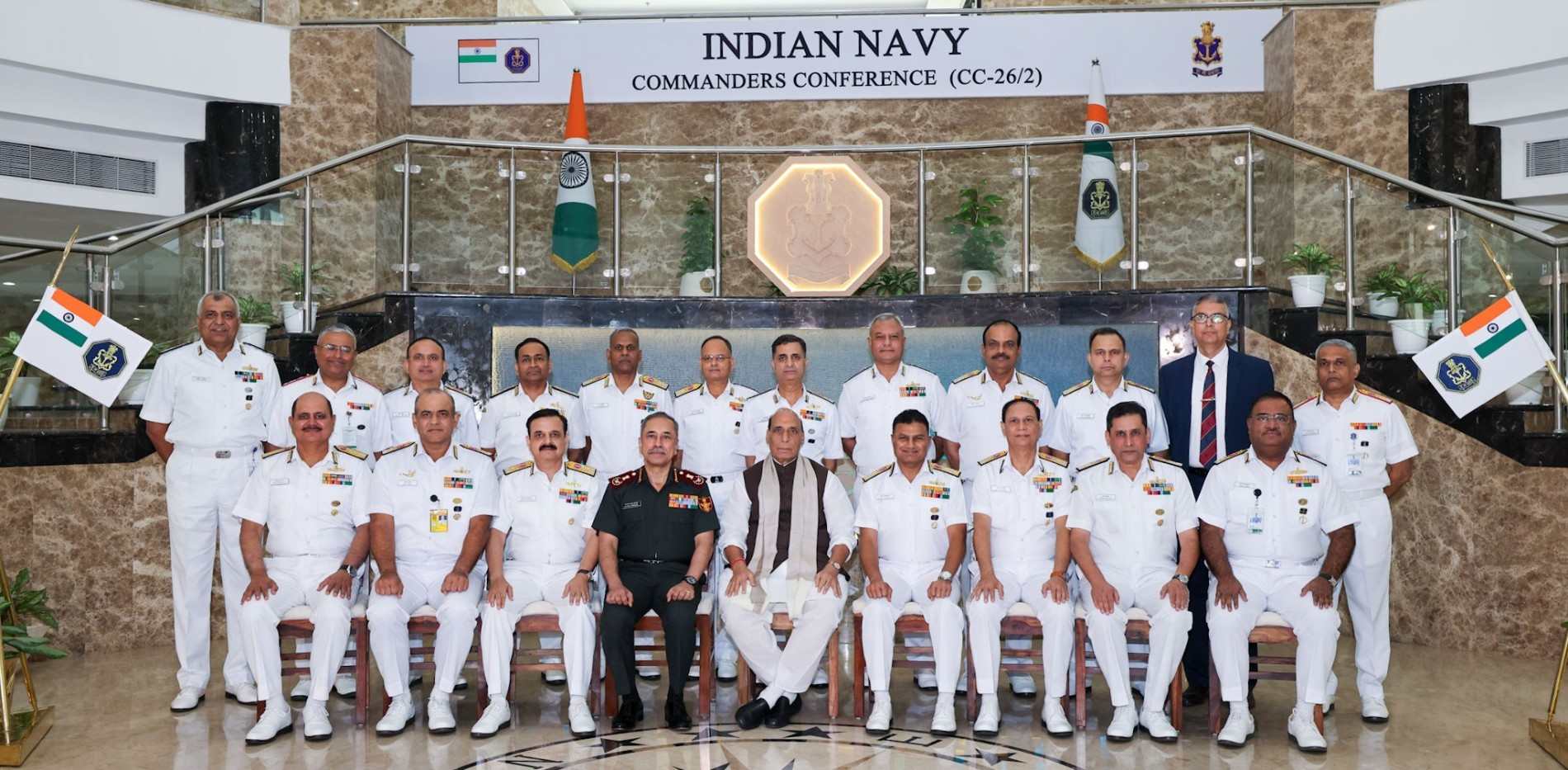
The 2025 Naval Commanders’ Conference also discussed the evolution of India’s maritime strategy and the importance of regional security cooperation.
The latest IPRD deliberations reinforce the need to move from broad strategic principles towards implementation.
For MAHASAGAR and IPOI to produce measurable outcomes, regional partners will need sustained cooperation in areas such as maritime information-sharing, research, training, disaster response, ocean observation and institutional capacity-building.
Who Attended IPRD 2026?
The November 4 commemorative session was attended by senior political, military and maritime leadership.
Those present included:
- Raksha Mantri Rajnath Singh.
- Chief of the Naval Staff Admiral Krishna Swaminathan.
- Chief of the Army Staff General Dhiraj Seth.
- Chief of the Air Staff Air Chief Marshal Ashutosh Dixit.
- Former Chief of the Naval Staff and Chairman of the National Maritime Foundation Admiral Dinesh K Tripathi (Retd).
The second day also featured a special address by Dr Jitendra Singh, Minister of State (Independent Charge) for Science and Technology and Earth Sciences.
He released an NMF publication titled Alternative Hull Forms for the Future Indian Navy.
An interactive session titled Perspectives from the Flag Bridge brought together former Indian Navy chiefs Admiral RK Dhowan, Admiral Sunil Lanba, Admiral Karambir Singh and Admiral Dinesh K Tripathi, along with former Commander of the Sri Lanka Navy Admiral Jayantha Perera.
The session was hosted by Director General, National Maritime Foundation, Vice Admiral Pradeep Chauhan.
These discussions added naval and strategic perspectives to the broader theme of maritime technology, regional cooperation and the future of Indo-Pacific security.
The Reality Check: What Must Happen After the Dialogue?
IPRD 2026 has placed several important issues on the regional maritime agenda.
But the effectiveness of such a strategic dialogue cannot be measured only by the seniority of participants, the number of sessions or the policy statements delivered.
The real test is whether the discussions lead to practical cooperation.
Several questions deserve attention.
First, how will supply chain resilience be measured?
Diversification is important, but governments and industry need clear assessments of critical imports, alternative shipping routes, port capacity, supplier concentration and the ability to respond to prolonged disruptions.
Second, how will maritime domain awareness be strengthened across countries with different technological capabilities?
Information-sharing requires compatible systems, trained personnel, secure networks and clearly defined responsibilities.
Third, who will finance regional oceanographic research and data-sharing?
Joint scientific programmes require sustained funding, access to research vessels, observation infrastructure and mechanisms for sharing data.
Fourth, how will smaller maritime nations participate meaningfully?
Technology-sharing and capacity-building should include long-term training, maintenance and institutional support rather than only equipment transfers.
Fifth, how will environmental protection be incorporated into maritime development?
Port expansion, offshore projects, shipping activity and ocean-resource utilisation must be assessed against ecological safeguards and the interests of coastal communities.
Finally, what measurable outcomes will emerge from IPRD 2026?
The conference’s stated objective is to translate ideas into partnerships, projects and measurable outcomes. The Indian Navy and the National Maritime Foundation should communicate how recommendations are taken forward, what cooperation mechanisms are established and how progress will be evaluated.
These are not criticisms of the dialogue. They are the implementation questions that determine whether strategic discussions deliver lasting value.
What It Means for India’s Maritime Industry
Although IPRD is a strategic and defence-oriented conference, its discussions have implications well beyond naval institutions.
A resilient maritime environment supports:
- Merchant shipping and international trade.
- Port and terminal operations.
- Shipbuilding and maritime technology.
- Offshore energy and marine infrastructure.
- Seafarer safety and welfare.
- Fisheries and coastal livelihoods.
- Maritime research and education.
- Environmental monitoring and disaster preparedness.
For India’s maritime industry, the next stage should involve closer coordination between government agencies, research institutions, ports, shipping companies, shipbuilders and technology providers.
The development of maritime technology should also strengthen domestic industrial capabilities, technical skills and research infrastructure.
The Minister’s emphasis on developing a comprehensive maritime ecosystem under Maritime Amrit Kaal Vision 2047 is relevant in this context.
However, the long-term objective will require clear institutional responsibilities, funding commitments, measurable milestones and coordination between national and regional maritime programmes.
Maritime Resilience Will Depend on Cooperation That Works
The message from IPRD 2026 is that maritime security can no longer be approached as a narrowly military concern.
Supply chain disruptions, strategic chokepoints, cyber threats, illegal maritime activity, technological inequality and climate-related risks are interconnected challenges.
Rajnath Singh’s call for stronger regional cooperation and more resilient interdependence reflects India’s attempt to position maritime security as a foundation of wider economic and strategic stability.
Admiral Krishna Swaminathan’s emphasis on scientific capability, technology-sharing and institutional cooperation adds an important operational dimension to that vision.
But strategic intent must now translate into practical results.
The Indo-Pacific needs reliable maritime information-sharing, stronger oceanographic research networks, affordable technologies, trained personnel, resilient infrastructure and institutions capable of sustaining cooperation over time.
For India, the test will be whether its regional leadership can help create systems that improve security, protect trade, strengthen scientific capacity and safeguard the interests of coastal communities.
The future of maritime resilience will not be determined by how many strategic declarations countries make, but by how effectively they work together when the next disruption arrives.
Frequently Asked Questions (FAQs)
1. What is the Indo-Pacific Regional Dialogue 2026?
IPRD 2026 is the Indian Navy’s annual apex-level international strategic conference, conducted in association with the National Maritime Foundation. The three-day event commenced on November 3, 2026, in New Delhi.
2. What did Rajnath Singh emphasise at IPRD 2026?
He called for supply chain diversification, reliable maritime infrastructure, enhanced maritime awareness and stronger regional cooperation to build resilience against disruptions in the global maritime environment.
3. What maritime security threats were highlighted?
The Defence Minister referred to piracy, trafficking, illegal fishing, cyberattacks, natural disasters, deliberate trade disruptions, challenges to freedom of navigation and the weaponisation of narrow maritime passages.
4. Why is technology important for Indo-Pacific maritime security?
Artificial intelligence, autonomous systems, advanced sensors and data analytics can strengthen surveillance, maritime domain awareness, operational response and scientific understanding of the oceans.
5. What did the Chief of the Naval Staff say about technology cooperation?
Admiral Krishna Swaminathan emphasised that cooperation should extend beyond equipment acquisition to include the ability to operate, maintain, adapt and upgrade technologies.
6. What is MAHASAGAR?
MAHASAGAR stands for Mutual and Holistic Advancement for Security and Growth Across Regions. It is India’s vision for strengthening security and prosperity through maritime cooperation among regional partners.
7. What is the Indo-Pacific Oceans Initiative?
The Indo-Pacific Oceans Initiative was announced by Prime Minister Narendra Modi in 2019. It provides a framework for regional maritime cooperation across seven interconnected areas.
8. Why is oceanographic research important for maritime security?
Oceanographic research supports navigation, weather forecasting, disaster preparedness, environmental monitoring, climate resilience and the safety of maritime operations.
9. Who organised IPRD 2026?
The Indian Navy conducted IPRD 2026 in association with the National Maritime Foundation.
Sources and References
Primary Government and Institutional Source
- Press Information Bureau, Government of India – 4 November 2026
Supply chain diversification & greater regional cooperation are key to stronger maritime inter-dependence amid strained security environment: Raksha Mantri at Indo-Pacific Regional Dialogue 2026.
Official source for the speeches, policy positions, attendees, conference sessions and announcements covered in this article.
https://www.pib.gov.in/PressReleaseDetail.aspx?PRID=2332665®=3&lang=1
Previous Maritime News Reporting
- Maritime News – Goa Maritime Conclave 2026 Strengthens IOR Maritime Security
Background on regional maritime cooperation, information-sharing and institutional capacity-building.
https://maritimenews.in/goa-maritime-conclave-2026-strengthens-ior-maritime-security/ - Maritime News – India Strengthens Maritime Monitoring Amid Rising West Asia Tensions
Earlier reporting on maritime security, shipping disruption and India’s monitoring mechanisms.
https://maritimenews.in/india-strengthens-maritime-monitoring-amid-rising-west-asia-tensions/ - Maritime News – India Steps Up Monitoring of Ships and Seafarers in Persian Gulf
Background on the implications of geopolitical instability for Indian vessels and seafarers.
https://maritimenews.in/india-steps-up-monitoring-of-ships-and-seafarers-in-persian-gulf/ - Maritime News – Indian Navy Hosts Virtual Dialogue for Regional Maritime Cooperation
Historical reporting on MAHASAGAR and regional maritime security cooperation.
https://maritimenews.in/indian-navy-hosts-virtual-dialogue-for-regional-maritime-cooperation/ - Maritime News – 6th EAS Conference on Maritime Security Cooperation Held
Previous coverage of Indo-Pacific maritime security, information-sharing, anti-piracy cooperation and regional mechanisms.
https://maritimenews.in/6th-eas-conference-on-maritime-security-cooperation-held/ - Maritime News – Biannual Naval Commanders’ Conference 2025 Concluded
Background on India’s naval strategy, maritime cooperation and capability development.
https://maritimenews.in/biannual-naval-commanders-conference-2025-concluded/