A 30-seater electric vessel has begun recreational operations along the Sonia Vihar–Jagatpur stretch. The initiative brings river tourism to the national capital, but its long-term success will depend on environmental safeguards, commercial viability, visitor experience and the condition of the Yamuna.
Key Takeaways
- Union Minister Sarbananda Sonowal inaugurated Delhi’s first recreational Yamuna River Cruise service in the presence of Chief Minister Rekha Gupta.
- The service uses a 30-seater electric vessel on an approximately 6-kilometre round-trip stretch between Sonia Vihar and Jagatpur.
- The wider destination includes a musical fountain, light and sound show, food court, shopping area, children’s play zone and adventure sports facilities.
- The Yamuna is designated National Waterway-110 under the National Waterways Act, 2016.
- The government presents the project as part of India’s broader inland waterway tourism and infrastructure development programme.
- However, the PIB announcement does not provide passenger projections, ticket prices, operating schedules, water-quality measurements or a detailed environmental assessment.
- The initiative’s long-term credibility will depend on whether river tourism can operate alongside effective river conservation and responsible destination management.
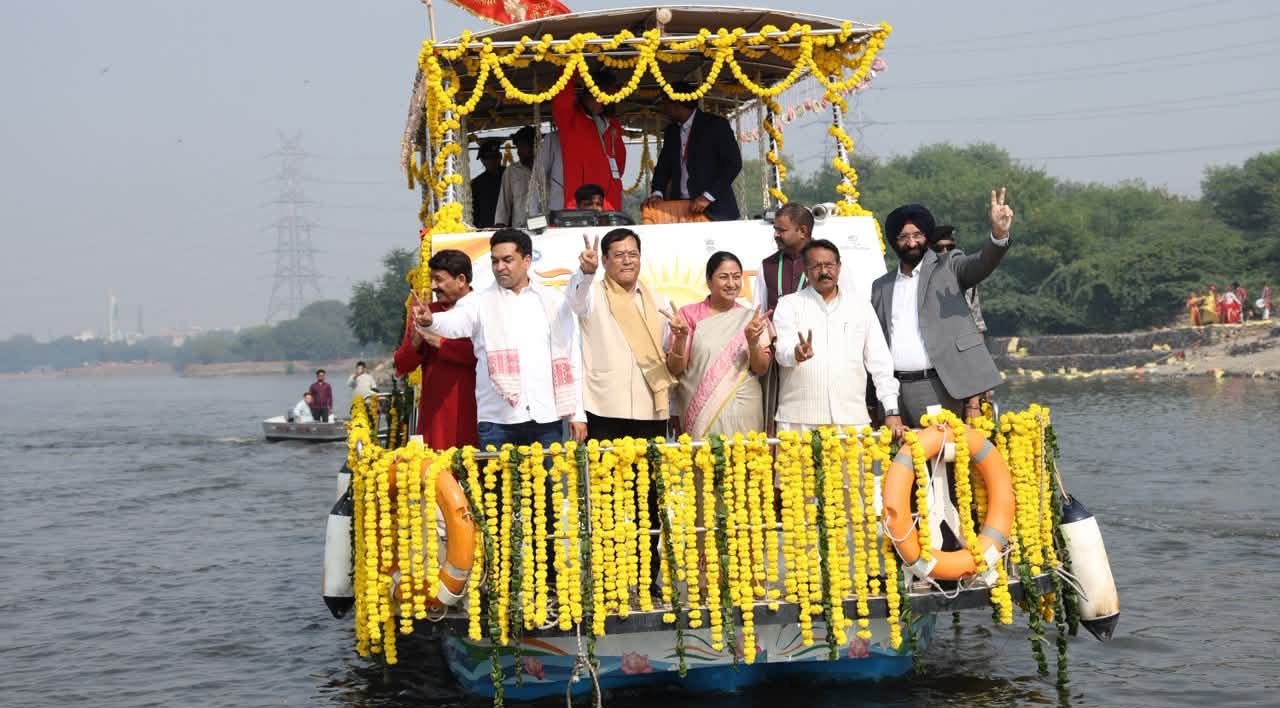
New Delhi, India, November 10, 2026 | Maritime News: Delhi has taken its first step towards developing recreational river tourism on the Yamuna with the inauguration of a cruise service along the Sonia Vihar–Jagatpur stretch.
Union Minister for Ports, Shipping and Waterways Sarbananda Sonowal inaugurated the service on November 10, 2026, in the presence of Delhi Chief Minister Rekha Gupta and senior representatives of the Central and Delhi governments.
The service features a 30-seater electric cruise vessel operating along an approximately 6-kilometre round-trip stretch of the river.
The project is intended to offer residents and visitors a new recreational experience while creating opportunities to develop the Yamuna riverfront as a tourism destination.
The inauguration represents an expansion of India’s river-based tourism initiatives beyond established river cruise destinations. It also places Delhi within the wider national discussion on the use of inland waterways for passenger experiences, tourism and economic activity.
However, the launch of a vessel is only the beginning of a tourism operation. Whether the Yamuna service becomes a sustainable and commercially viable attraction will depend on the quality of the destination, the condition of the river, operational arrangements and the experience offered to visitors.
What Has Delhi Actually Launched?
The project is not limited to introducing an electric vessel.
According to the Ministry of Ports, Shipping and Waterways, the wider recreational destination includes several visitor facilities designed to make the riverfront an attraction in its own right.
The announced components include:
- A 30-seater electric recreational cruise vessel.
- An approximately 6-kilometre round-trip cruise experience.
- Floating jetties.
- Dedicated ticket counters and online booking facilities.
- A musical fountain with a coordinated light and sound show.
- A presentation of the Yamuna’s mythology and cultural significance.
- A food court and shopping area.
- A children’s play zone.
- Adventure activities, including skating and rock climbing.
- Restrooms and waiting areas.
- Illuminated approach pathways.
The musical fountain and light and sound presentation are intended to highlight the Yamuna’s religious and cultural associations, including Surya Dev, Yama, Lord Krishna and the legendary Kaliya Daman episode.
This approach positions the project as a combination of recreational boating, cultural interpretation and riverfront entertainment.
The model is different from a conventional overnight river cruise. It is closer to a short-duration sightseeing and leisure experience supported by shore-based attractions.
That distinction matters when assessing the project’s economic potential, passenger capacity and infrastructure requirements.
Electric Vessel: A Positive Step, but Sustainability Needs Wider Assessment
The use of an electric-powered vessel is one of the project’s notable features.
Electric propulsion can reduce vessel-level exhaust emissions during operation compared with conventional combustion-engine propulsion. It can also reduce local noise and air pollution, depending on vessel design, operating conditions and the source of electricity.
For a short recreational route in an urban environment, this is a relevant consideration.
However, an electric vessel alone does not make an entire tourism destination environmentally sustainable.
A broader assessment would need to consider:
- The source of electricity used for charging.
- Battery technology, maintenance and end-of-life disposal.
- Passenger safety and emergency response arrangements.
- Waste management at the boarding and visitor facilities.
- The impact of floating jetties and riverfront infrastructure.
- The condition of the river and the ecological sensitivity of the operating stretch.
- The management of visitor activity and associated commercial facilities.
The PIB announcement identifies the electric vessel as a cleaner mobility initiative but does not provide a lifecycle emissions assessment or detailed environmental performance data.
Maritime News therefore considers electric propulsion a positive operational feature, not sufficient evidence by itself to classify the entire project as environmentally sustainable.
The Yamuna Question: Tourism and River Conservation Must Move Together
The most important issue surrounding the Yamuna cruise is the relationship between tourism development and river conservation.
The Yamuna is not simply an urban recreational corridor. It is a major river system with ecological, hydrological, cultural and public-health significance.
Any tourism initiative on the river must therefore be considered alongside the wider condition of the waterway.
The government announcement describes the recreational and infrastructure components of the project. However, it does not provide specific information about:
- Water-quality measurements for the operating stretch.
- The frequency of water-quality monitoring.
- The ecological assessment undertaken for the project.
- Wastewater and solid-waste management arrangements.
- Environmental permissions or applicable operational clearances.
- Emergency response procedures for pollution incidents.
- The mechanism for monitoring impacts from increased visitor activity.
The absence of these details in the press release does not establish that the project lacks the required safeguards. It means that the public announcement does not provide enough information to independently assess them.
This distinction is important.
A river tourism project should not be judged only by its passenger facilities, attractions or inauguration. Its environmental performance must also be transparent and measurable.
Delhi’s tourism authorities and the agencies responsible for river management should make the relevant environmental and operational information accessible to the public.
The objective should be to demonstrate that tourism activity is compatible with river restoration and ecological protection, rather than allowing recreational development to become disconnected from the river’s environmental condition.
National Waterway-110: Tourism Beyond Cargo Movement
The Yamuna has been designated National Waterway-110 under the National Waterways Act, 2016.
The designation provides an institutional context for the development of the river as an inland waterway. The newly inaugurated recreational service introduces another potential use of the waterway: passenger-oriented tourism.
This is significant because the development of national waterways is often discussed primarily in terms of freight movement, cargo terminals and logistics connectivity.
But inland waterways can support several different activities, including:
- Passenger transportation.
- Recreational boating.
- Short-distance sightseeing cruises.
- River tourism circuits.
- Cultural and heritage experiences.
- Local economic activities linked to waterfront destinations.
These activities do not necessarily require the same vessel types, infrastructure or operating arrangements.
A cargo terminal and a recreational boarding facility serve different users. Similarly, a passenger sightseeing vessel has different operational requirements from an overnight river cruise vessel.
The development of National Waterway-110 should therefore be considered through a broader planning framework that recognises navigation, tourism, environmental management and local public access.
From Ganga Vilas to Yamuna: India’s River Tourism Expansion
The Yamuna initiative comes as India continues to promote river cruising and inland waterway tourism.
One of the most prominent examples is the voyage of MV Ganga Vilas, which travelled more than 3,200 kilometres through India and Bangladesh, connecting multiple tourist destinations and river systems.
The journey demonstrated the potential of longer-duration river tourism, combining cultural destinations, heritage sites and inland navigation.
The PIB announcement also highlights the expansion of India’s river cruise fleet, from five overnight river cruise vessels in 2013–14 to 26 in 2025–26.
It further reports that cargo movement on national waterways increased from 18 million metric tonnes in 2013–14 to 218 million metric tonnes in 2025–26.
These figures indicate the government’s wider ambition to expand inland waterway utilisation.
However, cargo growth and passenger tourism development are different performance indicators. The expansion of freight movement does not automatically establish the commercial viability of recreational passenger services.
The government will need to report tourism-specific indicators such as passenger numbers, operating frequency, route utilisation, passenger satisfaction and revenue performance.
Maritime News has previously examined the broader policy questions surrounding the Cruise Bharat Mission and India’s cruise and yacht tourism ambitions.
The earlier analysis highlighted the need to distinguish between passenger targets, infrastructure announcements and actual operational performance. The Yamuna initiative provides another opportunity to examine how these ambitions translate into functioning services.
Cruise Tourism Is Bigger Than Large Passenger Ships
The Yamuna launch also raises a wider question about how India defines and develops cruise tourism.
Public discussions about cruise tourism frequently concentrate on large ocean-going cruise ships, international cruise terminals and passenger turnaround facilities.
But the wider marine tourism ecosystem includes several distinct segments:
River cruise vessels: Passenger vessels operating on inland rivers, including short sightseeing services and longer multi-day journeys.
Day-cruise and recreational vessels: Smaller boats and passenger vessels offering sightseeing, leisure trips, sunset experiences and short-duration excursions.
Charter yachts and private leisure vessels: Vessels operated for private groups, tourism experiences and specialised leisure activities.
Large ocean-going cruise ships: Passenger ships operating domestic and international cruise itineraries through major ports and dedicated cruise terminals.
These segments have different requirements in terms of vessel certification, passenger capacity, navigation permissions, safety arrangements, berthing, insurance and destination infrastructure.
A 30-seater electric river cruise in Delhi should not be treated as equivalent to an international cruise liner. But it belongs within the broader passenger and recreational boating economy.
India’s cruise tourism planning should recognise these differences and develop suitable infrastructure for each segment.
This includes smaller jetties, floating boarding facilities, marinas, safe berthing, passenger amenities, trained operators and destination-level management.
The development of yacht tourism and charter operations also deserves consideration within this wider framework. Platforms such as Cruise Yacht Tourism illustrate the role of private and charter yacht experiences in the expanding marine tourism ecosystem. Such services are different from government-operated river cruises, but they share an interest in safe navigation, suitable infrastructure and well-managed visitor destinations.
Who Is Responsible for the Yamuna Cruise Project?
The PIB release identifies the Inland Waterways Authority of India (IWAI) as the developer of the recreational cruise service, under the Ministry of Ports, Shipping and Waterways.
The project has been developed in collaboration with:
- Delhi Development Authority.
- Delhi Tourism and Transportation Development Corporation.
- Delhi Jal Board.
- Irrigation and Flood Control Department, Government of Delhi.
This multi-agency arrangement is important because river tourism involves more than vessel operations.
IWAI has a role in inland waterway development and navigation-related matters. Delhi’s tourism and development agencies are relevant to visitor infrastructure and destination management. The Delhi Jal Board and the Irrigation and Flood Control Department have responsibilities relevant to the river and its management.
The arrangement therefore requires coordination between agencies with different mandates.
The public should be able to identify which agency is responsible for vessel operations, ticketing, passenger safety, riverfront maintenance, environmental monitoring and emergency response.
The PIB announcement identifies the participating institutions but does not provide a detailed division of operational responsibilities.
That information would help establish accountability after the inauguration.
The Reality Check: What We Still Need to Know
The launch is a positive development for Delhi’s recreational tourism offering. But several questions remain unanswered by the published announcement.
Passenger capacity and demand
A 30-seater vessel provides a defined passenger capacity, but the government has not disclosed expected daily or annual passenger numbers, operating frequency or demand projections.
How many trips will operate each day? What is the expected occupancy rate? Will the service operate throughout the year or be affected by seasonal river conditions?
Ticket pricing and commercial viability
The PIB release mentions ticket counters and online booking facilities but does not provide ticket prices, booking arrangements, operating hours or the commercial model.
Will the service be managed directly by a government agency or through an operating partner? What are the projected operating costs and maintenance responsibilities?
River conditions and environmental safeguards
What water-quality monitoring is being undertaken along the route? What environmental safeguards apply to the boarding facilities, visitor attractions and vessel operations?
The government should publish relevant monitoring and assessment information.
Navigation and passenger safety
What safety arrangements apply to the vessel and its passengers? What emergency response systems, life-saving equipment, weather restrictions and operating procedures are in place?
Visitor access and destination management
How will visitors reach the boarding location? What parking, public transport, accessibility, sanitation and crowd-management arrangements are available?
Performance monitoring
Will IWAI and the Delhi government publish passenger numbers, service frequency, operational disruptions, visitor feedback and environmental performance?
These are reasonable questions for a newly launched public-facing tourism service. The answers will help determine whether the initiative becomes a sustained destination or remains a limited recreational attraction.
What Success Should Look Like
The success of the Yamuna cruise should not be measured only by the number of passengers carried or the popularity of its light and sound show.
A meaningful evaluation should consider several indicators.
| Performance area | What should be reported |
|---|---|
| Passenger activity | Monthly passengers, occupancy and repeat visitors |
| Service reliability | Trips scheduled, completed and cancelled |
| Commercial performance | Ticket revenue and operating costs |
| Safety | Incidents, emergency preparedness and compliance |
| Environment | Water-quality monitoring and waste management |
| Local economy | Local employment and participation of businesses |
| Visitor experience | Accessibility, amenities and passenger feedback |
Publishing these indicators would provide a transparent picture of the service’s performance.
It would also help the government determine whether similar recreational waterway projects can be developed elsewhere.
Conclusion: The Yamuna Needs More Than a Cruise Vessel
Delhi’s first recreational Yamuna cruise service introduces a new dimension to the capital’s tourism landscape.
The 30-seater electric vessel, visitor attractions and riverfront facilities provide the foundation for a new recreational experience along the Sonia Vihar–Jagatpur stretch.
The initiative also reflects India’s wider ambition to use inland waterways for passenger experiences, tourism and economic activity.
But the long-term success of river tourism depends on more than launching vessels and constructing visitor facilities.
It requires safe navigation, reliable operations, environmental safeguards, transparent performance reporting and coordination among the agencies responsible for the river.
For the Yamuna, the most important test will be whether tourism development can reinforce public engagement with the river while supporting its conservation.
A successful river cruise should not simply take passengers along a river. It should give them a reason to value, protect and reconnect with it.
Frequently Asked Questions
What is the Yamuna Recreational Cruise Service?
It is Delhi’s newly inaugurated recreational river cruise service operating along the Sonia Vihar–Jagatpur stretch of the Yamuna.
Who inaugurated the Yamuna cruise service?
Union Minister for Ports, Shipping and Waterways Sarbananda Sonowal inaugurated the service on November 10, 2026, in the presence of Delhi Chief Minister Rekha Gupta.
What type of vessel is being used?
The service uses a 30-seater electric-powered recreational cruise vessel.
What is the route length?
The announced experience covers approximately 6 kilometres as a round trip along the Sonia Vihar–Jagatpur stretch.
What attractions are included in the Yamuna tourism project?
The destination includes a musical fountain, light and sound show, food court, shopping area, children’s play zone, adventure sports facilities, floating jetties, ticket counters and visitor amenities.
What is National Waterway-110?
The Yamuna has been designated National Waterway-110 under the National Waterways Act, 2016.
Which agencies developed the project?
The Inland Waterways Authority of India developed the initiative under the Ministry of Ports, Shipping and Waterways, in collaboration with the Delhi Development Authority, Delhi Tourism and Transportation Development Corporation, Delhi Jal Board and the Irrigation and Flood Control Department of the Delhi government.
Does the electric vessel make the project environmentally sustainable?
Electric propulsion can reduce vessel-level exhaust emissions during operation, but the sustainability of the wider project also depends on electricity sourcing, battery management, water quality, waste management, infrastructure impacts and river conservation.
Is the Yamuna cruise comparable to an ocean cruise ship?
No. It is a short-duration recreational river cruise using a small passenger vessel. Ocean-going cruise ships operate on a different scale and require different port infrastructure and operating arrangements.
Sources and References
Primary Government Source
Press Information Bureau, Government of India – 10 November 2026
Delhi’s River Tourism Begins with the Launch of Yamuna Recreational Cruise Service.
Official source for the inauguration, participating dignitaries, vessel capacity, route, project facilities, implementing agencies, National Waterway-110 designation and inland waterway statistics.
https://www.pib.gov.in/PressReleaseDetail.aspx?PRID=2334740®=48&lang=1
Previous Maritime News Reporting
Maritime News – Cruise Bharat Mission: India Targets 1 Million Passengers by 2029, But Is India Ready for the Wider Cruise Tourism Economy?
Background on cruise tourism policy, passenger targets, river tourism and the need to distinguish infrastructure announcements from operational delivery.
https://maritimenews.in/cruise-bharat-mission-cruise-yacht-tourism/
Maritime News – Mumbai Port Showcases Cruise Infrastructure, Marina Plans to Seychelles Parliamentary Delegation
Context on the development of cruise terminals, marina infrastructure, yacht tourism and passenger-oriented maritime facilities.
Maritime News – Digital Portal to Boost Private Investment in National Waterways
Earlier reporting on private investment in inland waterways, digital permissions and the proposed Goa jetty project at Malim on National Waterway-68, intended to accommodate private yachts and leisure craft.
https://maritimenews.in/digital-portal-to-boost-private-investment-in-national-waterways/
Maritime News – New Era’s Old Ambition of Indian Cruise Tourism: Costa Serena Sets Sail Again
Historical context on India’s development of cruise tourism and the distinction between launching a service and sustaining an operating market.
https://maritimenews.in/new-eras-old-ambition-of-indian-cruise-tourism-costa-serena-sets-sail-again/