
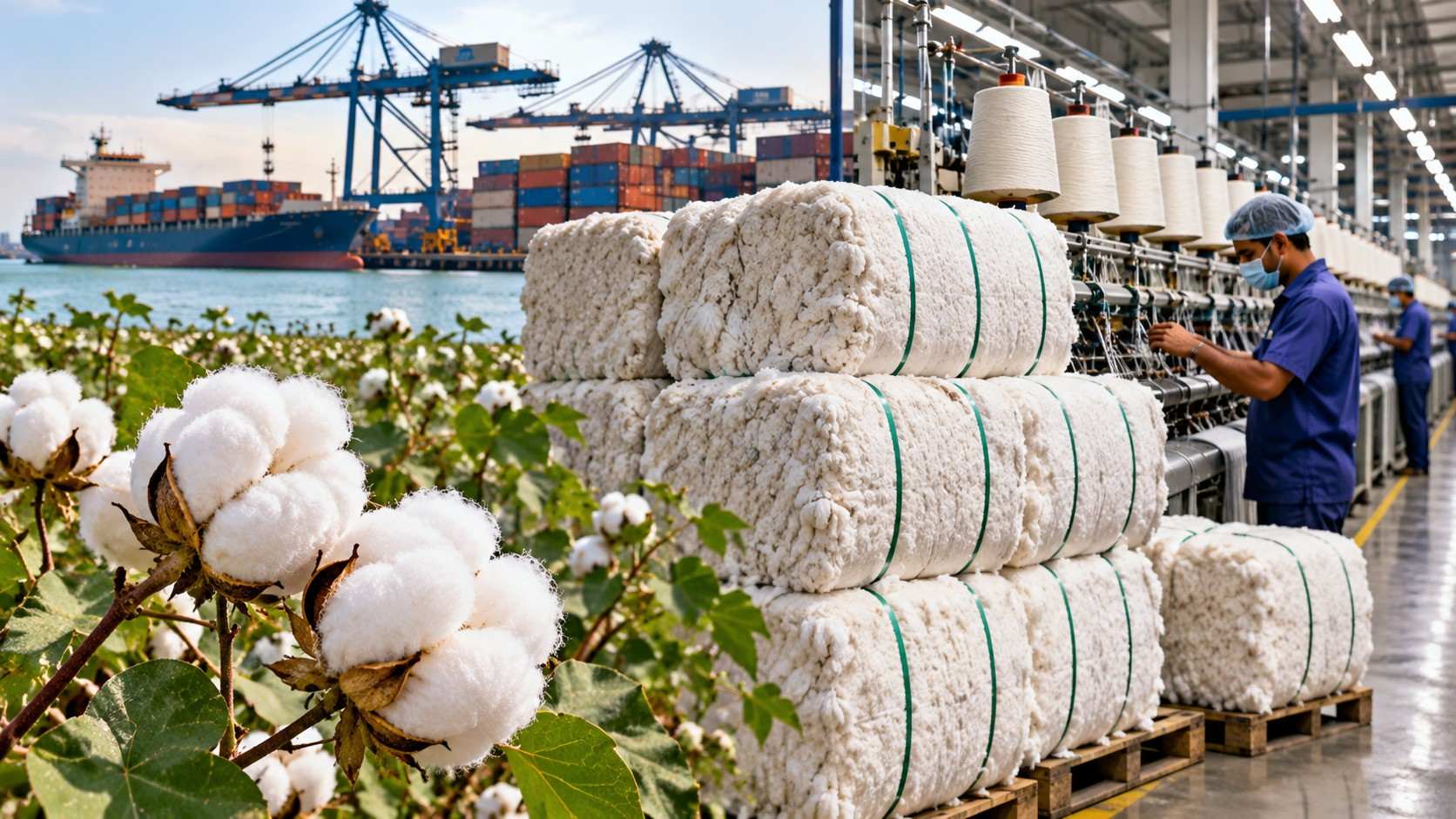
The two-month extension aims to improve cotton availability, ease raw-material cost pressures for textile manufacturers and support MSMEs, while keeping the interests of domestic cotton farmers in focus.
Key Takeaways
- The Government of India has extended the existing customs duty exemption on cotton imports until 31 December 2026.
- The extension was notified by the Department of Revenue, Ministry of Finance, through Notification No. 35/2026-Customs dated 30 October 2026.
- The exemption, which was due to expire on 31 October 2026, has been extended by two months.
- The government expects the measure to improve raw-material availability, provide manufacturers with greater operational flexibility and support textile and apparel exports.
- The impact on domestic cotton prices, farmers’ returns and manufacturers’ costs will need to be assessed against market data.
New Delhi, India, November 1, 2026 (Maritime News): The Government of India has extended the customs duty exemption on cotton imports until 31 December 2026, providing the domestic textile and apparel industry with an additional two months of relief on imported raw materials.
Announced by the Ministry of Textiles through a Press Information Bureau release on 31 October, the extension was notified by the Department of Revenue, Ministry of Finance, under Notification No. 35/2026-Customs dated 30 October 2026. The existing exemption had been scheduled to expire on 31 October.
The decision is intended to improve cotton availability for domestic manufacturers, ease input-cost pressures and support value addition across the cotton, textile and apparel value chain. The government has also emphasised the need to balance the requirements of the textile industry with the interests of domestic cotton farmers.
The official announcement is available in the Press Information Bureau release.
What Has the Government Changed?
The latest decision extends an existing exemption rather than announcing a new, permanent customs policy.
| Policy detail | Position |
|---|---|
| Commodity | Imported cotton |
| Previous exemption deadline | 31 October 2026 |
| Revised deadline | 31 December 2026 |
| Extension period | Two months |
| Notification | No. 35/2026-Customs |
| Notification date | 30 October 2026 |
| Responsible department | Department of Revenue, Ministry of Finance |
| Stated objective | Improve cotton availability and support the domestic textile industry |
The government had previously announced a temporary exemption on cotton imports from 1 June to 31 October 2026. The Ministry of Finance’s earlier announcement described the measure as an exemption from customs duties intended to augment domestic cotton availability and ease costs for textile and apparel manufacturers.
The earlier policy is detailed in the Ministry of Finance’s PIB announcement.
The October extension maintains the exemption for a further two months. The latest PIB release does not provide a quantified estimate of the additional revenue forgone, the volume of cotton expected to be imported during the extension, or the precise reduction in production costs anticipated for manufacturers.
Why the Extension Matters to India’s Textile Industry
Cotton is a critical raw material for spinning mills, yarn manufacturers, fabric producers, garment manufacturers and other businesses across the textile supply chain. Changes in cotton availability and prices can affect procurement decisions, production planning and the cost of finished products.
The government has identified several objectives for the extension.
1. Improving raw-material availability
The exemption is intended to augment the supply of cotton available to domestic manufacturers. Imports can provide an additional sourcing option when domestic availability, quality specifications or delivery schedules do not fully match a manufacturer’s requirements.
The measure may be particularly relevant to businesses requiring specialised cotton varieties. However, the actual benefit will depend on import prices, exchange rates, freight, insurance, delivery times and the quality of cotton available from overseas suppliers.
2. Easing input-cost pressures
Customs duty is one component of the landed cost of imported cotton. Removing the applicable customs duties can reduce the tax component of eligible imports, although the total saving depends on the applicable tariff treatment and the importer’s procurement costs.
The exemption does not guarantee that domestic cotton prices or finished textile prices will decline. International prices, currency movements, shipping costs, domestic supply conditions and demand can influence the final cost of cotton.
3. Supporting MSMEs
Small and medium-sized textile businesses can be particularly sensitive to changes in raw-material costs and working-capital requirements.
By maintaining the exemption until the end of December, the government aims to give manufacturers additional flexibility in sourcing cotton and planning production. Whether this translates into lower costs or improved margins will depend on how much of the potential saving is passed through the supply chain.
4. Strengthening textile and apparel competitiveness
Indian textile and apparel producers compete in both domestic and international markets. Access to competitively priced raw materials can help manufacturers manage production costs and respond to buyer requirements.
The Ministry of Textiles expects the extension to support competitiveness and greater value addition across the sector. These are policy objectives, rather than confirmed outcomes; their achievement will depend on actual procurement costs, production performance and market demand.
The Balancing Act: Textile Manufacturers and Cotton Farmers
The policy presents a familiar challenge for India’s cotton economy: manufacturers seek reliable supplies at competitive prices, while farmers need remunerative returns for their produce.
For textile manufacturers, access to imported cotton without the previously applicable customs duty can improve sourcing flexibility. For domestic cotton growers, however, the effect of additional import availability depends on prevailing supply and demand, the quality and price of imported cotton, domestic arrivals and the effectiveness of existing farmer-support mechanisms.
The government has explicitly stated that it intends to balance the requirements of the textile industry with the interests of domestic cotton farmers.
That stated objective should not be confused with evidence that the extension will have no adverse effect on farm-gate prices. Nor does the extension alone establish that farmers will experience a price decline. Both outcomes require assessment against actual market conditions.
A previous government statement on cotton imports and prices acknowledged that domestic prices are influenced by international market trends, domestic demand and supply, exchange rates and quality considerations. It also discussed the role of the Minimum Support Price (MSP) mechanism in supporting farmers.
That background is available in the PIB’s December 2025 statement on cotton import duty and prices.
The key question is whether the extended exemption can improve the competitiveness of the textile sector while preserving a viable market for domestically grown cotton. That balance must be evaluated using price, import and procurement data rather than policy statements alone.
Implications for the Cotton-to-Export Supply Chain
The decision affects more than the immediate transaction between an importer and a customs authority. Cotton procurement feeds into spinning, yarn production, fabric manufacturing, garment production and, ultimately, domestic sales and export orders.
The main potential implications are:
- Importers and spinning mills: Additional flexibility in sourcing cotton, subject to international prices, quality and logistics costs.
- Yarn and fabric manufacturers: Potential relief from raw-material cost pressures if the exemption results in lower effective procurement costs.
- Garment and apparel manufacturers: Possible indirect benefits if savings move through the yarn and fabric supply chain.
- MSMEs: More options for managing raw-material procurement and production schedules.
- Cotton farmers: A need to monitor domestic prices, arrivals, import volumes and procurement support as imported supply remains available.
- Exporters: Potentially improved cost competitiveness, depending on how the exemption affects actual production costs and international demand.
The Maritime and Logistics Connection
Cotton imports depend on international sourcing and transport. Imported cargo must move through overseas supply chains, maritime transport and Indian port and inland logistics networks before reaching processing facilities.
For importers, the final landed cost includes more than customs duty. Ocean freight, insurance, port handling, customs clearance, inland transport, storage and delivery schedules can all affect procurement economics.
The exemption may reduce the customs-duty component of eligible imports, but it does not remove these other costs. The net benefit to a textile mill will therefore depend on the origin of the cotton, the terms of the shipment, the route used and the location of the processing facility.
For maritime stakeholders, the extension is relevant as a trade-policy development affecting the import economics of a major industrial raw material. However, the PIB announcement does not quantify expected additional cotton cargo volumes, identify supplier countries or forecast changes in port throughput.
Any claim that the extension will generate a specific increase in shipping activity would require supporting import and logistics data.
Reality Check: What the Extension Does—and Does Not—Establish
The two-month extension provides policy continuity beyond the previous deadline, but its wider effects remain to be measured.
What is confirmed:
- The existing cotton import customs-duty exemption has been extended until 31 December 2026.
- The extension was notified on 30 October 2026.
- The government intends to improve cotton availability, support manufacturers and MSMEs, and promote value addition.
- The government has stated that it remains conscious of the interests of domestic cotton farmers.
What is not established by the latest announcement:
- The volume or value of additional cotton imports expected during November and December.
- The amount of savings that textile manufacturers will achieve.
- Whether domestic cotton prices will rise, fall or remain stable.
- Whether the benefit will be passed on to yarn, fabric, garment and apparel buyers.
- Whether the exemption will be extended beyond 31 December 2026.
- The effect on cotton-import cargo volumes, port activity or freight rates.
The two-month duration is significant. Businesses planning procurement beyond December need to distinguish the confirmed exemption period from any future policy decision. No extension beyond 31 December 2026 should be assumed unless the government issues a further notification.
What Maritime News Will Monitor
The effectiveness of the extension can be assessed through developments in the coming weeks and months, including:
- Cotton import volumes: Monthly import data showing whether overseas sourcing increases during the extended period.
- Domestic cotton prices: Changes in domestic market prices compared with international benchmarks and imported cotton’s landed cost.
- Manufacturer procurement costs: Evidence of changes in the costs faced by spinning mills and other textile businesses.
- Farmer returns: Domestic cotton arrivals, farm-gate prices and MSP procurement activity.
- Textile production and exports: Whether improved raw-material availability translates into production stability, competitiveness or stronger export performance.
- Policy continuity: Whether the government announces any further change before the exemption expires on 31 December 2026.
These indicators will provide a stronger basis for assessing the policy than the announcement alone.
Frequently Asked Questions
1. Until when has the cotton import duty exemption been extended?
The exemption has been extended until 31 December 2026. It was previously scheduled to expire on 31 October 2026.
2. Which notification covers the extension?
The extension was notified by the Department of Revenue, Ministry of Finance, through Notification No. 35/2026-Customs dated 30 October 2026.
3. Why has the government extended the exemption?
According to the Ministry of Textiles, the extension aims to improve cotton availability, ensure access to competitively priced raw materials, address specialised cotton requirements, ease input-cost pressures and support value addition across the textile and apparel industry.
4. Will the extension reduce textile manufacturing costs?
It may reduce the customs-duty component of the landed cost of eligible imported cotton. The actual saving will depend on international prices, exchange rates, freight, insurance, other logistics expenses and procurement arrangements. The government has not quantified the savings in its announcement.
5. How could the decision affect domestic cotton farmers?
The impact will depend on domestic supply and demand, imported cotton prices, import volumes and the quality of cotton available. The government has stated that it intends to balance the requirements of textile manufacturers with farmers’ interests. The actual effect on farm-gate prices must be assessed using market data.
6. Will MSMEs benefit from the extension?
The government expects MSMEs to benefit from improved raw-material availability, greater sourcing flexibility and relief from input-cost pressures. The extent of any benefit will depend on actual procurement costs and market conditions.
7. Does the exemption continue after 31 December 2026?
The latest announcement confirms the exemption only until 31 December 2026. Any continuation beyond that date would require a further government decision or notification.
Short-Term Relief, Long-Term Questions Remain
The extension of the cotton import customs-duty exemption until 31 December 2026 gives India’s textile and apparel industry two additional months to source imported cotton under the existing exemption framework.
The measure may help manufacturers manage raw-material procurement, support MSMEs and strengthen cost competitiveness. Its wider impact, however, will depend on actual import volumes, landed costs, domestic cotton prices and the extent to which savings are passed through the supply chain.
For cotton farmers, the critical issue is how import availability interacts with domestic prices and procurement support. For manufacturers, the priority is whether the extension delivers dependable supplies at competitive costs. For the government, the challenge is to sustain textile-sector competitiveness while supporting a viable domestic cotton economy.
Maritime News will assess the policy through the evidence that follows: import data, cotton prices, manufacturing costs and developments before the 31 December 2026 deadline.
Sources and References
- Primary source — Ministry of Textiles, Government of India: Government of India extends Customs Duty Exemption on Cotton Imports up to 31 December 2026. Published 31 October 2026.
- Background — Ministry of Finance, Government of India: Central Government temporarily exempts customs duties on cotton imports from 1 June to 31 October 2026. Published 30 May 2026.
- Price and farmer-support context — Government of India: PIB statement on cotton import duty, domestic prices and MSP support. Published 19 December 2025.