

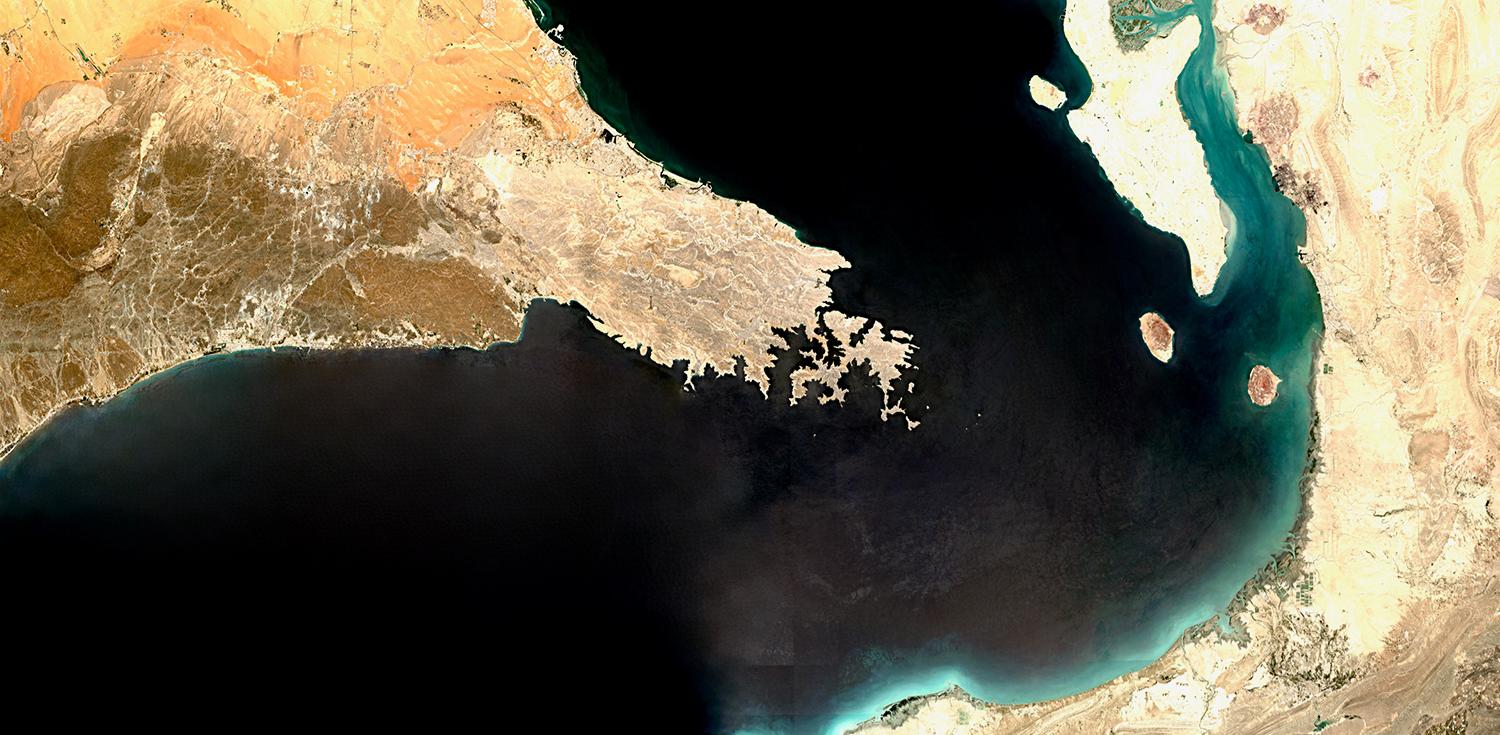
Oman and IMO establish temporary maritime corridors and phased vessel movements following US-Iran peace agreement
The International Maritime Organization (IMO) has announced the launch of a large-scale evacuation operation for more than 11,000 seafarers stranded in and around the Strait of Hormuz following months of conflict that disrupted one of the world’s most strategically important maritime corridors.
The operation follows a Memorandum of Understanding signed between the United States and Iran, which IMO Secretary-General Arsenio Dominguez described as a decisive step toward restoring maritime security and ending attacks on civilian shipping.
However, newly emerged navigation documents indicate that maritime authorities are not yet returning to normal operations. Instead, the Strait of Hormuz is being reopened through a carefully managed system of temporary maritime corridors, vessel grouping mechanisms and phased departures coordinated by the IMO and the Sultanate of Oman.
The development represents not only one of the largest seafarer evacuation operations in recent years but also one of the most significant maritime traffic management exercises undertaken in a major global shipping chokepoint.
Key Takeaways
- IMO will coordinate the evacuation of more than 11,000 stranded seafarers.
- The operation follows the US-Iran peace agreement.
- Fourteen seafarers reportedly lost their lives during the conflict.
- Oman and IMO have established temporary maritime corridors through the Strait of Hormuz.
- The existing Traffic Separation Scheme (TSS) is currently considered unsafe for unrestricted use.
- Vessel departures will occur through a phased and controlled process.
- IMO will provide daily reporting on vessel departures.
- The operation could help stabilize global shipping and energy trade flows.
From Maritime Crisis to Controlled Recovery
For months, shipping companies, crews and maritime authorities have faced growing uncertainty as attacks on civilian vessels disrupted navigation through the Strait of Hormuz.
The impact extended far beyond the Gulf region.
Thousands of seafarers remained trapped aboard vessels operating in the area while shipowners, charterers and governments assessed security risks and explored contingency measures.
Announcing the evacuation plan, IMO Secretary-General Arsenio Dominguez welcomed the peace agreement between the United States and Iran and stated that the organization had secured the necessary safety guarantees while verifying conditions for safe navigation.
The IMO also paid tribute to fourteen seafarers who reportedly lost their lives during the conflict.
Why This Matters
The Strait of Hormuz is one of the world’s most important maritime chokepoints.
A substantial share of global crude oil exports, LNG cargoes and international trade flows move through the waterway each year.
Any disruption affects:
- Energy security
- Shipping schedules
- Marine insurance
- Freight markets
- Global supply chains
The restoration of maritime movement therefore carries consequences far beyond the Gulf region.
Why the World Is Watching
The Strait of Hormuz remains one of the world’s most critical maritime chokepoints, connecting energy producers in the Gulf with consumers across Asia, Europe and beyond. Any disruption to vessel traffic through the waterway has the potential to affect crude oil supplies, LNG shipments, freight markets and global trade flows. The successful implementation of the evacuation and recovery operation will therefore be closely watched not only by shipping companies but also by governments, energy markets and investors worldwide.
Human Cost of the Crisis
Behind the operational challenges lies a significant human story.
For months, thousands of seafarers continued serving aboard vessels operating in an environment marked by heightened security risks, uncertainty and restricted movements. Delayed crew changes, prolonged deployments and concerns over vessel safety placed additional pressures on crews already responsible for maintaining the continuity of global trade.
The evacuation of more than 11,000 seafarers therefore represents not only a logistical operation but also a major welfare initiative aimed at bringing relief to maritime workers who remained at the centre of the crisis.
The Story Behind the Evacuation
While the IMO announcement focused on the evacuation itself, a navigation warning issued by the Oman National Hydrographic Office provides a deeper insight into how the operation will be conducted.
The warning reveals that Oman, working in coordination with the IMO, has established temporary maritime corridors through the Strait of Hormuz to facilitate vessel departures while maintaining navigational safety.
According to the document, the existing Traffic Separation Scheme (TSS) is not considered safe for unrestricted use under current conditions.
As a result, vessels departing the region will utilize temporary routes located north and south of the existing traffic separation system.
The document further states that elevated collision risks require a gradual and controlled evacuation of vessel traffic rather than an immediate return to normal operations.
MaritimeNews Insight
The most significant development may not be the evacuation itself.
Nor may it be the peace agreement.
The real significance lies in the fact that international maritime institutions have demonstrated an ability to restore controlled navigation through one of the world’s most strategically important shipping corridors before full normality has returned.
The operation shows that maritime security is no longer solely a naval responsibility. Increasingly, the continuity of global trade depends on the ability of civilian maritime institutions, coastal states and industry stakeholders to coordinate large-scale recovery operations in real time.
How the Operation Will Work
The navigation warning outlines a structured process for vessel departures.
Ships will be organized into designated groups and contacted individually regarding their departure schedules. The IMO has developed this phased approach in coordination with Omani authorities to reduce navigational risks and avoid congestion.
Vessels will proceed to a designated waiting area in international waters before receiving authorization to transit through the temporary corridors. Masters will receive individual sailing instructions, allocated transit dates and route guidance from relevant authorities coordinated by the IMO.
Shipowners and masters remain responsible for conducting independent voyage risk assessments, while AIS and LRIT reporting requirements remain active throughout the operation.
IMO will also provide daily reports on the number of vessels successfully departing the region.
What This Operation Teaches the Maritime Industry
The Strait of Hormuz recovery effort offers several lessons for governments, regulators and shipping companies.
Key Lessons
- Maritime crisis response requires international coordination.
- Seafarer welfare must remain central to contingency planning.
- Alternative navigation frameworks may be required during periods of disruption.
- Real-time information sharing can reduce operational uncertainty.
- Trade resilience increasingly depends on cooperation between governments and maritime institutions.
The operation may ultimately serve as a case study for future maritime emergency management frameworks.
Geography and Trade Corridor Intelligence
Primary Geography
Strait of Hormuz
Secondary Geography
Oman
Regional Geography
Arabian Gulf and Gulf of Oman
Global Geography
Global Energy Trade Network
Strategic Trade Corridors Affected
- Gulf–Asia Energy Corridor
- Gulf–Europe Energy Corridor
- India–Gulf Trade Corridor
- China–Gulf Trade Corridor
- Global LNG Shipping Routes
Why Hormuz Matters
The Strait of Hormuz remains one of the world’s most critical maritime chokepoints.
A disruption affecting vessel movement through the Strait has the potential to influence:
- Global oil prices
- LNG markets
- Freight rates
- Marine insurance premiums
- Supply chain resilience
The restoration of controlled navigation therefore carries strategic importance for governments, energy markets and shipping companies alike.
Economic and Capital Markets Impact
Although the evacuation itself is humanitarian in nature, the wider implications are economic.
The reopening of controlled vessel traffic may help reduce uncertainty across energy and shipping markets.
Sector Impact Assessment
| Sector | Likely Impact |
|---|---|
| Crude Oil Markets | Positive Stability Signal |
| LNG Markets | Positive Stability Signal |
| Tanker Operators | Positive |
| Marine Insurance | Potentially Positive |
| Global Shipping | Positive |
| Energy Importers | Positive |
Investor Watchlist
Stakeholders will closely monitor:
- Daily vessel departure numbers.
- Resumption of tanker movements.
- Marine insurance developments.
- Freight rate movements.
- Long-term maritime security conditions.
MaritimeNews Capital Markets Verdict
The significance of the operation lies less in immediate market reactions and more in reducing uncertainty surrounding one of the world’s most important maritime trade corridors.
MaritimeNews Stakeholder Impact Pyramid
Grassroots Stakeholders
Seafarers benefit directly through evacuation and improved safety conditions.
Operational Stakeholders
Ship operators, masters and vessel managers gain greater route certainty and navigational support.
Professional Stakeholders
Marine insurers, maritime lawyers and risk consultants will closely monitor the recovery process and its implications for future risk assessments.
Business Stakeholders
Energy traders, cargo owners and logistics providers benefit from improved confidence in maritime transport corridors.
Industry Leaders
Major shipping companies and tanker operators will assess whether conditions support a gradual return to normal operations.
Strategic Investors
Investors and market participants will monitor the impact on energy flows, freight rates and maritime security risk premiums.
Stakeholder Impact Matrix
| Stakeholder | Impact |
|---|---|
| Seafarers | Evacuation and improved safety |
| Shipowners | Gradual restoration of operations |
| Charterers | Reduced uncertainty |
| Coastal States | Increased coordination responsibilities |
| Marine Insurers | Ongoing risk assessment |
| Energy Markets | Improved confidence |
| Global Trade | Enhanced continuity |
Historical Context: How We Got Here
The Strait of Hormuz has long been one of the world’s most strategically sensitive waterways.
Previous periods of regional tension have repeatedly raised concerns regarding freedom of navigation, energy security and maritime safety.
The latest conflict resulted in attacks on civilian shipping, operational disruptions and growing risks for seafarers serving aboard commercial vessels.
The current evacuation and corridor management operation therefore represents not merely a recovery effort but the latest example of how maritime institutions respond to geopolitical crises affecting global trade.
Alternative Perspectives
While the peace agreement has been widely welcomed, several uncertainties remain.
Shipping companies may continue to exercise caution before fully restoring normal operations.
Marine insurers are likely to maintain close scrutiny of risk conditions.
Energy markets may seek evidence of sustained stability before fully adjusting risk premiums.
The continued use of temporary routes and phased vessel departures indicates that maritime authorities remain cautious despite the diplomatic breakthrough.
How Do We Know This?
Confirmed
- IMO has announced the evacuation of more than 11,000 seafarers.
- The United States and Iran have signed a Memorandum of Understanding.
- Temporary maritime corridors have been established.
- Vessel departures will occur through a phased process.
- IMO will coordinate the operation with Oman, Iran, regional coastal states and industry stakeholders.
What Remains Unknown
- The exact duration of the evacuation operation.
- The number of vessels involved.
- When the existing Traffic Separation Scheme will fully reopen.
- Whether additional maritime restrictions may be required.
MaritimeNews Analysis
The assessment that the operation represents one of the largest coordinated maritime recovery efforts in recent years is based on the scale of the evacuation, the establishment of temporary navigation corridors and the strategic importance of the Strait of Hormuz.
MaritimeNews Critique
The peace agreement represents a major diplomatic achievement.
However, the navigation warning suggests that maritime authorities do not yet consider the Strait fully restored to normal operating conditions.
Temporary corridors, designated waiting areas, vessel grouping systems and the possibility of traffic suspensions demonstrate that active risk management remains necessary.
The challenge now is not reopening navigation.
The challenge is rebuilding confidence.
What Happens Next?
Several indicators will determine the success of the recovery operation:
- Number of seafarers successfully evacuated.
- Daily vessel departures reported by the IMO.
- Restoration of normal shipping patterns.
- Reduction in marine insurance concerns.
- Resumption of unrestricted navigation through the existing TSS.
The pace at which these milestones are achieved will influence the wider recovery of maritime activity in the region.
2047 Outlook
The operation may influence future international maritime policy in several areas:
- Seafarer evacuation planning.
- Maritime crisis management.
- Emergency traffic separation systems.
- Chokepoint resilience strategies.
- International maritime coordination mechanisms.
As geopolitical risks continue to affect global trade routes, the Strait of Hormuz operation could become a case study for future maritime security responses.
MaritimeNews Verdict
The evacuation of more than 11,000 seafarers is far more than a humanitarian operation.
It is a test of the international maritime system’s ability to restore safe navigation, protect seafarers and maintain the continuity of global trade during periods of geopolitical instability.
The peace agreement may have opened the door to recovery.
The true measure of success will not be the signing of the peace agreement.
It will be whether thousands of seafarers, hundreds of vessels and one of the world’s most important maritime trade corridors can safely return to normal operations without a single further incident.
That outcome will determine not only the success of the evacuation but also the resilience of the global maritime system itself.
FAQ
How many seafarers are being evacuated?
Approximately 11,000 seafarers.
Why are seafarers stranded?
Months of maritime insecurity and attacks on civilian shipping disrupted normal vessel movements and crew change operations.
Who is coordinating the evacuation?
The International Maritime Organization (IMO), Oman, Iran, the United States, coastal states and the maritime industry.
Has shipping fully resumed?
No. Temporary maritime corridors and phased vessel movements are still being used.
Why is the Strait of Hormuz important?
It is one of the world’s most important maritime chokepoints, handling major volumes of oil, LNG and international trade.
What happens next?
Authorities will gradually restore vessel traffic while monitoring safety and security conditions.
Make us preferred source on Google
Source: International Maritime Organization (IMO), Oman National Hydrographic Office Navigation Warning, MaritimeNews Analysis.
Reporting by MaritimeNews Bureaus, Writing by Harpal S Naol; Editing by Jaspal Singh Naol.