

MARITIME NEWS DOSSIERS
THE COST OF SILENCE
PART IV
WHEN DOCUMENTS BEGIN SPEAKING
Documents do not replace professional judgement. They preserve its chronology.
“Paper preserves what conversation may later leave uncertain.”
Make us preferred source on Google
Editor’s Note
This Part marks the transition from attributed observation to documentary material. It examines internal communications, records and the reporting marine engineer’s written account reviewed by Maritime News. Unless otherwise stated, observations attributed to him are presented as his account and are not treated as independent findings beyond the material reviewed.
A document may establish that a communication occurred, identify what was reported and assist in reconstructing chronology. It does not necessarily establish that every statement within it was technically correct, that the issue had the severity attributed to it, or that no response or corrective action occurred outside the material available to Maritime News.
Each exhibit should therefore be considered through several separate questions: what record exists, what technical or welfare matter it describes, when and to whom it was communicated, what response followed, what corrective action is documented, and whether other evidence corroborates or qualifies the account.
From Observation to Documentation
Professional observations become more useful when they are recorded through recognized operational channels. Maintenance requests, defect reports, planned-maintenance entries, requisitions, work permits, risk assessments, inspection findings and technical correspondence allow information to move beyond an individual conversation and into a system that can be reviewed, assigned and followed.
For marine engineers, documentation is not simply an administrative task. It connects observation to engineering governance. A reliable record can support defect prioritization, temporary control measures, spare-parts planning, shore-side assistance, machinery lifecycle management, handover continuity, audit review and verification that corrective action has been completed effectively.
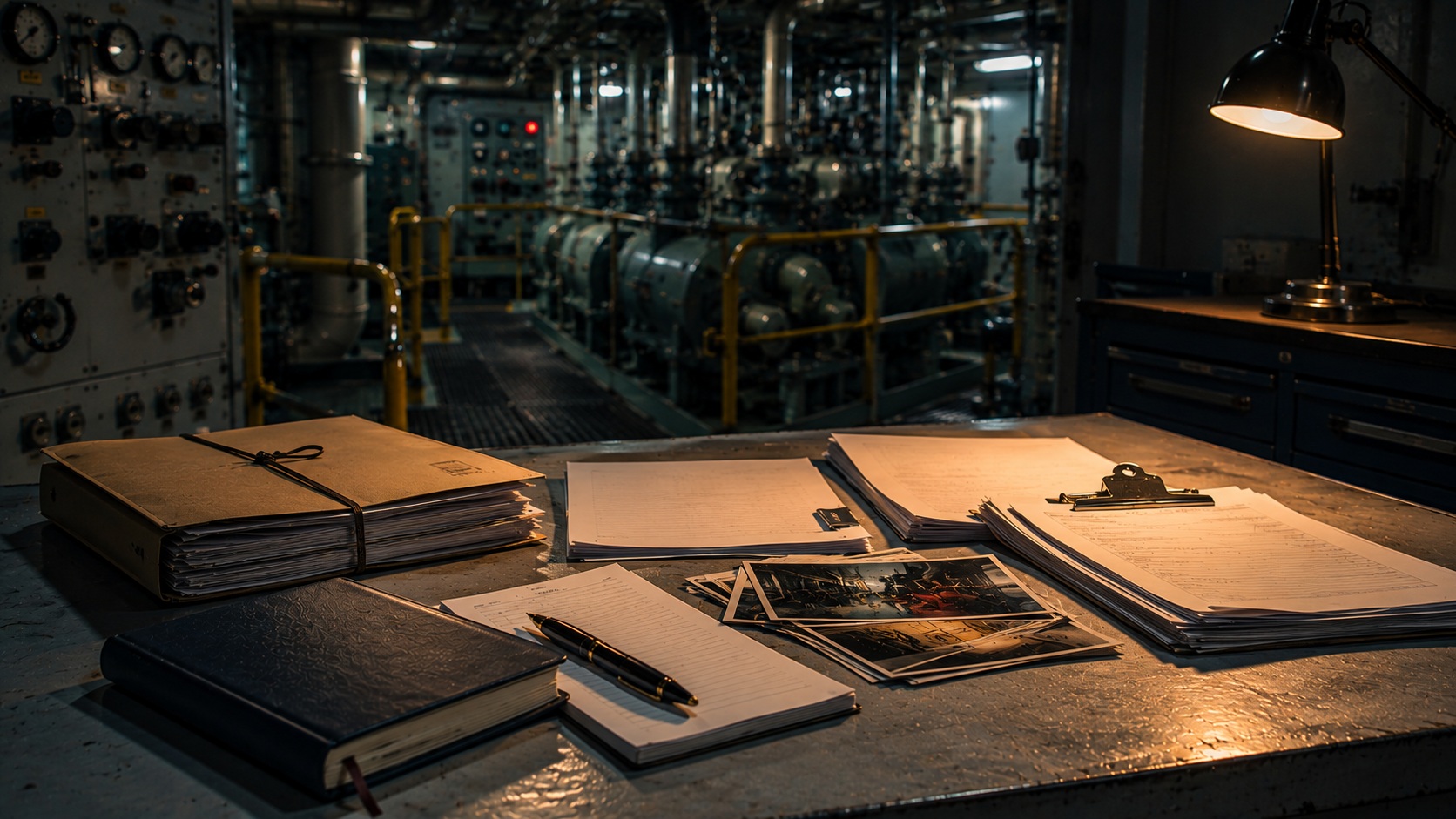
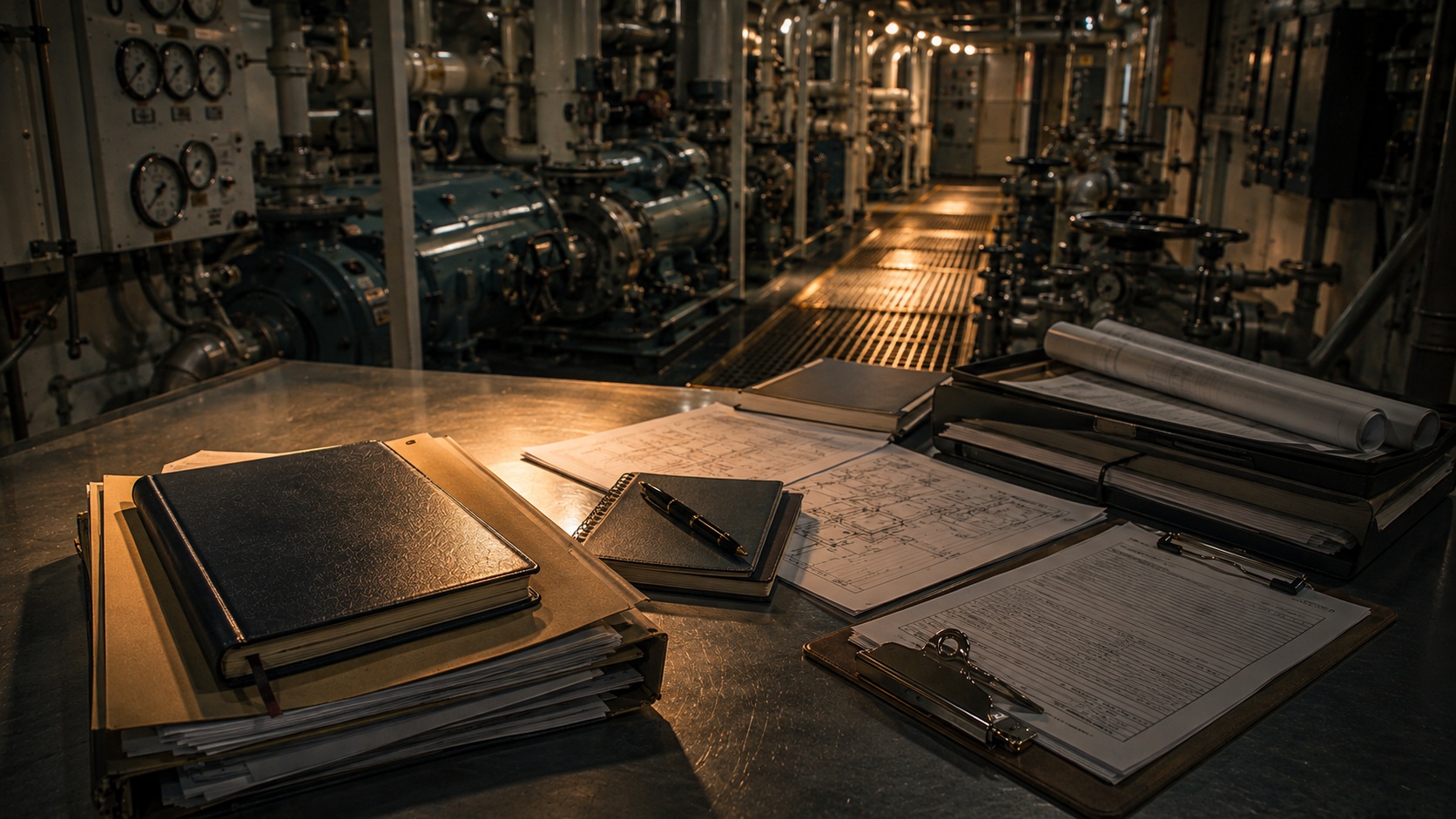
The reporting marine engineer states that, after spending time onboard and observing conditions he believed required attention, he began documenting concerns through internal communication channels. According to his account, his objective at that stage was not external disclosure. It was to place the matters within the vessel’s and company’s reporting structure for consideration and, where appropriate, resolution.
The Documentary Trail Begins
The material reviewed by Maritime News includes internal communications exchanged during July to September 2025. The records relate to technical observations, maintenance matters and aspects of crew welfare raised during the reporting marine engineer’s period of service.
Taken individually, each communication addresses a particular matter. Considered chronologically, the records show that concerns were being documented during the contract rather than reconstructed solely from memory after sign-off. Contemporaneous recording strengthens the timeline and preserves the reporter’s understanding at the time, but it does not by itself validate the technical accuracy, criticality or cause of every condition described.
The documents form the documentary backbone of this Dossier because they allow readers to examine when issues entered the reporting process. Their significance must nevertheless be assessed together with engineering context, available responses, maintenance records, corrective actions, photographs, measurements and any other corroborating or qualifying material.
Internal Technical Communication
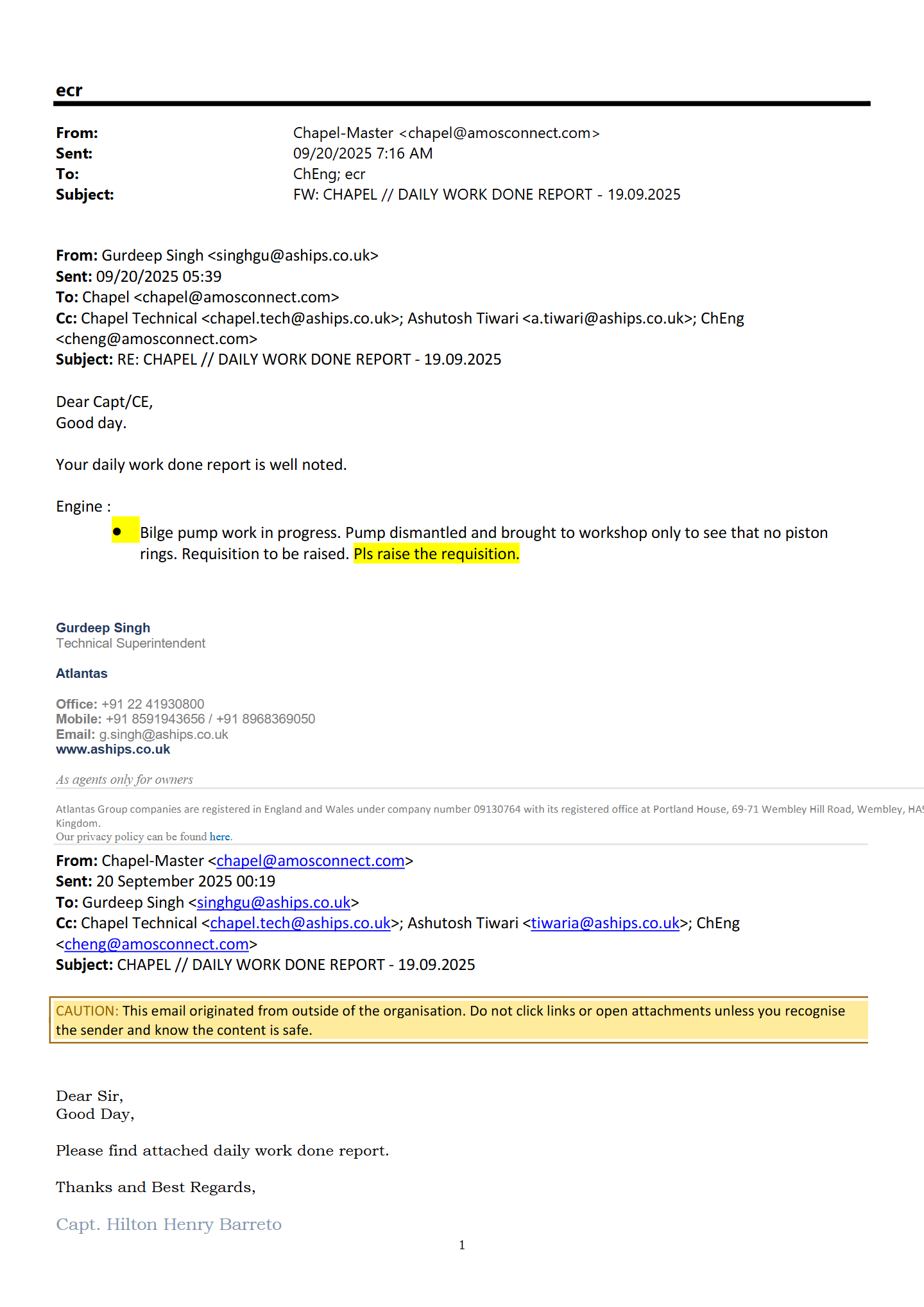
One of the earliest records reviewed by Maritime News concerns maintenance-related observations communicated through internal channels. The reporting marine engineer states that the purpose was to bring matters he considered technically significant to the attention of personnel within the responsible reporting structure.
The exhibit demonstrates that a technical communication was made and that the matter did not remain solely an informal engine-room conversation. Standing alone, however, it does not determine the condition’s cause, severity, duration or final disposition. Those questions require examination of the report’s wording, the machinery or system involved, inspection or test findings, operational safeguards, maintenance history and any response or closure record.
At this stage, Maritime News does not conclude whether the issue described in Exhibit D-01 was substantiated, controlled, repaired or otherwise resolved. The exhibit is presented to establish that a formal documentary process had commenced.
Crew Welfare Communication
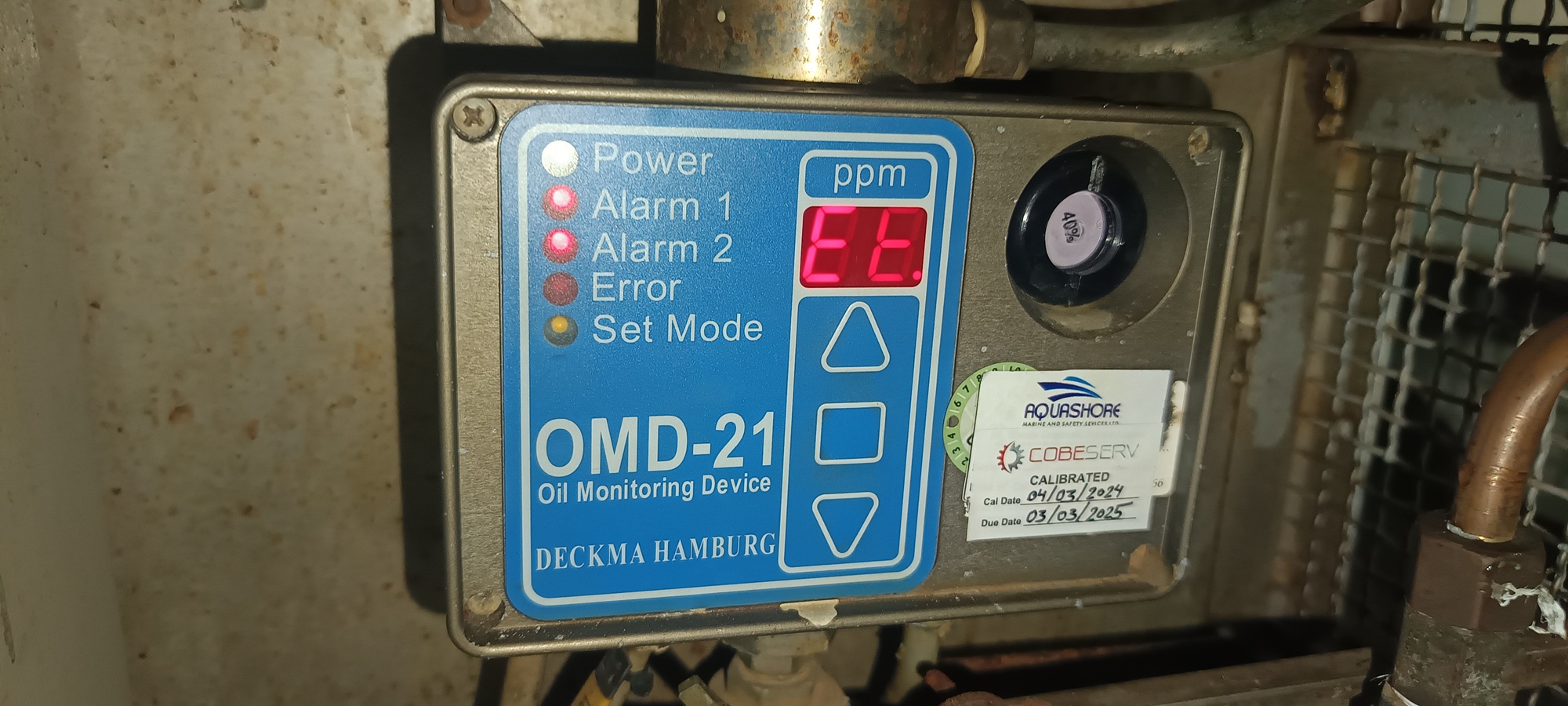
The reviewed material also includes communications relating to onboard living conditions and crew welfare. These records indicate that the reporting marine engineer considered certain accommodation-related matters sufficiently important to raise during his service.
The existence of a welfare communication is evidence that a concern entered the reporting process. It is not, by itself, an independent finding that a statutory, contractual or company standard was breached. Fair assessment requires consideration of the condition described, its duration, any immediate mitigation, the applicable onboard procedure, the response received and other available evidence.
Technical reliability and crew welfare are governed through different requirements, yet both influence the environment in which safe shipboard work is performed. Accommodation, sanitation, rest, medical support and morale can affect concentration and human performance, just as machinery condition and maintenance control affect operational reliability. Specific causal conclusions, however, must be supported by evidence rather than assumed.
Why Documentation Matters
Not every reported concern ultimately proves to require corrective action. Equally, a concern should not be dismissed merely because its significance is disputed. The professional value of documentation lies in creating a transparent record of what information was available, when it was communicated and how it entered the organizational system.
That record allows managers, engineers, auditors and investigators to reconstruct the decision-making process. A complete documentary trail may show acknowledgment, technical assessment, risk control, requisitioning, repair, testing and close-out. It may also reveal disagreement, delay, incomplete information or the need for further investigation.
Absence of a particular record does not automatically prove absence of action, just as the existence of a report does not prove the underlying conclusion. Reliable interpretation depends on the completeness of the available record and on whether different sources support, qualify or contradict one another.
Documentation therefore protects more than machinery. It supports continuity between watches and contracts, preserves professional accountability and enables later decisions to be examined against the information available at the time.
A Pattern Begins to Emerge
The reporting marine engineer states that his decision to retain copies of certain records developed gradually. He says this was not his approach at the beginning of the contract, but evolved as recurring experiences led him to believe that a personal chronology would assist him in recording events accurately.
Maritime News does not infer motive beyond that explanation and does not determine in this Part whether retention of any individual record was authorized under the applicable contract, company procedure or legal framework. Material selected for publication should be limited to what is necessary for the technical and public-interest narrative, with proportionate redaction of personal, confidential or operationally sensitive information.
The chronology reviewed for this Dossier indicates an increasing concentration of retained communications. Whether the matters described within those records constitute a recurring operational pattern must be assessed from the complete documentary and technical evidence, rather than from the number of records alone.
The Difference Between Reporting and Disclosure
There is an important distinction between raising concerns internally and later providing documentary material outside the organization. The records reviewed by Maritime News indicate that internal reporting preceded external disclosure.
According to the chronology available, the reporting marine engineer did not begin by approaching the media. He first documented matters through operational channels during his service and supplied material to Maritime News after completion of his contract.
That sequence is relevant because it explains how the documentary record developed. It does not, by itself, determine whether every internal avenue was exhausted, whether the responses were adequate, whether external disclosure was legally justified or whether the substance of each concern was correct. Those are separate questions requiring their own evidence and, where appropriate, responses from affected parties.
As the Dossier proceeds, documentary extracts should be presented with sufficient context to distinguish the reporter’s interpretation from the content of the original record and from any company, vessel or third-party response.
Reflection
Every document tells more than one story. It records the matter described by its author, but it also records a professional decision that the matter should enter an organizational process and be preserved for later action or review.
For engineers, documentation is not a substitute for inspection, testing or professional judgement. It is the means by which judgement, uncertainty, action and responsibility become traceable. A report may lead to maintenance, risk control, disagreement, clarification, no further action or formal investigation. Whatever the outcome, the record becomes part of the vessel’s operational history.
The Parts that follow will examine selected documents alongside photographs, written explanations, technical function, chronology and any available responses. Readers should consider those sources together, distinguish reporting from verification, and avoid treating any single exhibit as proof of the entire account.
The next Part moves from the documentary trail into the engine room, where the reported observations will be considered against the machinery, systems and operational context to which they relate.
End of Part IV
“The value of documentation is not that it proves everything. It is that it preserves what someone considered important enough to place on the record.”
Continue Reading
← Return to The Cost of Silence – Maritime News Dossier 001
Next Part
PART V – Inside the Engine Room
“Machinery rarely speaks for itself. Engineers speak through the records they leave behind.”
Make us preferred source on Google
Reporting Basis: Internal technical and welfare communications reviewed by Maritime News, together with the reporting marine engineer’s written account, chronology and supporting material. The Part also draws upon general professional principles concerning maintenance documentation, reporting, engineering governance, safety management and crew welfare.
Verification Note: The existence of a document or communication establishes that a record or communication was made; it does not, by itself, establish the technical accuracy, severity, cause or final disposition of the matter described. The absence of a particular record does not automatically establish that no action occurred, while the existence of a report does not prove the underlying conclusion. The exhibits should therefore be considered alongside their chronology, technical context, photographs, maintenance records, responses, corrective actions and other available corroborating or qualifying material. Maritime News does not determine in this Part whether the matters described in Exhibit D-01 or Exhibit D-02 were substantiated, controlled, repaired or otherwise resolved.
Reporting by MaritimeNews Bureaus, Writing and Editing by Jaspal Singh Naol Technical review and revisions by Priyatham Sanjeeva Reddy Ramidi
One thought on “When Documents Begin Speaking”