

MARITIME NEWS DOSSIERS
THE COST OF SILENCE
Part VI
Living Below Deck
“Crew welfare is not a comfort issue. It is part of the safety system.”
Make us preferred source on Google
Editor’s Note
This Part examines the reporting marine engineer’s documented observations relating to accommodation and crew welfare during his period of service onboard MT Chapel. It draws upon photographs, internal communications and written responses reviewed by Maritime News. Descriptions of photographs are limited to what the images appear to show, while broader statements concerning the condition, its duration and the response onboard are attributed to the reporting marine engineer or to the documentary record where appropriate.
Maritime News has not independently established the species of any insect depicted, the date or location of every image, the onset, extent or cause of the reported condition, or the adequacy of any later remedial action. The general maritime labor principles discussed in this Part provides technical context. They do not constitute a flag-State, port State, medical, pest-control or judicial finding, nor do they determine whether a statutory deficiency or breach existed onboard MT Chapel.
Life Beyond the Engine Room
For those outside the maritime profession, a ship may be viewed primarily as a workplace. For seafarers serving for months at a time, it is also the place where they sleep, eat, recover between watches and prepare for the next period of duty.
The condition of accommodation therefore has both a human and an operational significance. The Maritime Labor Convention, 2006, as amended, provides the principal international framework for decent accommodation, recreational facilities, food and drinking water, health protection and complaint procedures. Those requirements take legal effect through the applicable flag-State system and must be considered together with the vessel’s construction date, certification arrangements and any permitted national provisions.
Within that framework, shipboard accommodation is expected to remain clean, decently habitable and in a good state of repair. Frequent inspections are to be carried out by or under the authority of the master, with the results recorded and available for review. Associated guidance also addresses berth design, materials that do not harbor vermin and the provision of clean, good-quality bedding.
These are not abstract standards. They recognize that the vessel is a continuous living environment and that conditions below deck form part of the system through which seafarers’ health and wellbeing are protected.
Welfare and Operational Performance
Marine engineering requires sustained attention under conditions that may include heat, noise, vibration, physical work and responsibility for safety-critical systems. Effective recovery between watches supports judgement, communication and reliable performance.
Minimum hours-of-rest records are an essential control, but they do not by themselves establish that the available rest was restorative. The quality of sleep can also be affected by the accommodation environment, including temperature, noise, vibration, illness, stress or a reported pest condition.
That relationship does not mean that every accommodation concern causes fatigue or predicts an operational event. It means that a reported condition affecting sleep or hygiene deserves proportionate assessment, timely control and documented follow-up.
Crew Accommodation
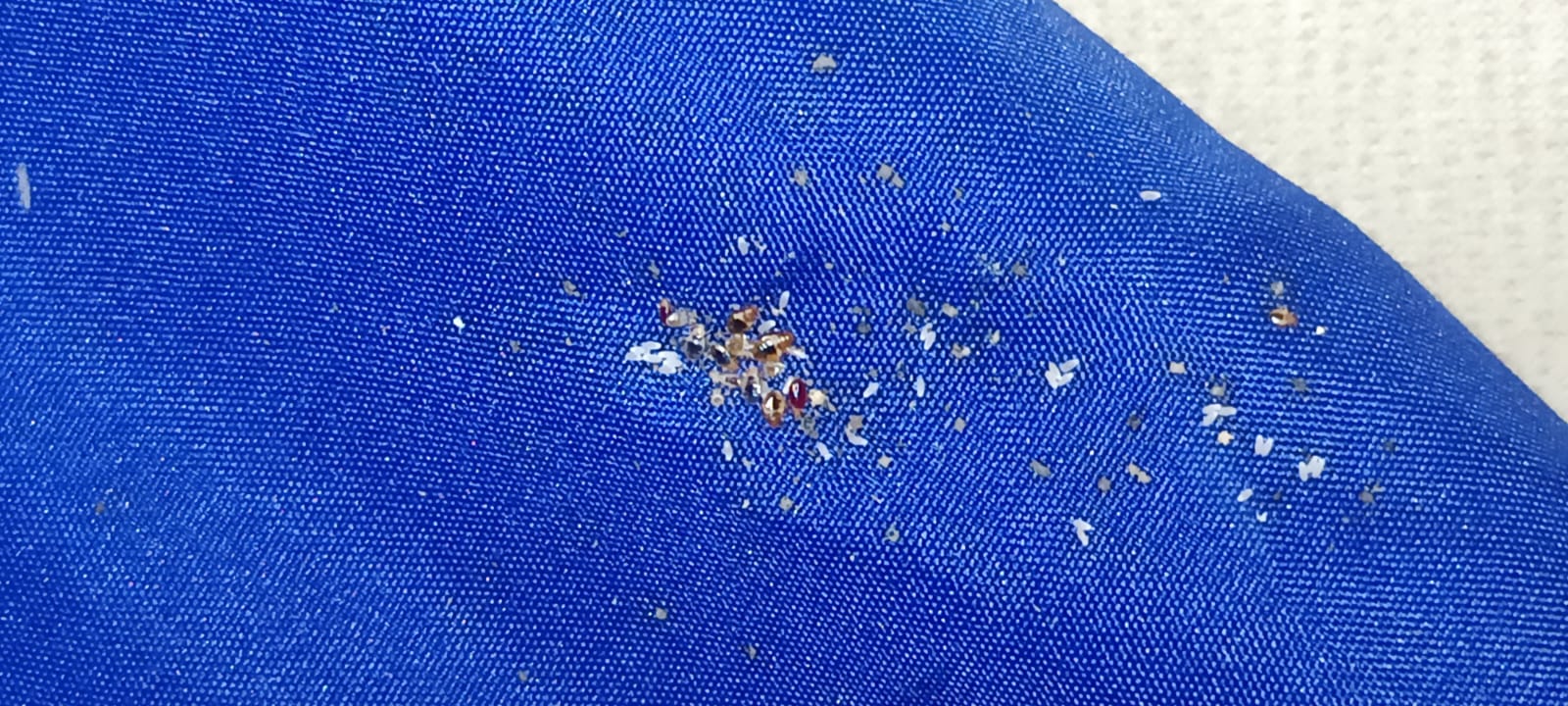
Among the material supplied to Maritime News are photographs identified by the reporting marine engineer as having been taken in crew accommodation during his period of service.
The images appear to show small insects on or near bedding and sleeping surfaces. The reporting marine engineer identifies the insects as bed bugs and describes the condition as an infestation. Maritime News has not obtained independent entomological confirmation of the insect species.
The photographs provide visual evidence of the limited areas and moments captured. They do not, by themselves, establish when the condition began, how many cabins or persons were affected, how the insects were introduced, how long the condition continued, or whether treatment, replacement or reinspection occurred after the images were taken.
A complete technical assessment would consider the original image files and metadata where available, accommodation inspection records, housekeeping and pest-control actions, requests for replacement bedding, treatment instructions, follow-up inspections and evidence that the reported condition was effectively closed.
Internal Reporting of Welfare Concerns
The documentary material reviewed by Maritime News indicates that at least some accommodation and welfare concerns were communicated internally during the reporting marine engineer’s service.
According to his written account, those matters included requests concerning bedding and other basic welfare items. The existence of a message, requisition or request can establish that a concern was raised; it does not, without the surrounding record, determine whether the concern was accepted, disputed, acted upon, deferred for a stated reason or ultimately closed.
The relevant professional questions are therefore procedural as well as factual. Was the condition acknowledged? Was it assessed by a competent person? Were interim controls or replacement arrangements provided? Was treatment followed by reinspection? Was the person who raised the concern informed of the outcome?
This Part does not make findings on each of those questions. Their importance lies in showing what a complete welfare-management record would need to address.
The Reporting Marine Engineer’s Account
In his written responses to Maritime News, the reporting marine engineer stated that certain requests relating to basic welfare items encountered resistance. He referred to replacement bedding and to arrangements for personnel performing night-watch duties.
Where the latter concern relates to access to food or refreshment during night duty, the Maritime Labor Convention’s food and catering standards provide relevant general context. Determining the adequacy of the arrangements would, however, require details concerning what food and drinking water were available, their quality and quantity, the times and way they could be accessed, and the flag-State requirements applicable to the vessel.
These observations remain the reporting marine engineer’s account. Maritime News has not independently verified every operational decision, conversation or reason given for the response to those requests.
Their evidentiary value therefore depends on the contemporaneous correspondence, the clarity of the requests, any response recorded at the time and any later corrective action.
Welfare as Part of Safety Culture
Safety culture extends beyond machinery procedures and statutory certificates. It includes the practical environment in which seafarers live and work, the confidence with which concerns can be raised and the visibility of the response that follows.
An accommodation concern may be an isolated housekeeping issue, a pest-control problem, a procurement delay, an ineffective treatment or evidence of a wider weakness in management control. The existence of one possibility does not prove another. The significance of the condition depends on how it was identified, assessed, controlled, monitored and closed.
Persistent unresolved welfare concerns can affect trust, morale and willingness to continue reporting. That is a legitimate subject for professional reflection. It does not, without further evidence, establish that machinery reliability, statutory compliance or the vessel’s wider safety-management system failed.
A fair technical review must therefore hold two ideas together: crew welfare has direct operational relevance, and conclusions about organizational performance must remain proportionate to the evidence available.
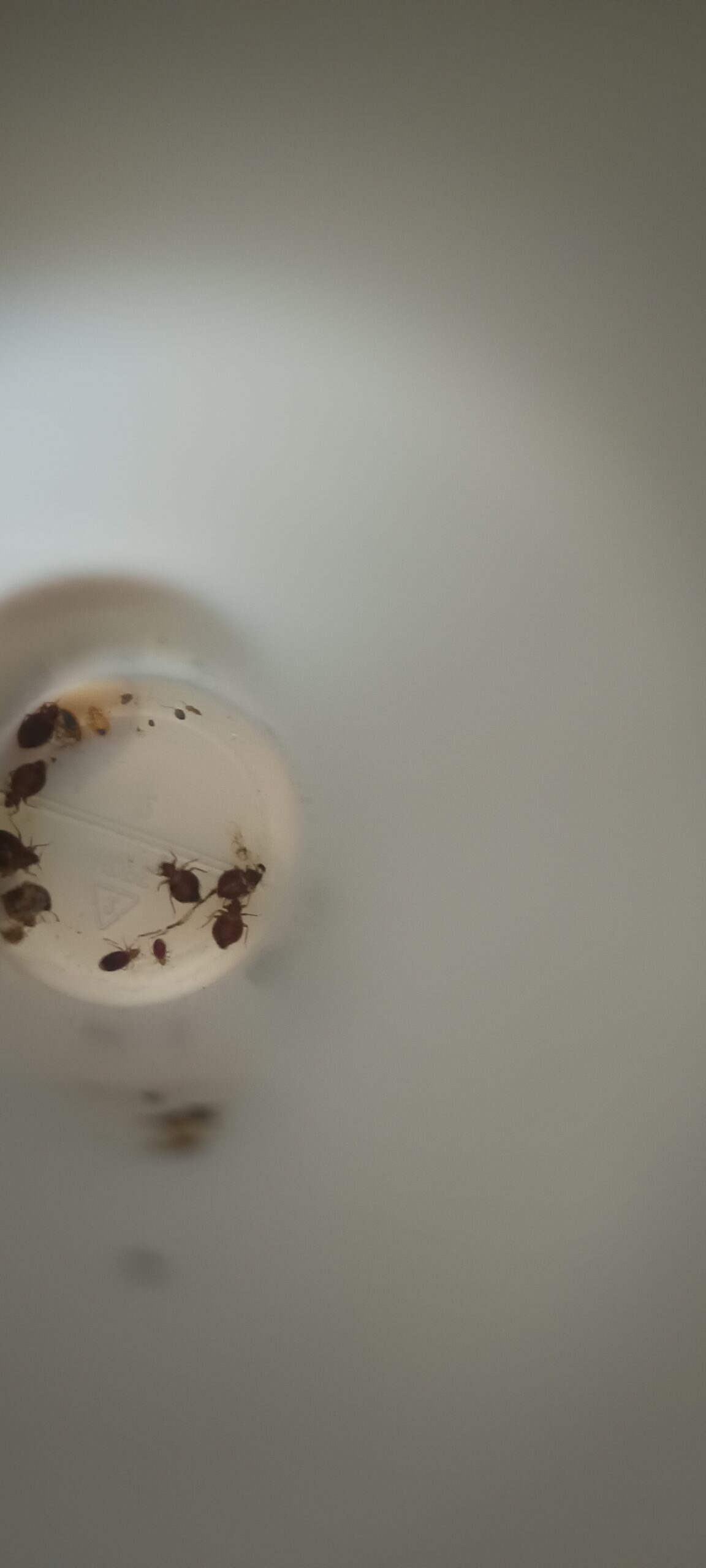
Additional photographs reviewed during preparation of this Dossier depict aspects of accommodation identified by the reporting marine engineer as supporting his written account.
They are included as documentary material supplied to Maritime News. Each image should be read with its source, verified date and location where available, the reporting marine engineer’s attributed explanation and the limitations of the frame itself.
Photographs can establish visible detail. They cannot independently establish every surrounding circumstance, the response taken outside the frame or the condition that existed before or after capture.
Reflection
The condition of a vessel is often discussed through machinery, steel and certification. The condition in which seafarers are expected to live is also part of professional ship operation.
Crew welfare is not a substitute for technical safety management, and a welfare complaint is not automatically proof of a wider failure. It is, however, a defined management responsibility with consequences for health, sleep, confidence and the ability of people to perform demanding work consistently.
The constructive response to a reported accommodation condition is neither dismissal nor premature accusation. It is disciplined verification: inspect the space, identify the condition, protect those affected, document the action, apply appropriate treatment or replacement, reinspect and confirm effective close-out.
The reporting marine engineer’s account is significant because it places ordinary living conditions within the same evidence-led question that guides this Dossier: how were concerns recognized, communicated, answered and resolved?
Whether considered through maritime labor standards, human factors or operational management, crew accommodation belongs within the safety conversation.
End of Part VI
“A ship’s greatest asset is not its machinery or its cargo. It is the people who keep both moving, day after day, watch after watch.”
Continue Reading
← Return to The Cost of Silence – Maritime News Dossier 001
Next Part
Part VII – Questions Beyond the Engine Room
“Some questions concern machinery. Others concern the systems that govern how decisions are made.”
Make us preferred source on Google
Reporting Basis: Photographs, internal communications and written responses supplied to Maritime News by the reporting marine engineer, considered alongside relevant maritime labour principles and MaritimeNews editorial analysis.
Verification Note:
The photographs reviewed in this Part provide visual evidence of the limited areas and moments captured. They do not, by themselves, establish when a reported condition began, its extent, how many cabins or persons may have been affected, how a condition originated, or whether subsequent treatment, replacement or reinspection occurred.
The reporting marine engineer identifies the insects shown in the accommodation photographs as bed bugs and describes the condition as an infestation. Maritime News has not independently obtained entomological confirmation of the insect species.
Similarly, the existence of a message, requisition or request establishes that a concern was raised or communicated; it does not independently establish whether it was accepted, disputed, acted upon, deferred or ultimately closed.
Accordingly, this Part distinguishes between what the photographs appear to show, what the reporting marine engineer states, what the documentary record establishes, and what remains unverified.
Reporting by MaritimeNews Bureaus, Writing and Editing by Jaspal Singh Naol Technical review and revisions by Priyatham Sanjeeva Reddy Ramidi


One thought on “Living Below Deck”