

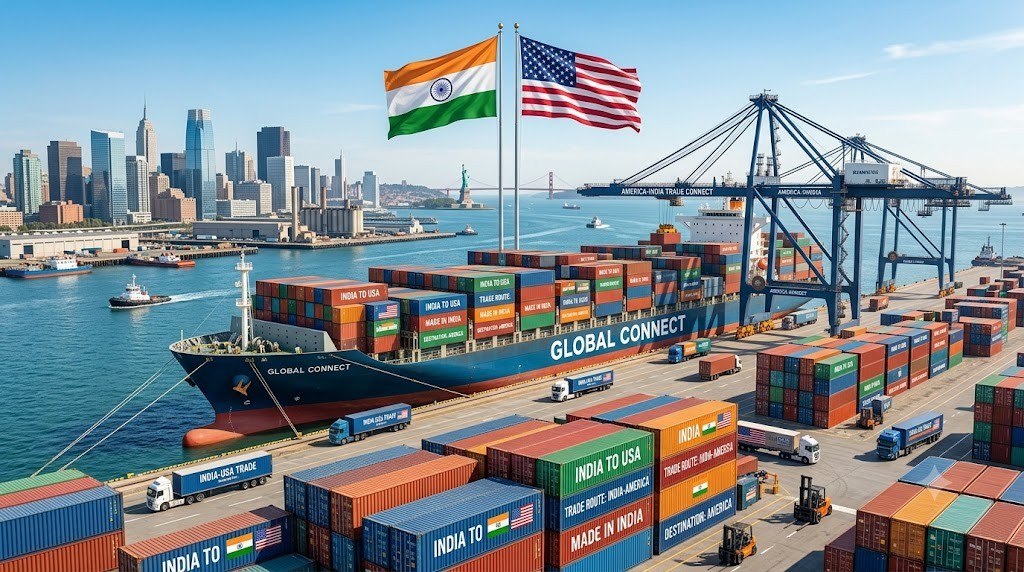
Commerce and Industry Minister Piyush Goyal’s September 29–October 5 visit to the United States includes G20 trade talks, bilateral engagement with the US Trade Representative and meetings with American businesses. The visit comes as Indian exporters face US tariff-related uncertainty, but the Government’s announcement does not confirm that any tariff relief or interim trade agreement will be secured during the visit.
Make us preferred source on Google
Key Takeaways
- Piyush Goyal is scheduled to visit the US from September 29 to October 5, 2026, including participation in the G20 Trade Ministers’ Meeting in Milwaukee on September 30 and October 1.
- The PIB announcement confirms planned bilateral engagement with the US counterpart to advance a balanced India–US Bilateral Trade Agreement and finalise an interim deal, in line with the February 7, 2026 Joint Statement.
- The stated agenda includes expanding opportunities for Indian farmers, fishermen, women entrepreneurs, startups, MSMEs and other enterprises.
- Meetings with American industry leaders and investors in Milwaukee, Chicago and New York are intended to promote India as a manufacturing and investment destination.
- The release does not announce a tariff agreement, a reduction in US duties, or a confirmed date for relief to Indian exporters. Any outcome will depend on negotiations and subsequent official announcements.
However, the September 28 PIB announcement describes Goyal’s visit as part of ongoing efforts to advance the bilateral agreement and finalise an interim deal. It does not say that the agreement has been concluded or that a new tariff exemption has been secured.
Reuters reported on September 28 that negotiations remained ongoing, with the visit intended to advance the proposed agreement.
The distinction is important for Indian exporters. A negotiating framework can establish the direction of a potential agreement, but businesses need confirmed terms, implementation dates, product coverage and customs procedures before they can calculate the actual benefit.
According to the PIB release, Goyal’s programme includes three principal areas of engagement:
- G20 trade discussions: India will participate in the Milwaukee meeting and advocate a rules-based, open, inclusive, transparent, equitable and non-discriminatory multilateral trading system, with the World Trade Organization at its core and policy space for developing countries.
- Bilateral trade negotiations: Goyal will meet his US counterpart to advance the India–US Bilateral Trade Agreement and work towards an interim deal.
- Business and investment engagement: Meetings with American companies, investors, startups and industry representatives in Milwaukee, Chicago and New York will promote India as a manufacturing and investment destination.
The agenda also identifies opportunities for Indian farmers, fishermen, women entrepreneurs, startups, MSMEs and other enterprises.
These engagements create opportunities to address market-access concerns, but the announcement does not identify a specific tariff concession or guarantee for any individual export sector.
Which Indian Exporters Need Clarity?
The February framework identified several Indian product categories for proposed US reciprocal tariff treatment, including textiles and apparel, leather and footwear, plastics and rubber, organic chemicals, home décor, artisanal products and certain machinery. It also set out potential adjustments for a range of other goods, subject to the agreement’s successful conclusion.
For exporters, the commercial importance of the visit will depend on the final terms and how they apply to individual products.
|
Export stakeholder |
Main issue requiring clarity |
|---|---|
|
Textile and apparel exporters |
Applicable tariff rates, product coverage and effective dates |
|
Leather and footwear manufacturers |
Whether negotiated tariff terms improve price competitiveness |
|
Engineering and machinery exporters |
Product-specific treatment, standards and market access |
|
Chemical and plastics exporters |
Tariff classification, coverage and compliance requirements |
|
MSME exporters |
Ability to absorb tariff costs, fulfil orders and access trade finance |
|
Agricultural and food exporters |
Market access, product standards and any negotiated concessions |
|
Customs Brokers |
Final tariff schedules, origin rules and documentary requirements |
|
Freight Forwarders and NVOCCs |
Shipment planning, order continuity and changes in cargo demand |
|
Ports, terminals and logistics operators |
Potential changes in export volumes and cargo flows |
|
Shipping lines and shipowners |
Changes in trade volumes, route demand and vessel deployment |
These are the sectors and operational groups that may be affected by the outcome; the PIB release does not confirm that each will receive a particular benefit.
For exporters, relief is not simply a positive statement following a ministerial meeting. It requires a clear, applicable and implemented trade measure.
The following outcomes would provide measurable evidence of progress:
- A concluded interim agreement: an agreed text and official confirmation of its status.
- Clear tariff schedules: product-level rates, exclusions, effective dates and applicable conditions.
- Rules of origin: clarity on how Indian goods qualify for preferential treatment and what documentation exporters must provide.
- Predictable implementation: published procedures, customs guidance and a defined timeline for applying the agreed rates.
- Resolution of outstanding issues: progress on market access, non-tariff barriers and sector-specific concerns.
- Exporter communication: practical guidance for MSMEs, trade associations, Customs Brokers and logistics providers.
The US Trade Representative’s published record identifies the February 2026 joint statement as a framework for an interim agreement. The terms must therefore be distinguished from a fully concluded and implemented agreement.
The Wider Trade and Logistics Chain
Any change in US tariffs can affect more than the exporter and overseas buyer. Export orders influence production schedules, procurement, packaging, documentation, inland transport, port operations and shipping arrangements.
The operational chain includes:
Indian manufacturer or farmer → Exporter → Customs Broker → Freight Forwarder or NVOCC → Inland logistics → Port and terminal → Shipping line → US importer and distributor
If tariff uncertainty causes buyers to delay orders, renegotiate prices or shift sourcing, the impact can move through this chain. Conversely, a confirmed and commercially meaningful tariff agreement could improve planning and support order continuity for qualifying exporters.
These are potential effects, not confirmed consequences of the minister’s visit. Their scale would depend on the final agreement, product coverage, market demand and exporters’ ability to use the negotiated terms.
Also Read: Edible Oil Import Duty Cut: Who Gets the Benefit — Importers, Refiners, Farmers or Consumers?
What About the G20 Meeting?
The G20 Trade Ministers’ Meeting gives India a multilateral forum to discuss international trade rules, transparency, inclusiveness and the position of developing economies.
The PIB statement says India will advocate a rules-based trading system with the WTO at its core while preserving adequate policy space for developing countries. It also says Goyal will hold bilateral meetings with counterparts on the sidelines, focusing on opportunities for Indian businesses and other stakeholders.
The G20 discussions and the India–US bilateral negotiations are related to the broader trade environment, but they are separate processes. Participation in the G20 meeting does not itself change US tariffs on Indian goods.
The Role of American Industry and Investors
Goyal’s meetings with American business leaders in Milwaukee, Chicago and New York are intended to promote India’s manufacturing and investment opportunities and encourage deeper partnerships with Indian enterprises.
These discussions may help identify business concerns and opportunities involving supply chains, investment, technology and market access. However, company-level investment interest should not be confused with a government-level tariff concession.
For Indian exporters, the immediate priority remains clarity on the terms under which their goods can enter the US market and compete with products from other exporting countries.
Political and Administrative Responsibility
The trade negotiations involve political leadership and government institutions on both sides.
At the political level, the Indian Government is seeking a balanced and mutually beneficial agreement, while the US administration determines its own negotiating position and tariff measures.
At the administrative level, the relevant ministries, trade negotiators and customs authorities will be responsible for translating any concluded agreement into schedules, procedures, rules of origin and implementation guidance.
For exporters, the practical measure of progress will be whether the final terms are clear, accessible and usable—not merely whether negotiations have taken place.
MaritimeNews Insight
Piyush Goyal’s US visit provides a scheduled opportunity to advance India–US trade negotiations, engage with American counterparts and present India’s manufacturing and investment opportunities. The February framework provides a basis for discussions, but the September 28 announcement confirms that work towards an interim deal is still part of the visit’s agenda.
Will the visit bring relief to Indian exporters? It may help advance negotiations, but actual tariff relief cannot be confirmed in advance. Exporters will need to see a concluded agreement, published tariff schedules, product-level eligibility and implementation procedures before they can determine the commercial benefit.
The wider question is whether any agreement provides predictable market access for Indian businesses while enabling MSMEs, Customs Brokers, freight forwarders, ports and shipping operators to plan around stable trade conditions.
Also Read: India’s Shipbuilding Modernisation Gets New Project Management Unit Under SbDS
What to Watch During and After the Visit
- Bilateral meeting outcome: whether the Indian and US trade representatives announce concrete progress or unresolved issues.
- Interim agreement: whether the two sides conclude the agreement or publish a revised timeline.
- Tariff provisions: whether the proposed rates and product coverage in the February framework are retained, amended or expanded.
- Rules of origin: whether exporters receive clear eligibility and documentation requirements.
- Sector-specific treatment: whether textiles, engineering goods, chemicals, leather, agriculture and MSMEs receive defined terms.
- Implementation: whether an official text, tariff schedule and customs instructions are published.
- Exporter response: whether trade associations and businesses report greater certainty in pricing, order negotiations and shipment planning.
- Logistics impact: whether subsequent trade data show changes in US-bound cargo volumes and shipping activity.
Frequently Asked Questions (FAQs)
Will Piyush Goyal’s US visit reduce tariffs on Indian exports?
The visit is intended to advance negotiations and work towards finalising an interim India–US trade agreement. The PIB announcement does not confirm a new tariff reduction or guarantee relief for exporters.
What is the purpose of the visit?
Goyal is scheduled to participate in the G20 Trade Ministers’ Meeting in Milwaukee from September 30 to October 1, hold bilateral discussions with his US counterpart and engage with American industry, investors and startups in Milwaukee, Chicago and New York.
What was agreed in the February 2026 India–US framework?
The February 6 joint statement outlined a framework for an interim agreement, including a proposed 18% reciprocal tariff rate on originating Indian goods and removal of an additional 25% tariff, alongside further potential adjustments subject to the successful conclusion of the agreement. The framework also included proposed Indian tariff reductions on specified US goods.
Has the interim trade agreement been finalised?
The September 28 PIB release describes finalising an interim deal as an ongoing objective of the visit. It does not announce that the agreement has been concluded.
Which Indian exporters could be affected?
The February framework identifies product categories including textiles and apparel, leather and footwear, plastics and rubber, organic chemicals, home décor, artisanal products and certain machinery. The final impact depends on the concluded agreement and product-specific provisions.
Will MSMEs benefit?
The PIB statement identifies MSMEs among the enterprises whose opportunities the minister intends to advance. However, it does not announce a specific MSME tariff exemption, compensation package or guaranteed benefit.
What should exporters do while negotiations continue?
Exporters can review their product classifications, origin documentation, contracts, pricing assumptions and exposure to US tariff changes. They should rely on official tariff schedules and customs guidance before applying any preferential rate.
How could the outcome affect maritime trade?
Changes in export competitiveness and order volumes may influence cargo bookings, freight forwarding, Customs clearance, port throughput and shipping demand. The scale and direction of any effect will depend on the agreement’s terms and subsequent trade activity.
Also Read: Vadhavan Port Tender Advances as NAPM Demands Project Halt and Independent Impact Assessment
Piyush Goyal’s September 29–October 5 visit to the United States is an important diplomatic and trade-negotiation engagement, with the G20 meeting, bilateral talks and business outreach forming its central agenda.
The February 2026 framework provides a negotiating basis, but the Government’s latest announcement does not confirm that the interim agreement has been finalised or that additional tariff relief will be delivered during the visit.
For Indian exporters, the immediate requirement is certainty: clear tariff rates, product coverage, rules of origin, implementation dates and customs procedures. For the wider trade ecosystem, the outcome will influence business planning, cargo movement and potentially the demand for logistics and shipping services.
The visit may advance the process; confirmed relief will depend on the agreement reached and its implementation.
Sources
- Press Information Bureau — Union Minister of Commerce and Industry Shri Piyush Goyal to Visit the United States to Participate in G20 Trade Ministers’ Meeting, September 28, 2026
- Reuters — India Trade Minister to Visit US for Deal Talks, September 28, 2026
- White House — United States–India Joint Statement, February 6, 2026
- White House — Fact Sheet: The United States and India Announce Historic Trade Deal, February 9, 2026
- Office of the United States Trade Representative — Statement on the India Trade Framework, February 6, 2026
- USTR — Presidential Tariff Actions
Make us preferred source on Google
Reporting by MaritimeNews Bureaus, Writing by Harpal S Naol; Editing by Jaspal Singh Naol.

2 thoughts on “Piyush Goyal’s US Visit: Can India Secure Tariff Relief for Exporters Amid Trump-Era Duties?”