
Five-year settlement puts labour relations, workforce welfare and operational continuity in focus at a port-linked logistics facility near JNPA
Make us preferred source on Google
Key Takeaways
- Wage agreement: A reported ₹9,000 pay increase has been agreed for around 400 Speedy Multimodes workers, according to NMGKS.
- Five-year term: The agreement is intended to remain in force for five years.
- Additional benefits: Medical facilities, bonus, festival advance, uniforms and other benefits are included in the union’s announcement.
- Negotiating representatives: Mahendra Gharat, Vaibhav Patil and Tukaram Kadu represented the union and workers; Pravin Patil and Pranit Patil represented the management.
- Industry significance: The agreement highlights workforce welfare and labour-management relations within the CFS segment of the maritime logistics chain.
- Implementation remains the key test: The signed agreement’s wage structure, effective date and benefit provisions are needed to establish the precise financial impact.
The settlement concerns the workforce supporting container freight station (CFS) and port-linked logistics operations. Speedy Multimodes identifies its facilities near Jawaharlal Nehru Port (JNPA), also known as Nhava Sheva, and Mundra Port as part of its logistics network. Its listed services include import-export cargo handling, warehousing, reefer services and hazardous-cargo handling. Company profile
The union has described the agreement as a major outcome for workers ahead of Diwali. However, the press release does not specify whether the ₹9,000 increase is monthly or structured differently, the date from which it becomes effective, or the detailed conditions governing the additional benefits.
| Particular | Details reported |
|---|---|
| Company | Speedy Multimodes Limited |
| Location | Ulwe / JNPA–Nhava Sheva logistics area |
| Agreement date | Tuesday, October 13, 2026 |
| Reported wage increase | ₹9,000; precise structure not specified |
| Workers expected to benefit | Approximately 400 |
| Agreement period | Five years |
| Union | New Maritime and General Kamgar Sanghatana (NMGKS) |
| Union leader | Mahendra Gharat |
| Additional benefits | Medical facilities, bonus, festival advance, uniforms and other benefits |
Source for settlement details: NMGKS press release supplied for this report. The signed agreement was not available for independent verification.
Six Unions Joined Together Before the Settlement
According to the union’s account, around eight unions were operating at Speedy Multimodes, but workers felt their concerns were not receiving adequate attention. Workers associated with six unions subsequently came together and accepted Mahendra Gharat’s leadership to pursue their demands.
The union said Gharat held several meetings with the management and continued discussions on the workers’ concerns before the agreement was reached. The release does not provide the full chronology of these meetings, the individual demands submitted by the unions, or the management’s detailed position during negotiations.
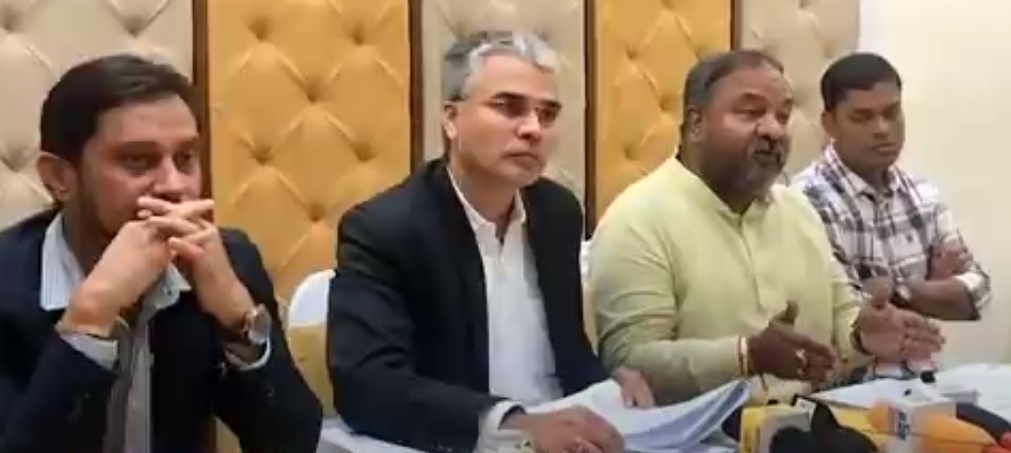
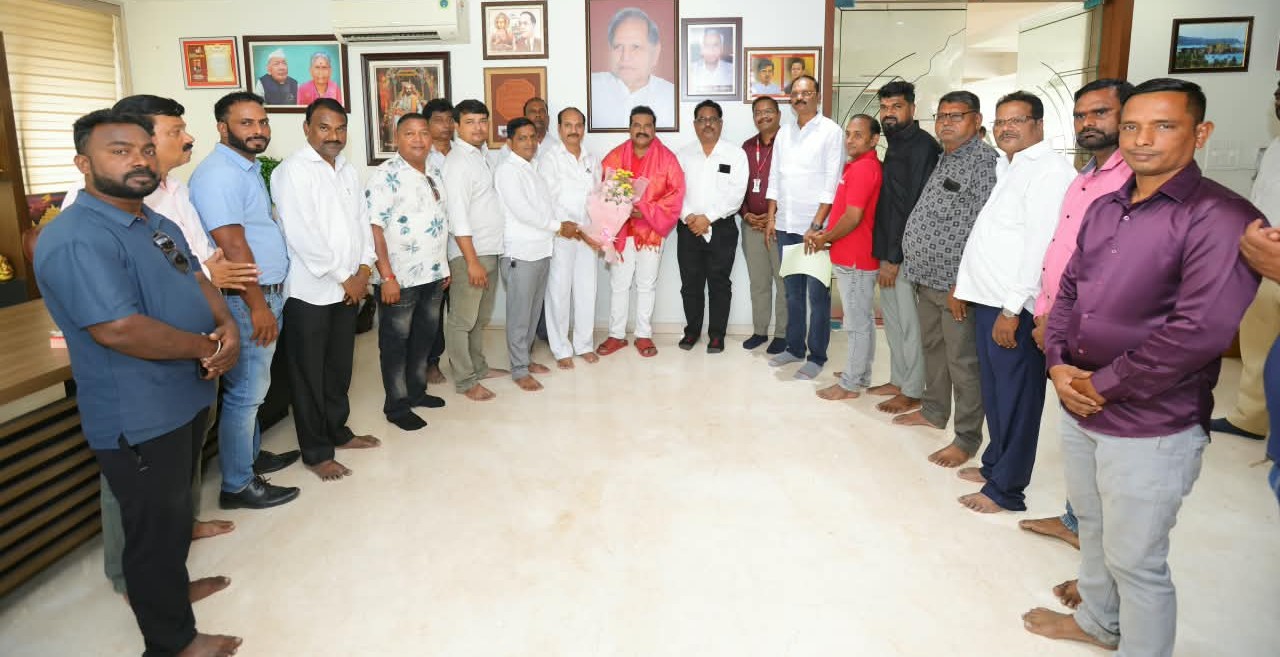
The agreement was concluded in the presence of Mahendra Gharat, founder-president of NMGKS; Vaibhav Patil, general secretary; Tukaram Kadu, workers’ representative; and Pravin Patil and Pranit Patil, representing the management.
Speaking after the agreement, Mahendra Gharat said he had told management that he would continue to pursue the issue until local workers received fair treatment. He said the management’s position had also been heard during discussions and credited its positive approach with helping bring the negotiations to a conclusion.
Gharat said the agreement also placed responsibility on workers to contribute to the company’s performance and profitability. He urged employees to work sincerely and cooperate with management, describing the interests of the company and its workforce as closely connected.
He also thanked Speedy Multimodes management for adopting what he described as a positive approach towards workers and agreeing to the wage increase.
Tukaram Kadu, a key workers’ representative, said workers had felt for several years that they lacked effective support in addressing their concerns. He credited Gharat’s leadership and understanding of the issues for the conclusion of the agreement and expressed gratitude on behalf of the workers.
Management Emphasises Dialogue and Mutual Understanding
Representing the management, Pravin Patil and Pranit Patil said maintaining understanding among workers, the union and management was important during negotiations.
They said Gharat had maintained a constructive atmosphere during discussions while also listening to management’s position. They attributed the settlement to his approach and leadership and thanked him for facilitating the discussions.
The statements from both sides indicate that dialogue was central to reaching the settlement. However, the press release does not contain an independent account of the bargaining process or the final contract terms.
Why the Agreement Matters to the Maritime Logistics Chain
A container freight station supports cargo handling and storage associated with import and export movements. CFS facilities operate within a wider network involving customs procedures, transport, freight forwarding, shipping lines and port terminals. Speedy Multimodes’ published service portfolio includes import-export handling, bonded and non-bonded warehousing, reefer plugging, hazardous-cargo handling and customs-clearance and documentation assistance. Official company profile
The operational chain can be understood as:
Importer / Exporter → Customs Broker and Documentation → CFS and Cargo Handling → Inland Transport / Freight Forwarder → Port Terminal → Shipping Line → Overseas Buyer
The sequence varies by cargo, service arrangement and whether the movement is an import or export. Nevertheless, a CFS is one of the links where cargo readiness, documentation, storage, handling and transport coordination converge.
Workforce relations are relevant to this system because CFS activities depend on trained personnel, safe cargo handling and the coordination of operational tasks. A wage agreement may contribute to employment stability, but it does not automatically establish improvements in productivity, cargo throughput or turnaround time. Those outcomes require separate operational evidence.
Stakeholder Impact: Who Is Affected?
| Stakeholder | Relevance of the agreement | What remains to be established |
|---|---|---|
| Workers | Reported wage increase and additional benefits | Effective date, eligibility and detailed benefit conditions |
| NMGKS and other worker representatives | Negotiation and representation of employee demands | Implementation monitoring and grievance-resolution arrangements |
| Speedy Multimodes management | Labour-management relationship and workforce administration | Full financial terms and implementation schedule |
| CFS customers and logistics partners | Depend on reliable cargo-handling and service continuity | No operational impact has been demonstrated by the announcement |
| Port and shipping supply chain | Relies on coordination between CFS, transport and port operations | No change in cargo volumes or turnaround time has been reported |
Workers Present at the Agreement
The union’s press release also names the following workers as present:
Vivek Mhatre, Anant Kadu, Jayendra Kadu, Pravin Kadu, Dharmendra Kadu, Dinesh Tandel, Gajanan Mhatre, Deepak Patil, Ajay Thakur, Chakradhar Gharat, Ganesh Gharat, Dilip Tandel, Pankaj Gharat, Manoj Tandel and Nishikant Gharat.
MaritimeNews Analysis: A Settlement Is the Beginning of Implementation
The agreement brings workforce welfare into focus at a company operating in the port-linked logistics sector. Its immediate reported outcome is a wage increase and additional benefits for approximately 400 employees. The longer-term significance will depend on whether the agreed provisions are implemented consistently throughout the five-year period.
Three issues warrant attention. First, the exact wage structure and effective date must be established from the signed agreement. Second, the conditions governing medical benefits, bonus, festival advance and uniforms should be clear to eligible workers. Third, the parties’ ability to maintain communication and resolve future disputes will matter to the durability of the settlement.
For the maritime industry, the broader lesson is that port efficiency depends on more than physical infrastructure and digital systems. It also depends on the people who carry out cargo-handling and logistics functions. That does not mean this settlement has already improved operational performance; it means workforce conditions form part of the operating environment that maritime logistics companies must manage.
Also Read: Edible Oil Import Duty Cut: Who Gets the Benefit — Importers, Refiners, Farmers or Consumers?
What to Watch Next
- Publication or confirmation of the signed agreement: This would clarify the ₹9,000 increase, the effective date and the five-year wage structure.
- Implementation of additional benefits: The specific terms for medical facilities, bonus, festival advance and uniforms need to be confirmed.
- Labour-management engagement: How the company and union address future workplace concerns will indicate whether the settlement supports sustained industrial relations.
- Evidence of operational effects: Any claim that the agreement improves productivity, cargo handling or service performance would require separate data rather than inference from the wage settlement alone.
The next measurable milestone is implementation. Until the detailed agreement is available, the ₹9,000 figure and estimated number of beneficiaries should remain attributed to the union’s announcement.
Frequently Asked Questions (FAQs)
1. What is the reported wage increase at Speedy Multimodes?
The NMGKS press release announces a ₹9,000 pay increase. It does not specify whether the amount is monthly or structured in another way.
2. How many workers are expected to benefit?
Approximately 400 workers are expected to benefit, according to the union’s announcement.
3. How long will the wage agreement remain in force?
The agreement is for five years.
4. Which additional benefits are included?
The announcement lists medical facilities, bonus, festival advance, uniforms and other benefits. Detailed eligibility and implementation conditions were not provided.
5. What does Speedy Multimodes do?
According to its company profile, Speedy Multimodes provides CFS, warehousing and port-linked logistics services near Nhava Sheva and Mundra, including import-export cargo handling, reefer plugging and hazardous-material handling.
6. Why is this agreement relevant to the maritime industry?
CFS facilities support cargo handling and logistics around major ports. Labour agreements are relevant to employment conditions and workforce relations within this part of the maritime supply chain, although the agreement’s effect on operational performance has not been established.
Speedy Multimodes’ five-year wage agreement is a workforce and industrial-relations development within India’s port-linked logistics sector. The union reports a ₹9,000 pay increase for around 400 workers, alongside medical facilities, bonus, festival advance, uniforms and other benefits. The agreement’s actual financial impact and its longer-term implications will depend on the final terms, implementation and continued engagement between workers and management.
Source
- Union press release: Source supplied for the wage agreement and all named participants. No original public URL was provided.
- Company profile: Speedy Multimodes — About Us — company services, CFS operations and facilities near JNPA and Mundra.
- Official customs reference: Jawaharlal Nehru Custom House — official CFS-related information listing Speedy Multimodes.
Make us preferred source on Google
Reporting by MaritimeNews Bureaus, Writing and Editing by Jaspal Singh Naol.