

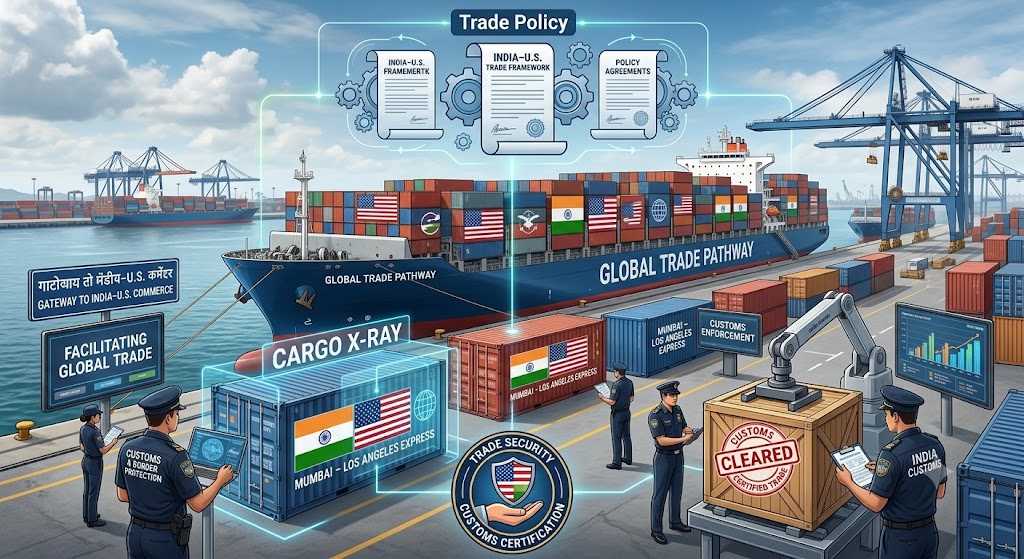
Commerce Ministry, FICCI and CII challenge selective exemptions and evidentiary standards while urging the United States to address forced labour concerns through bilateral trade negotiations rather than unilateral tariff action
Make us preferred source on Google
Key Takeaways
- India questioned the consistency of the USTR’s proposed forced labour tariff framework.
- The Commerce Ministry highlighted exemptions for approximately 1,600 products that are not subject to the same forced labour scrutiny.
- India criticised tariff preferences linked to U.S.-origin textile inputs, arguing they influence sourcing decisions without directly addressing forced labour.
- FICCI warned that additional tariffs would increase costs for U.S. manufacturers, retailers and consumers while penalising compliant supply chains.
- CII maintained that India’s constitutional and statutory framework already prohibits forced labour and does not meet the threshold of being “unreasonable” or “discriminatory” under Section 301.
India / USA, July 09 (Maritime News) – India has sharpened its defence during the ongoing U.S. Trade Representative (USTR) Section 301 hearings by challenging not only the proposed additional tariffs but also the consistency of the underlying policy framework. Appearing before the USTR panel, Commerce Ministry Joint Secretary Brij Mohan Mishra questioned selective product exemptions, criticised tariff incentives linked to the use of U.S.-origin textile inputs, and argued that concerns relating to forced labour should be resolved through bilateral India–U.S. trade negotiations rather than unilateral trade measures. Industry representatives from FICCI and the Confederation of Indian Industry (CII) reinforced India’s position by arguing that higher tariffs would increase costs across trusted supply chains without effectively addressing forced labour concerns.
India Challenges the Consistency of the U.S. Framework
Rather than limiting its intervention to opposing the proposed tariff rates, India questioned the consistency of the USTR’s overall approach to forced labour enforcement.
During the hearing, Commerce Ministry Joint Secretary Brij Mohan Mishra pointed out that the USTR exempts around 1,600 products that cannot be produced or grown within the United States from scrutiny related to forced labour. According to India’s submission, such exemptions weaken the stated objective of eliminating forced labour from global supply chains and may create opportunities for circumvention.
This marked a notable shift in India’s legal strategy—from defending its own policies to questioning whether the proposed U.S. framework applies its own principles consistently.
Textile Sourcing Rules Come Under Scrutiny
India also challenged U.S. tariff mechanisms that provide preferential treatment to textile products manufactured using U.S.-origin cotton and related inputs.
According to India’s submission, linking reduced tariff rates to the use of American raw materials influences sourcing decisions by overseas manufacturers without necessarily addressing the underlying issue of forced labour. The Commerce Ministry argued that such mechanisms operate as arbitrary trade requirements rather than targeted labour enforcement measures.
For the textile sector—one of India’s major export industries—the issue extends beyond tariff levels to questions of market access and supply-chain neutrality.
India Calls for Negotiated Solutions Instead of Unilateral Action
Another important feature of India’s presentation was its emphasis on bilateral engagement.
While maintaining its objections to the proposed Section 301 measures, India reiterated that concerns relating to labour standards and supply-chain governance should be addressed through the ongoing India–U.S. bilateral trade negotiations rather than through unilateral tariff actions.
This position reflects New Delhi’s broader diplomatic strategy of resolving trade differences through negotiated agreements while avoiding parallel enforcement measures that could complicate the wider trade relationship.
Industry Warns of Higher Costs Across Trusted Supply Chains
Representatives of India’s leading industry organisations echoed similar concerns before the USTR panel.
FICCI argued that additional tariffs would not only affect Indian exporters but would also increase costs for U.S. manufacturers, importers, retailers and ultimately American consumers. The organisation emphasised that many U.S. businesses rely on long-established relationships with Indian suppliers known for quality, reliability and compliance. Penalising these established supply chains, it argued, would make trusted sourcing networks more expensive without improving the identification of goods produced using forced labour.
Also Read: MEA Steps Up Diplomatic Efforts for Indian Seafarers as Gulf Evacuation Enters Final Phase
CII Reinforces India’s Constitutional Position
The Confederation of Indian Industry focused on the legal foundations of India’s labour framework.
CII argued that India’s constitutional protections and statutory labour laws already prohibit forced labour and therefore do not satisfy the threshold of being “unreasonable” or “discriminatory” under Section 301(b) of the U.S. Trade Act of 1974. It further supported the Government’s contention that the USTR had not presented sufficient economy-specific evidence linking India’s policies to measurable harm suffered by U.S. commerce.
From Tariffs to Supply Chain Governance
The hearings suggest that the debate has evolved beyond the proposed tariff percentages.
The central issue is increasingly becoming how governments regulate global supply chains, ensure labour compliance, verify sourcing practices and maintain fair competition without unnecessarily disrupting established trade relationships.
For maritime transport, this evolution is significant because supply-chain governance increasingly shapes cargo movement, customs procedures, due diligence requirements and international logistics planning.
Maritime Perspective
Modern maritime trade depends not only on ports, vessels and freight rates but also on regulatory confidence.
Import restrictions, traceability requirements, environmental standards and labour compliance are becoming integral components of global shipping competitiveness. The USTR proceedings therefore represent a broader shift in international commerce, where trade policy and maritime logistics are increasingly interconnected.
For Indian ports and logistics providers, maintaining predictable access to overseas markets may prove as important as expanding physical infrastructure.
Editorial Verdict
India’s latest intervention before the USTR panel represents a notable evolution in its defence strategy. Rather than focusing solely on opposing proposed tariff rates, New Delhi has questioned the consistency, evidentiary basis and policy design of the U.S. framework itself while advocating negotiated solutions through bilateral trade talks. As the hearings conclude, the debate appears to be moving beyond tariffs towards wider questions of supply-chain governance, regulatory coherence and the future architecture of international trade.
Also Read: Port Authorities Are More Than Landlords: Kolkata Warehouse Collapse Raises New Questions
Could the USTR Proposal Reshape Trusted Supply Chains?
One of the central themes emerging from the public hearings is the distinction between non-compliant supply chains and established, compliance-oriented manufacturing networks.
Indian industry representatives argued that many U.S. manufacturers and retailers source products from India because of long-standing commercial relationships built on quality, reliability and regulatory compliance. They cautioned that imposing additional tariffs on such supply chains could increase costs without necessarily improving the identification or prevention of goods produced through forced labour. According to their submissions, broad tariff measures risk treating compliant and non-compliant suppliers alike, potentially undermining trusted sourcing relationships that have evolved over decades.
For multinational companies operating across complex global logistics networks, the issue therefore extends beyond customs duties to the predictability and resilience of established supply chains.
Maritime Implications Extend Beyond Export Tariffs
Although the Section 301 proceedings are centred on trade policy, their implications are closely connected to maritime transport.
India–United States merchandise trade depends heavily on container shipping services, integrated logistics corridors and modern port infrastructure. Export cargo ranging from engineering products and machinery to textiles, pharmaceuticals, chemicals and automotive components moves through major Indian ports before connecting to trans-Pacific and trans-Atlantic shipping routes.
Should higher tariffs eventually influence purchasing decisions or sourcing patterns, container volumes, vessel deployment, warehousing demand and freight forwarding activity could all experience downstream effects. While the extent of any impact will depend on the USTR’s final determination and subsequent commercial responses, the hearings reinforce the growing influence of trade policy on maritime logistics planning.
Supply Chain Governance Becomes a Maritime Issue
The hearings also highlight a broader transformation occurring across international commerce.
Traditionally, shipping competitiveness was measured through freight rates, transit times and port efficiency. Increasingly, however, market access is also shaped by environmental standards, labour compliance, due diligence requirements, sanctions, carbon regulations and supply-chain transparency.
For ports, shipping companies and logistics providers, regulatory developments are becoming operational considerations rather than purely legal matters.
As governments introduce more compliance-based trade measures, maritime businesses may need to strengthen cargo traceability, supplier verification and documentation systems alongside traditional logistics capabilities.
India–U.S. Trade Negotiations Remain Central
Even as the Section 301 hearings continue, both India and the United States have indicated that negotiations on a bilateral trade agreement remain active.
India reiterated during the hearings that concerns relating to labour standards should ideally be addressed through bilateral engagement rather than unilateral tariff measures. This reflects New Delhi’s preference for resolving trade differences within a negotiated framework that considers the broader economic relationship between the two countries.
For exporters and maritime stakeholders alike, developments in the trade negotiations may ultimately prove just as significant as the outcome of the Section 301 proceedings.
Maritime Perspective
The latest hearings demonstrate that global maritime trade is increasingly influenced by governance frameworks rather than commercial considerations alone.
Today’s competitiveness depends not only on efficient ports and reliable shipping services but also on regulatory confidence, transparent supply chains and internationally accepted compliance standards. Countries able to demonstrate strong governance while maintaining efficient logistics networks are likely to enjoy greater resilience in an increasingly rules-based trading environment.
For India, the challenge is therefore broader than responding to a proposed tariff. It involves preserving confidence in its export ecosystem while continuing to strengthen its position as a trusted manufacturing and maritime trading nation.
MaritimeNews Editorial Verdict
The latest phase of the USTR Section 301 hearings marks an important evolution in the debate.
India is no longer simply contesting the proposed tariff rates. Instead, it is questioning the consistency of the policy framework, the evidentiary basis for the proposed measures and the effectiveness of unilateral trade actions in addressing global labour concerns. Industry has complemented this position by emphasising the commercial consequences for established supply chains and U.S. businesses.
For the maritime sector, the significance extends beyond customs duties. The proceedings illustrate how trade policy, supply-chain governance and maritime logistics have become increasingly interconnected. The final USTR determination, together with progress in India–U.S. trade negotiations, will therefore be watched closely by exporters, ports, shipping lines and logistics providers alike.
Frequently Asked Questions (FAQs)
Why did India question the USTR framework?
India argued that selective product exemptions and the absence of economy-specific evidence weaken the consistency of the proposed tariff framework.
What are the 1,600 product exemptions?
India pointed to USTR exemptions covering products that cannot be produced or grown in the United States, arguing that these exemptions raise questions about the policy’s consistency.
Why did India criticise the textile mechanism?
India argued that tariff preferences linked to U.S.-origin cotton influence sourcing decisions without directly addressing forced labour concerns.
Why is this important for maritime trade?
Trade policy influences export competitiveness, container shipping demand, cargo flows, port activity and logistics planning.
Are the proposed tariffs final?
No.
The USTR is still considering evidence presented during the public hearings before making a final determination.
What happens next?
The USTR will review hearing testimony and written submissions before issuing its final decision. India–U.S. bilateral trade negotiations are expected to continue in parallel.
Make us preferred source on Google
Source: United States Trade Representative (USTR)
Reporting by MaritimeNews Bureaus, Writing by Jaspal Singh Naol


One thought on “India Questions U.S. Tariff Framework as Section 301 Hearings Shift from Duties to Supply Chain Governance”