
The collapse of an under-construction warehouse on SMPA-leased land has triggered a national conversation on how India’s rapidly expanding port estates should be governed as the country pursues Maritime Amrit Kaal Vision 2047.
Key Takeaways
- The collapsed structure was an under-construction warehouse on SMPA-leased land intended to support warehousing and cold storage operations.
- Rescue operations involved the Army, NDRF, SDRF, Kolkata Police, Fire & Emergency Services and medical teams.
- MoPSW monitored the incident through Union Minister Sarbananda Sonowal and Minister of State Shantanu Thakur.
- The West Bengal Government constituted a Special Investigation Team, ordered wider construction audits and initiated criminal proceedings against those connected with the project.
- Beyond the investigation, the tragedy raises a broader governance question about oversight of strategically important infrastructure developed within India’s port estates.
Kolkata, West Bengal, India, June 29 (Maritime News) – India’s ports are undergoing one of the most significant transformations in their history. Once defined primarily by berths, container terminals and cargo handling operations, they are rapidly evolving into integrated logistics ecosystems where warehouses, cold chains, logistics parks, multimodal transport corridors and industrial facilities are becoming just as critical as ships and cranes. These supporting assets increasingly determine the efficiency, resilience and competitiveness of India’s maritime supply chain.
It was within this larger transformation that an under-construction warehouse on land leased by the Syama Prasad Mookerjee Port Authority (SMPA) collapsed in Kolkata on 24 June 2026, resulting in multiple fatalities and injuries while triggering one of the largest rescue operations witnessed in the city’s port logistics corridor in recent years. The project was being developed on a 30-year lease for warehousing and cold storage facilities intended to support logistics activities connected with the port ecosystem.
The tragedy immediately drew national attention. Union Minister for Ports, Shipping and Waterways Sarbananda Sonowal expressed condolences and confirmed that SMPA was assisting the West Bengal Government in rescue operations. Two days later, Minister of State Shantanu Thakur chaired a review meeting with senior officials of the Ministry and SMPA to assess rescue and relief efforts, reflecting continued engagement at the highest level.
The investigation will determine why the structure failed and who bears legal responsibility.
However, the incident has already exposed another question that extends well beyond Kolkata.
As India’s ports increasingly develop through long-term leases and public-private partnerships, should port authorities also evolve from being administrators of leased land into stewards of the wider port estate?
This editorial examines the tragedy not only as a construction failure but also as a defining moment in the governance of India’s expanding maritime logistics infrastructure.
Also Read: BMCT Flyover Cleared, but Infrastructure Quality Puts Spotlight on JNPA Logistics Ecosystem
A Project Intended to Strengthen Port Logistics
Before it became the scene of a devastating accident, the warehouse represented a different story.
It was expected to become part of the logistics infrastructure supporting Kolkata’s maritime economy—a facility designed to expand warehousing and cold-storage capacity for cargo moving through one of India’s oldest port ecosystems.
The project was being developed on approximately 6,689 square metres (72,000 square feet) of land leased by the Syama Prasad Mookerjee Port Authority to Behera Brothers under a 30-year lease effective from 1 August 2024. The proposed development was intended to serve as a multi-storey warehouse and cold-storage facility supporting logistics operations connected with the port ecosystem.
In today’s maritime economy, such facilities are no longer peripheral infrastructure. They are part of the logistics chain that determines how efficiently cargo is stored, consolidated and transported beyond the port gate.
That is why the collapse has implications extending beyond a single construction site.
A Human Tragedy Before a Policy Debate
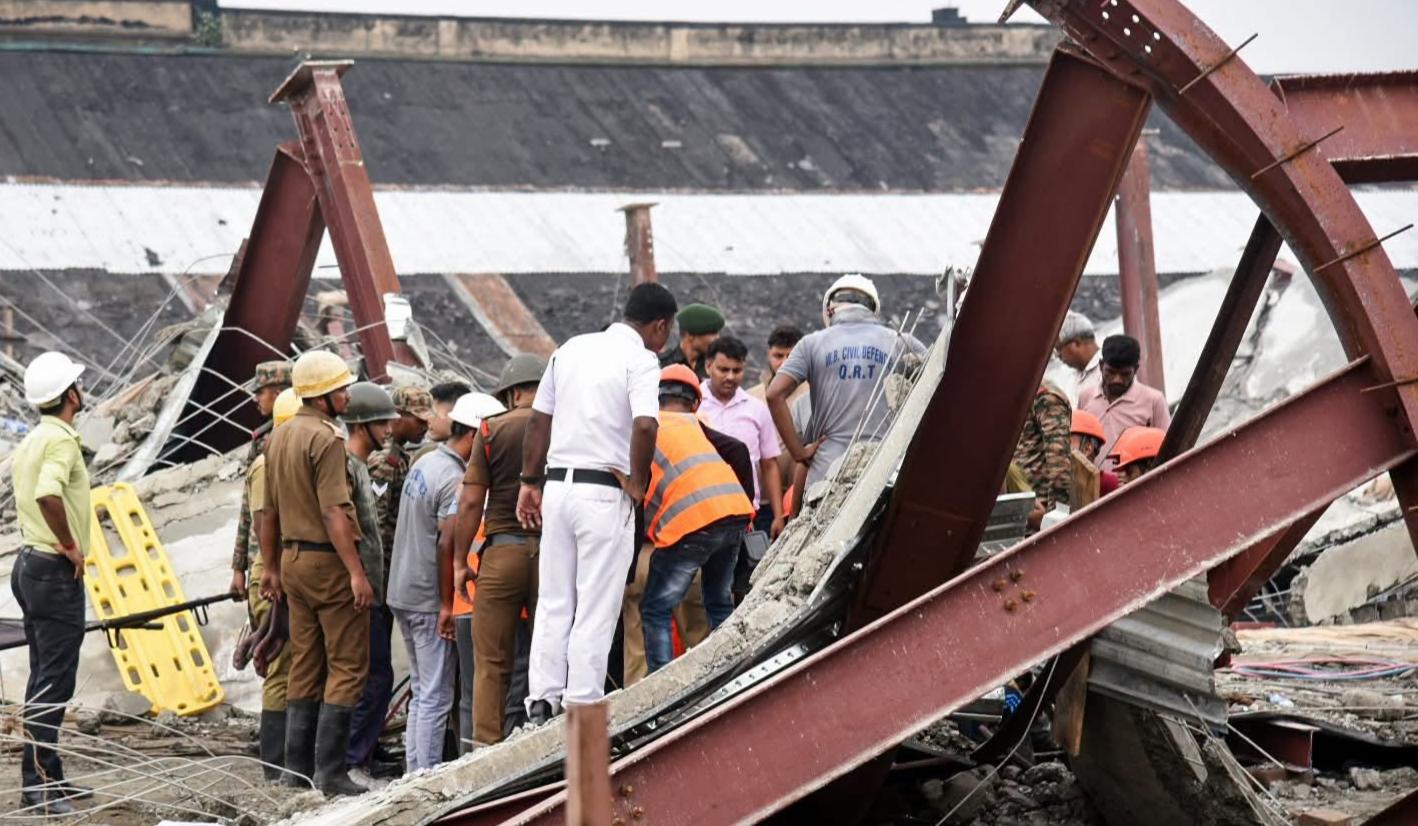
On the afternoon of 24 June 2026, construction activity was underway at the site when the roof structure collapsed, trapping workers beneath reinforced concrete and steel. Local residents were the first to respond, attempting rescues before emergency agencies reached the site. Rescue operations involving the Army, NDRF, SDRF, Fire Services, Kolkata Police, engineers and medical teams continued through the night under extremely challenging conditions.
Behind every casualty figure was a worker who had travelled to earn a livelihood, a family waiting for news outside hospitals and rescue sites, and emergency responders working tirelessly to save lives.
The first responsibility of every investigation must therefore remain justice for the victims, support for the injured and accountability wherever evidence ultimately leads.
Only after acknowledging that human tragedy should the wider policy discussion begin.
Also Read: JNPA launches NIVESH, an AI-powered treasury platform
What Is a Port Estate?
Modern ports extend far beyond waterfront operations.
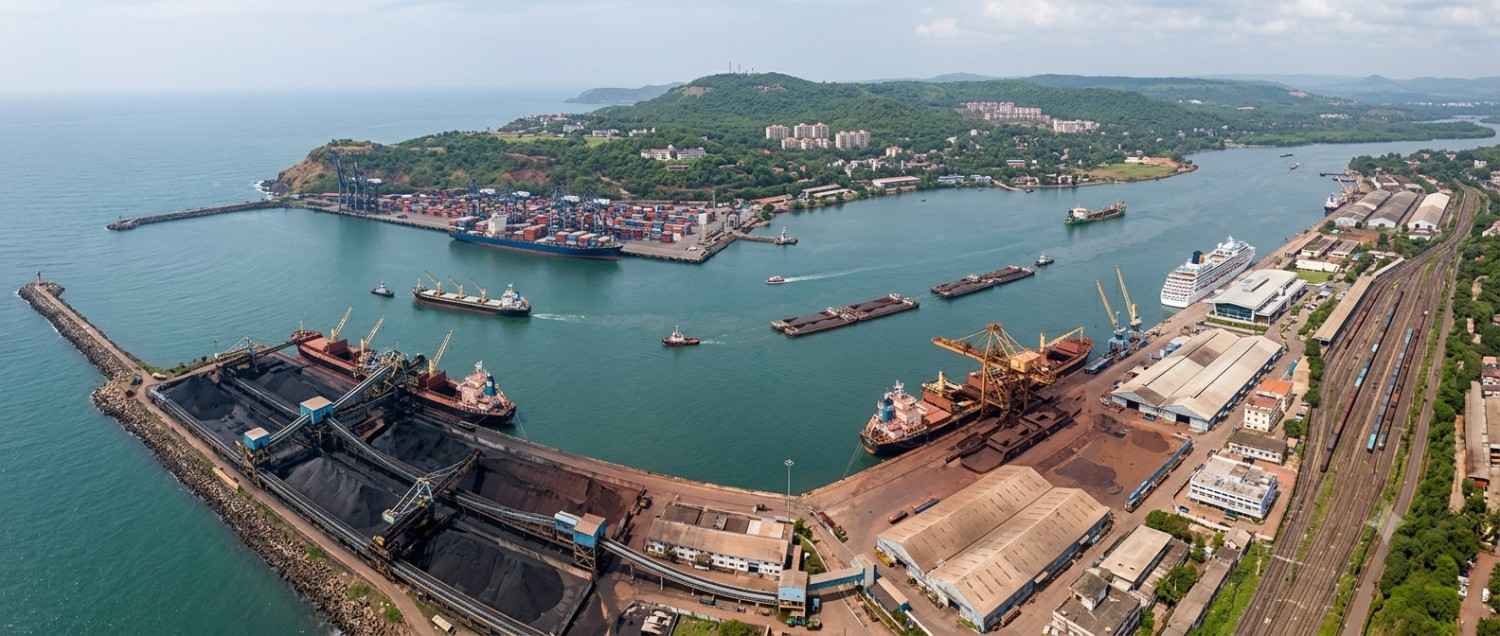
A port estate includes the wider network of assets developed on port-owned or port-leased land that enables cargo to move efficiently through the maritime supply chain.
These typically include:
- Warehouses
- Cold-storage facilities
- Logistics parks
- Container Freight Stations (CFS)
- Rail connectivity
- Road infrastructure
- Industrial units
- Utility infrastructure
- Commercial logistics developments
Together, these assets form the economic ecosystem surrounding a port.
When one critical component fails, the consequences may extend well beyond the immediate project, affecting investor confidence, logistics planning and the perception of infrastructure quality within the wider maritime sector.
When a Construction Accident Becomes a Maritime Governance Issue
The official investigation will establish why the warehouse collapsed.
It will examine structural design, engineering practices, construction methods, material quality, supervision, statutory approvals and compliance with applicable regulations. The criminal investigation will determine whether negligence, violations or other failures contributed to the tragedy.
Those questions belong to investigators.
For India’s maritime sector, however, another equally important conversation has already begun.
The collapse has highlighted how rapidly India’s ports are evolving beyond traditional cargo-handling facilities into integrated economic ecosystems where logistics infrastructure developed by private entities increasingly becomes part of the national supply chain.
This evolution changes not only how ports operate—but also how they may need to be governed.
The Warehouse Was Never Just a Warehouse
Viewed in isolation, the collapsed structure was a private construction project.
Viewed within the broader maritime ecosystem, it was intended to become an operational logistics asset supporting cargo movement through Kolkata’s port economy.
That distinction is critical.
Modern maritime competitiveness is no longer measured only by:
- Ship turnaround time
- Cargo throughput
- Berth productivity
It is increasingly determined by the efficiency of everything that happens after cargo leaves the vessel.
- Warehousing.
- Cold-chain logistics.
- Road connectivity.
- Rail evacuation.
- Container freight stations.
- Industrial clusters.
- Digital logistics.
Each forms an essential link in the maritime value chain.
Consequently, infrastructure failures within these supporting systems can have implications that extend far beyond the boundaries of an individual construction site.
India’s Port Estate Model Is Expanding Rapidly
The Kolkata project reflects a much larger national trend.
Across India’s major ports, thousands of acres of port-owned land are being developed through long-term leases for:
- Warehousing
- Logistics parks
- Manufacturing units
- Cold-storage facilities
- Multimodal logistics hubs
- Container freight stations
- Maritime industrial clusters
This expansion aligns with national initiatives including:
- Maritime Amrit Kaal Vision 2047
- PM Gati Shakti
- National Logistics Policy
- Sagarmala
- Port-led industrialisation
Collectively, these programmes recognise that globally competitive ports require equally competitive logistics ecosystems.
As investment accelerates, governance frameworks must evolve alongside physical infrastructure.
Also Read: JNPA’s Industrial Expansion Plan Raises Questions Over Navi Mumbai’s Port Region
Understanding the Governance Question
One question has repeatedly emerged since the tragedy.
Does a port authority’s role effectively end once land has been leased to a private developer?
Legally, lease agreements allocate responsibilities between the lessor, the lessee and various statutory authorities.
Those contractual arrangements remain fundamental.
However, governance extends beyond legal liability.
Modern governance asks a different question.
Should strategically important infrastructure developed within a port estate receive a coordinated stewardship model that encourages periodic engagement between port authorities, developers and statutory regulators?
This question does not presume legal responsibility.
Nor does it prejudge the outcome of the ongoing investigation.
Instead, it asks whether India’s rapidly expanding port ecosystems would benefit from stronger institutional coordination as they become increasingly interconnected.
Stakeholder Responsibility Matrix
The tragedy illustrates that multiple institutions intersect during the lifecycle of a major infrastructure project.
| Stakeholder | Primary Role |
|---|---|
| Ministry of Ports, Shipping and Waterways | National maritime policy and strategic oversight |
| Syama Prasad Mookerjee Port Authority | Port estate owner, lessor and facilitator |
| Lessee | Project execution and contractual compliance |
| Kolkata Municipal Corporation | Building approvals and municipal regulation |
| Engineers & Structural Consultants | Technical design and structural integrity |
| Contractors | Construction execution and site management |
| Labour Suppliers | Workforce deployment |
| Police & Special Investigation Team | Criminal investigation |
| Rescue Agencies | Emergency response and life-saving operations |
Each stakeholder performs a distinct role.
The investigation will determine whether any individual or institution failed to fulfil its legal responsibilities.
The broader governance discussion concerns how these responsibilities interact within increasingly complex port ecosystems.
Also Read: VOC Port Emerges as Model for Green Maritime Growth
Communication During a Crisis
Major infrastructure incidents are also tests of institutional communication.
The Ministry of Ports, Shipping and Waterways communicated publicly through statements issued by Union Minister Sarbananda Sonowal, who confirmed that the collapsed structure stood on land leased by the Syama Prasad Mookerjee Port Authority and assured full cooperation with the West Bengal Government during rescue operations.
Subsequently, Minister of State Shantanu Thakur chaired a review meeting with senior Ministry and SMPA officials to assess rescue and relief measures, demonstrating continued ministerial oversight.
These communications reassured stakeholders that the incident was receiving attention at the highest levels.
However, the incident also highlighted an opportunity.
At the time this editorial was prepared, MaritimeNews had not identified a detailed standalone public communication issued directly by the port authority explaining:
- the lease framework,
- operational implications,
- coordination with investigating agencies,
- or future governance measures.
For nationally significant infrastructure, timely and transparent institutional communication strengthens confidence among workers, investors, logistics operators, insurers and the wider maritime community.
Transparency does not interfere with investigations.
Properly managed, it complements them.
The Economics of Infrastructure Failure
Every construction accident carries a human cost.
Major infrastructure failures also create economic consequences that are often less visible but equally significant.
Potential long-term impacts include:
| Area | Potential Consequence |
|---|---|
| Logistics | Delay in planned warehousing capacity |
| Trade | Reduced operational efficiency |
| Insurance | Higher project and liability premiums |
| Investment | Increased due diligence by investors and lenders |
| Supply Chain | Delayed cargo handling and storage capacity |
| Public Confidence | Questions regarding infrastructure governance |
For a country investing billions of rupees in logistics modernisation, these indirect costs deserve careful consideration alongside the immediate investigation.
Governance Gap Analysis
This incident also highlights several broader governance questions that extend beyond one project.
| Existing Practice | Emerging Question | Opportunity |
|---|---|---|
| Long-term land lease | How should strategically important developments be monitored during construction? | Periodic milestone reporting |
| Multiple approving authorities | How can oversight become better coordinated? | Structured inter-agency coordination |
| Independent project execution | How can emerging risks be identified earlier? | Risk-based compliance reviews |
| Incident communication | How can stakeholders receive timely, consistent information? | Standard crisis communication framework |
These are policy questions—not conclusions about responsibility.
Their purpose is to strengthen governance for future projects rather than influence the ongoing investigation.
Beyond Kolkata
The issues highlighted by this tragedy are not unique to one port.
Across India, major port authorities are facilitating private investment in logistics infrastructure that will shape the country’s future supply chains.
As these investments grow, similar governance questions may arise elsewhere.
The lessons emerging from Kolkata therefore extend beyond one city.
They are relevant to every port estate where strategic infrastructure is being developed through long-term public-private partnerships.
The Road Ahead: Building Safer Port Estates for a Maritime India
Every major infrastructure tragedy forces a nation to confront two questions.
The first asks what went wrong.
The second asks what must change.
The ongoing investigation into the Kolkata warehouse collapse will answer the first.
India’s maritime community now has an opportunity to answer the second.
This is not about expanding legal liability or shifting responsibility from those directly accountable under law. Developers, engineers, contractors, architects, labour suppliers and statutory authorities each have clearly defined legal obligations that must be established through due process.
The larger question is whether India’s governance model should evolve as its ports evolve.
Also Read: The Growing Conflict Over Vadhvan Port
India’s Ports Are Becoming Integrated Economic Ecosystems
For decades, ports were viewed primarily as gateways where ships loaded and discharged cargo.
Today, that definition is no longer sufficient.
A modern port is an interconnected economic ecosystem where trade depends upon the seamless functioning of terminals, warehouses, cold chains, logistics parks, rail corridors, highways, inland container depots and industrial clusters.
A disruption in any one component can reduce the efficiency of the entire logistics chain.
The Kolkata tragedy illustrates that the supporting infrastructure surrounding ports is no longer secondary infrastructure.
It is strategic maritime infrastructure.
Global Practice: Stewardship Beyond the Waterfront
The world’s leading ports have gradually expanded their focus from marine operations to estate management.
Although governance structures differ, leading international port systems increasingly emphasise:
- Long-term estate planning.
- Risk-based infrastructure management.
- Regular engagement with developers and tenants.
- Safety management throughout project lifecycles.
- Digital monitoring and asset management.
- Integrated emergency preparedness.
The objective is not to replace statutory regulators.
It is to ensure that critical logistics infrastructure develops within a coordinated governance ecosystem.
India need not copy any one international model.
However, it can adapt the principles that strengthen safety, resilience and investor confidence.
Also Read: CBIC Pushes Unified Customs System as India Targets Faster Cargo Clearance and Lower Logistics Costs
MaritimeNews Editorial Proposal
National Port Estate Stewardship Guidelines (NPESG)
Rather than creating another regulatory layer, MaritimeNews proposes that the Ministry of Ports, Shipping and Waterways consider developing National Port Estate Stewardship Guidelines (NPESG) for major infrastructure developed on port-owned and port-leased land.
The objective would be preventive governance rather than additional regulation.
Possible components could include:
| Stewardship Area | Suggested Approach |
|---|---|
| Project Classification | Identify high-risk and strategically significant developments. |
| Construction Milestones | Periodic reporting at key construction stages. |
| Structural Assurance | Independent third-party review for major logistics assets where appropriate. |
| Institutional Coordination | Regular interaction between developers, statutory authorities and port authorities. |
| Digital Oversight | Use of drones, GIS mapping and digital project records for major developments. |
| Worker Safety | Periodic review of occupational safety systems during construction. |
| Crisis Communication | Standard protocols for communicating incidents affecting strategic port-estate infrastructure. |
These guidelines would complement existing legal responsibilities rather than replace them.
Port Authorities Are More Than Landlords
The Kolkata incident has revived an important institutional question.
Should a port authority simply lease land and wait until a project is completed?
Or should it actively encourage a culture of safety, compliance and collaboration across its port estate?
MaritimeNews believes the future lies in stewardship rather than passive administration.
Stewardship does not imply legal liability for every engineering decision.
It means recognising that infrastructure built within a port estate ultimately contributes to national logistics performance, trade competitiveness and public confidence.
The distinction is important.
Ports are not merely custodians of land.
They are custodians of economic ecosystems.
Lessons for Every Indian Port
The significance of this tragedy extends beyond Kolkata.
Across India, major ports are facilitating investments in:
- Logistics parks.
- Warehousing.
- Cold chains.
- Industrial clusters.
- Green hydrogen projects.
- Shipbuilding and repair facilities.
- Multimodal logistics hubs.
As these ecosystems expand, every port authority may eventually confront similar governance questions.
The lessons emerging today should therefore inform tomorrow’s projects.
Governance Reflection
The Ministry of Ports, Shipping and Waterways responded promptly through ministerial engagement.
Union Minister Sarbananda Sonowal publicly confirmed that SMPA was assisting rescue operations, while Minister of State Shantanu Thakur later reviewed rescue and relief efforts with senior officials.
These actions reflected national attention to the tragedy.
The incident nevertheless highlights an opportunity for stronger institutional communication at the port-estate level.
In major incidents involving nationally significant infrastructure, stakeholders benefit from timely, factual updates explaining operational impacts, coordination measures and future actions.
Transparent communication builds confidence without compromising ongoing investigations.
Policy Pathway
MaritimeNews recommends that policymakers consider:
- Developing National Port Estate Stewardship Guidelines for strategically significant infrastructure.
- Encouraging structured coordination between port authorities, developers and statutory regulators.
- Promoting independent structural assurance mechanisms for high-value logistics infrastructure where appropriate.
- Introducing risk-based monitoring during major construction projects.
- Strengthening digital monitoring using GIS, drones and digital engineering records.
- Establishing consistent crisis communication protocols for incidents involving port-estate infrastructure.
- Strengthening worker safety management throughout the lifecycle of strategic logistics projects.
These recommendations are intended to support India’s long-term maritime ambitions while respecting existing legal frameworks.
The Road Ahead
India’s ambition under Maritime Amrit Kaal Vision 2047 is not simply to build larger ports.
It is to build globally competitive maritime ecosystems.
Achieving that ambition requires excellence not only at the quay but across every warehouse, logistics park, industrial cluster and transport corridor that supports maritime trade.
The infrastructure surrounding a port should aspire to the same standards of resilience, engineering excellence and governance as the port itself.
Also Read: Critical Minerals Race Reshaping Global Shipping, Ports and Trade Corridors
MaritimeNews Editorial Conclusion
The Kolkata warehouse collapse should first be remembered for the workers who lost their lives, those who were injured and the families forever changed by the tragedy.
The investigation will determine legal responsibility.
History, however, may remember this incident for another reason.
It has exposed a question that India’s maritime sector can no longer ignore.
As ports expand beyond the waterfront into integrated logistics ecosystems, should their governance evolve as well?
MaritimeNews believes the answer lies not in assigning broader legal liability, but in embracing stronger stewardship, greater institutional coordination and a shared commitment to infrastructure quality.
If the lessons emerging from Kolkata help shape safer warehouses, stronger logistics parks and more resilient port estates across India, then this tragedy may ultimately leave behind more than sorrow.
It may leave behind a stronger foundation for the future of Indian maritime infrastructure.
MaritimeNews Editorial Note
This editorial clearly distinguishes between verified facts, ongoing investigations and policy analysis. All observations regarding governance reform are editorial recommendations intended to encourage constructive discussion within India’s maritime and logistics sectors. They should not be interpreted as findings of fact or determinations of legal responsibility, which remain subject to official investigation and due process.
FAQ
Why is the Kolkata warehouse collapse significant for the maritime sector?
Because the warehouse was being developed on port-leased land as part of the wider logistics ecosystem supporting maritime trade.
Is the port authority legally responsible?
Legal responsibility will be determined through the ongoing investigation and applicable contractual and statutory provisions. The editorial instead discusses broader governance and stewardship considerations.
What is a port estate?
A port estate includes the wider logistics and industrial infrastructure developed on port-owned or port-leased land that supports cargo movement beyond the port terminal.
What does MaritimeNews recommend?
MaritimeNews recommends considering National Port Estate Stewardship Guidelines to strengthen coordination, transparency and risk-based oversight for strategically significant infrastructure developed within port estates.
Source: Kolkata State & National Newspapers and Government Official Social Media
Reporting Basis: Kolkata State & National Newspapers and MaritimeNews Analysis
Reporting by MaritimeNews Bureaus, Writing by Jaspal Singh Naol