
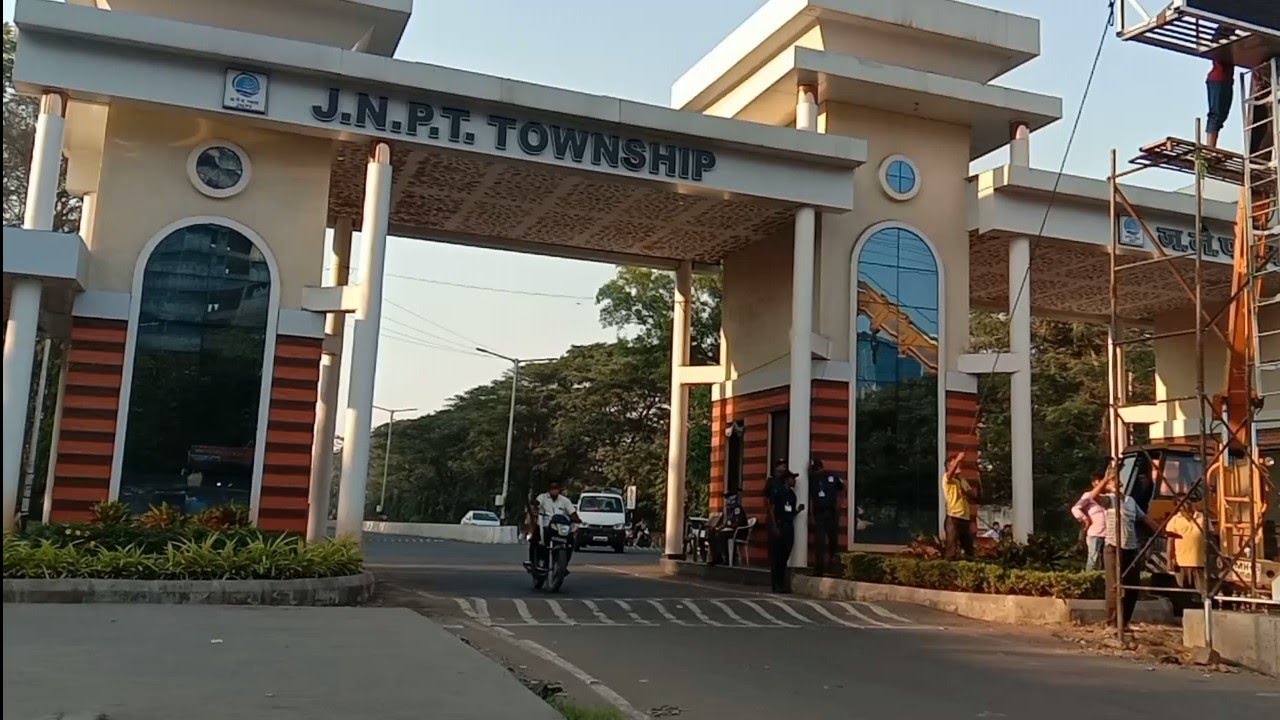
CIDCO‘s approval for widening State Highway 103 between Uran Railway Station, Bokadvira and the JNPA Township Gate is expected to improve last-mile connectivity to India’s largest container port, reduce congestion and strengthen the logistics ecosystem supporting Jawaharlal Nehru Port.
Key Takeaways
- CIDCO has granted administrative approval for widening SH-103 near the JNPA Township Gate.
- The project covers the stretch connecting Uran Railway Station, Bokadvira and Dronagiri Node.
- The road serves both residential communities and logistics traffic linked to JNPA and surrounding industrial areas.
- The widening is expected to reduce congestion, improve safety and increase road capacity.
- The project highlights the growing importance of supporting infrastructure in maintaining efficient port-led logistics.
Dronagiri, Navi Mumbai, Raigad, Maharashtra, India, June 29 (Maritime News) – A long-pending road infrastructure project serving one of India’s busiest maritime logistics corridors has moved closer to execution with CIDCO granting administrative approval for the widening of State Highway 103 (SH-103) near the JNPA Township Gate in the Dronagiri Node.
The decision follows sustained representations by MLA Mahesh Baldi, who had repeatedly raised concerns regarding severe traffic congestion along the corridor connecting Uran Railway Station, Bokadvira, Dronagiri Node and the Jawaharlal Nehru Port Authority (JNPA) township.
While the project is expected to significantly improve daily commuting for local residents, its strategic importance extends far beyond urban traffic management. The corridor serves as an important access route for cargo vehicles, industrial traffic and port-related transportation supporting India’s largest container gateway.
Once completed, the widening is expected to improve traffic flow, enhance road safety, reduce travel delays and strengthen the efficiency of the wider logistics ecosystem serving JNPA.
Also Read: BMCT Flyover Cleared, but Infrastructure Quality Puts Spotlight on JNPA Logistics Ecosystem
A Road That Serves More Than Local Traffic
At first glance, the project appears to be a conventional urban road-widening initiative.
However, viewed through a maritime lens, SH-103 performs a far more strategic function.
The corridor links residential areas, the Dronagiri Node, industrial establishments and the JNPA township while accommodating substantial movement of heavy commercial vehicles associated with port and industrial activities.
Over the years, increasing traffic volumes, particularly container trucks and heavy vehicles, have placed significant pressure on the existing road infrastructure. The resulting congestion has affected commuters, logistics operators and businesses alike, creating delays that extend beyond local inconvenience into broader supply chain efficiency.
Recognising these challenges, MLA Mahesh Baldi pursued the matter with CIDCO, seeking expedited approval for the long-awaited widening project.
Administrative approval has now been granted, with construction expected to commence in due course.
Why This Project Matters to JNPA
Jawaharlal Nehru Port is India’s largest container port and one of the country’s most important gateways for international trade.
Its competitiveness depends not only on terminal productivity but equally on the efficiency of the transport corridors connecting the port with industrial zones, logistics parks, rail infrastructure and urban settlements.
Every delay experienced by cargo vehicles outside the port has the potential to influence transport scheduling, fleet productivity, fuel consumption and overall logistics efficiency.
Although SH-103 is not a port-owned road, it forms part of the wider transport network that supports the movement of people, goods and services associated with JNPA’s expanding ecosystem.
As cargo volumes continue to grow and logistics investments accelerate across the Navi Mumbai-Uran region, strengthening such supporting infrastructure becomes increasingly important for sustaining efficient port operations.
Also Read: JNPA launches NIVESH, an AI-powered treasury platform
Beyond Urban Mobility
The widening of SH-103 represents more than an infrastructure upgrade for local commuters.
It reflects the continuing evolution of the JNPA region into an integrated logistics and industrial hub where urban planning, transport infrastructure and maritime trade are becoming increasingly interconnected.
Projects such as this complement broader investments taking place across the region, including port expansion, multimodal logistics infrastructure, industrial development and improved road and rail connectivity.
Viewed collectively, these initiatives contribute to strengthening the resilience and competitiveness of India’s western maritime gateway.
Supporting Infrastructure Is Becoming the New Competitive Advantage
The announcement regarding the widening of State Highway 103 should not be viewed as an isolated public works project.
It represents another reminder that the competitiveness of a modern port depends as much on its supporting infrastructure as on the efficiency of its terminals.
For decades, discussions surrounding port performance largely focused on berth productivity, crane efficiency, vessel turnaround time and cargo handling capacity.
Today, the equation has changed.
Global logistics competitiveness increasingly depends on what happens before cargo reaches the port and after it leaves the port gate.
Road connectivity has therefore become one of the most critical components of maritime infrastructure.
The Last-Mile Challenge
India has invested significantly in expanding port capacity under programmes such as Sagarmala, the National Logistics Policy, PM Gati Shakti and Maritime Amrit Kaal Vision 2047.
However, expanding terminal capacity alone cannot deliver maximum efficiency if supporting road networks remain constrained.
Every container truck delayed on an approach road represents:
- Increased turnaround time.
- Higher fuel consumption.
- Reduced fleet utilisation.
- Increased logistics costs.
- Lower supply chain reliability.
- Additional emissions.
For logistics operators, congestion outside the port often becomes just as costly as congestion inside the terminal.
The SH-103 widening therefore addresses an important component of the wider logistics chain rather than simply improving urban mobility.
Why SH-103 Matters
Although SH-103 is a state highway, its strategic importance stems from the communities and economic assets it connects.
The corridor serves:
- Uran Railway Station
- Bokadvira
- Dronagiri Node
- JNPA Township
- Port-linked industrial establishments
- Residential communities
- Commercial establishments
In addition to daily commuter traffic, the route experiences considerable movement of heavy commercial vehicles serving industries associated with the port ecosystem.
As industrial development continues across the Uran-Dronagiri region, demand on this corridor is expected to increase further.
Improving its capacity today helps prepare the region for tomorrow’s logistics requirements.
Infrastructure Must Grow With Cargo
JNPA has consistently expanded its cargo-handling capabilities through new terminals, mechanisation, digital initiatives and private investment.
Supporting infrastructure must keep pace with this growth.
Every increase in port capacity generates additional demand on:
- Roads.
- Rail corridors.
- Logistics parks.
- Container Freight Stations.
- Warehousing.
- Utility infrastructure.
Failure to strengthen these complementary assets can gradually reduce the benefits created by investments within the port itself.
Efficient maritime trade therefore depends upon synchronised infrastructure development rather than isolated projects.
Also Read: JNPA’s Industrial Expansion Plan Raises Questions Over Navi Mumbai’s Port Region
The Wider Development Story
The SH-103 widening also reflects the rapid transformation taking place across the Navi Mumbai-Uran region.
Major developments including:
- Expansion of Jawaharlal Nehru Port.
- Growth of Dronagiri Node.
- Industrial investments.
- Logistics facilities.
- Increasing multimodal connectivity.
- Regional infrastructure projects.
are collectively reshaping the economic geography of the area.
As these projects mature, transport corridors originally designed for lower traffic volumes require corresponding upgrades.
Road widening should therefore be viewed as infrastructure adaptation to changing economic realities.
Stakeholder Perspective
The benefits of the project extend across multiple stakeholder groups.
| Stakeholder | Expected Benefit |
|---|---|
| Local residents | Reduced congestion and improved daily mobility |
| Commercial vehicle operators | Faster and safer movement |
| Logistics companies | Improved fleet efficiency and lower delays |
| Industries | Better connectivity with suppliers and customers |
| JNPA ecosystem | Stronger supporting transport network |
| Emergency services | Improved accessibility |
| Regional economy | Greater infrastructure resilience |
The project demonstrates how a single transport intervention can create benefits extending well beyond road users.
Governance Reflection
The project also illustrates the importance of sustained coordination between elected representatives, planning agencies and infrastructure authorities.
According to the announcement, administrative approval followed continued representations made by MLA Mahesh Baldi regarding the persistent congestion affecting the corridor.
Such coordination becomes increasingly important as urban development, industrial expansion and maritime logistics converge within rapidly growing port regions.
The effectiveness of future infrastructure planning will increasingly depend upon proactive identification of transport bottlenecks before they begin constraining economic growth.
Also Read: ₹172 Crore Somtane–Chikhli Chord Line to Strengthen JNPA Hinterland Connectivity
Beyond Traffic Management
Reducing congestion is the immediate objective.
Strengthening logistics resilience is the longer-term outcome.
As India’s ports continue expanding under Maritime Amrit Kaal Vision 2047, supporting infrastructure such as highways, bridges, rail links and logistics corridors will increasingly determine how efficiently cargo moves through the national economy.
The widening of SH-103 should therefore be viewed as an investment in the wider logistics ecosystem that supports India’s largest container port rather than merely another road development project.
Building the Roads That Keep India’s Ports Moving
Infrastructure projects are often evaluated by their physical dimensions—kilometres widened, bridges constructed or funds sanctioned.
For the maritime sector, however, the more meaningful question is different.
Will the project improve the movement of cargo?
If the answer is yes, then the project contributes not only to regional development but also to India’s logistics competitiveness.
The widening of SH-103 should therefore be viewed through the broader lens of supply chain efficiency rather than simply as a road improvement initiative.
Port Competitiveness Begins Beyond the Port Gate
India’s major ports are continuously investing in deeper channels, larger terminals, automation and digital technologies.
Yet international experience increasingly demonstrates that port performance cannot be measured solely within terminal boundaries.
Cargo journeys begin long before a container enters a port and continue long after it exits the terminal.
Congestion on approach roads, inadequate last-mile connectivity and urban traffic bottlenecks can reduce the efficiency gained through substantial investments inside the port.
The SH-103 widening addresses one such constraint by strengthening a corridor that supports the wider JNPA ecosystem.
The Emerging JNPA Growth Corridor
The Navi Mumbai–Uran region is witnessing one of the country’s most significant infrastructure transformations.
Alongside JNPA’s continued expansion, the region is benefiting from investments in:
- Industrial development.
- Logistics parks.
- Warehousing.
- Rail connectivity.
- Urban infrastructure.
- Residential growth.
- Multimodal transport integration.
Each of these developments generates additional transport demand.
Consequently, road infrastructure must evolve in parallel with economic expansion.
Projects like SH-103 demonstrate how seemingly local interventions contribute to maintaining the efficiency of nationally significant logistics corridors.
Also Read: JNPA’s Floating Waste and Oil Spill Under Scrutiny
MaritimeNews Insight
One important lesson emerges from this project.
Ports do not become globally competitive through terminal investments alone.
They become competitive when every component of the logistics chain functions efficiently.
This includes:
- High-capacity approach roads.
- Reliable rail connectivity.
- Efficient customs processes.
- Modern warehousing.
- Integrated logistics planning.
- Safe and resilient transport infrastructure.
Road widening may therefore appear modest when compared with major port expansion projects, but its cumulative impact on logistics performance can be substantial.
Governance Reflection
The approval of the SH-103 widening demonstrates the importance of identifying transport bottlenecks before they begin constraining economic growth.
As India’s port cities continue expanding, infrastructure planning should increasingly adopt a corridor-based approach rather than addressing isolated projects individually.
Planning authorities, port authorities, state governments and urban development agencies all share a common objective:
To ensure that cargo, commuters and commercial activity can move safely and efficiently through rapidly developing port regions.
Integrated planning reduces future congestion, supports economic growth and improves quality of life for surrounding communities.
Lessons for Other Port Regions
The issues addressed through the SH-103 project are not unique to JNPA.
Many port cities across India face similar challenges where urban growth and increasing cargo movement compete for limited road capacity.
Future infrastructure planning around major ports could benefit from:
- Periodic traffic demand assessments.
- Integrated freight and urban mobility planning.
- Early identification of logistics bottlenecks.
- Better coordination between port authorities, planning agencies and state governments.
- Long-term corridor development aligned with projected cargo growth.
Strengthening these practices can help ensure that supporting infrastructure evolves alongside port expansion.
Also Read: Port Authorities Are More Than Landlords: Kolkata Warehouse Collapse Raises New Questions
Looking Ahead
Administrative approval marks an important milestone.
The next challenge will be timely execution.
Successful implementation will require efficient project management, minimal disruption to existing traffic and coordination among all executing agencies.
Once completed, the widened SH-103 corridor has the potential to deliver lasting benefits for residents, industries, logistics operators and the wider JNPA ecosystem.
MaritimeNews Editorial Verdict
The widening of SH-103 is more than a road development project.
It is an investment in the infrastructure that enables India’s maritime economy to function efficiently.
As JNPA continues to strengthen its position as the country’s premier container gateway, supporting transport corridors such as SH-103 become indispensable components of the logistics ecosystem that surrounds the port.
The approval also reinforces an important principle.
Ports are not defined solely by what happens inside their gates.
Their competitiveness increasingly depends on the strength of the roads, railways, logistics facilities and industrial corridors that connect them to the national economy.
For India to realise the ambitions of Maritime Amrit Kaal Vision 2047, infrastructure planning must continue to look beyond individual projects and focus on creating integrated, resilient and future-ready logistics networks.
The widening of SH-103 is a step in that direction.
MaritimeNews Editorial Note
This editorial is based on the announced administrative approval for the SH-103 widening project and publicly available information regarding its intended objectives. The analysis reflects MaritimeNews’ assessment of the broader logistics and maritime significance of the project and should be read as policy commentary rather than as an evaluation of project execution, which will depend on subsequent implementation by the concerned authorities.
Source: District Information Office (DIO) and MaritimeNews Analysis.
Reporting by MaritimeNews Bureaus, Writing by Harpal S Naol; Editing by Jaspal Singh Naol.