
MLAs Prashant Thakur and Mahesh Baldi raise the issue in the Maharashtra Legislature; State Government confirms it has urged the Centre to shift fishermen‘s diesel supply from bulk to retail pricing amid rising global fuel costs
Key Takeaways
- Maharashtra legislators have sought revision of diesel pricing applicable to fishermen’s cooperative societies.
- The issue concerns the classification of fishermen as bulk diesel consumers.
- The Fisheries Department acknowledges that bulk diesel prices have become significantly higher than retail prices.
- Rising international fuel prices have increased operational costs for fishing vessels.
- Maharashtra has already requested the Union Government to allow diesel supply under the retail category.
- The issue directly affects coastal livelihoods and the economics of marine fisheries.
Uran, Navi Mumbai, Raigad, Maharashtra, India, June 29 (Maritime News) – The Maharashtra Government has acknowledged that rising diesel prices are placing increasing financial pressure on the State’s fishing community and has confirmed that it has requested the Central Government to permit the supply of diesel to fishermen under the retail pricing category instead of the existing bulk consumer classification.
The issue was raised during the Maharashtra Legislature’s Monsoon Session through a starred question by MLA Prashant Thakur and MLA Mahesh Baldi, who highlighted the growing burden on fishing cooperative societies, particularly along the Konkan coast.
According to the written reply submitted by Fisheries Minister Nitesh Rane, diesel supplied to fishermen’s cooperative societies is currently classified under bulk rates, which have become significantly higher than retail diesel prices following recent global fuel market disruptions.
The State Government has informed the Union Government that shifting fishermen to retail diesel pricing would provide much-needed relief to the sector and has formally communicated this request through a letter dated 23 March 2026.
When Global Events Reach India’s Fishing Harbours
Fuel is one of the largest operating expenses for marine fishing vessels.
Consequently, fluctuations in global energy markets are often felt first by fishing communities whose livelihoods depend upon daily voyages into coastal and offshore waters.
During the Maharashtra Legislature’s Monsoon Session, MLAs Prashant Thakur and Mahesh Baldi highlighted the financial difficulties being faced by fishing cooperative societies due to the continued classification of diesel purchases under the bulk consumer category.
The legislators argued that fishermen are being compelled to purchase diesel at higher bulk rates despite depending upon fuel as their primary production input, thereby increasing operational costs and reducing the economic viability of fishing activities.
Uran’s Fishing Fleet Under Pressure
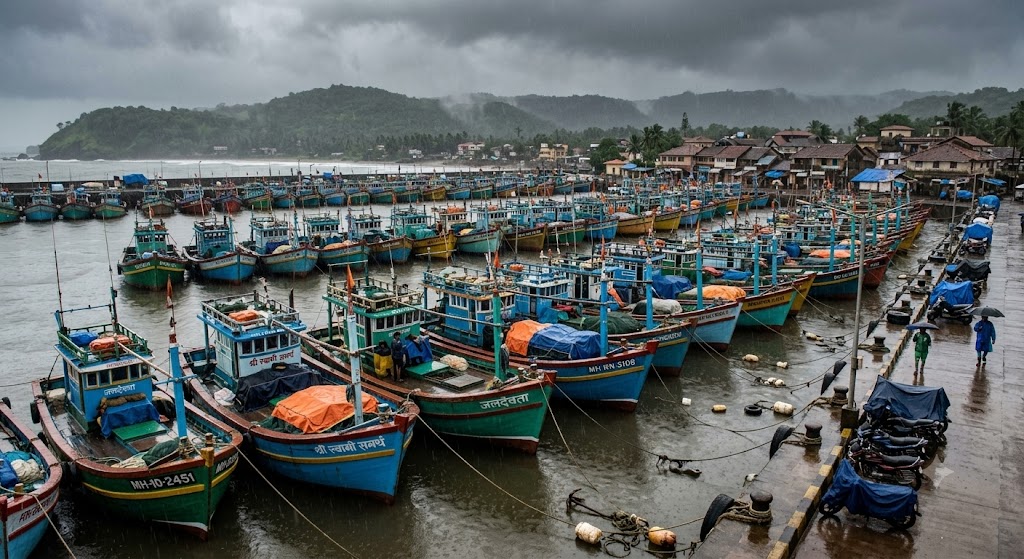
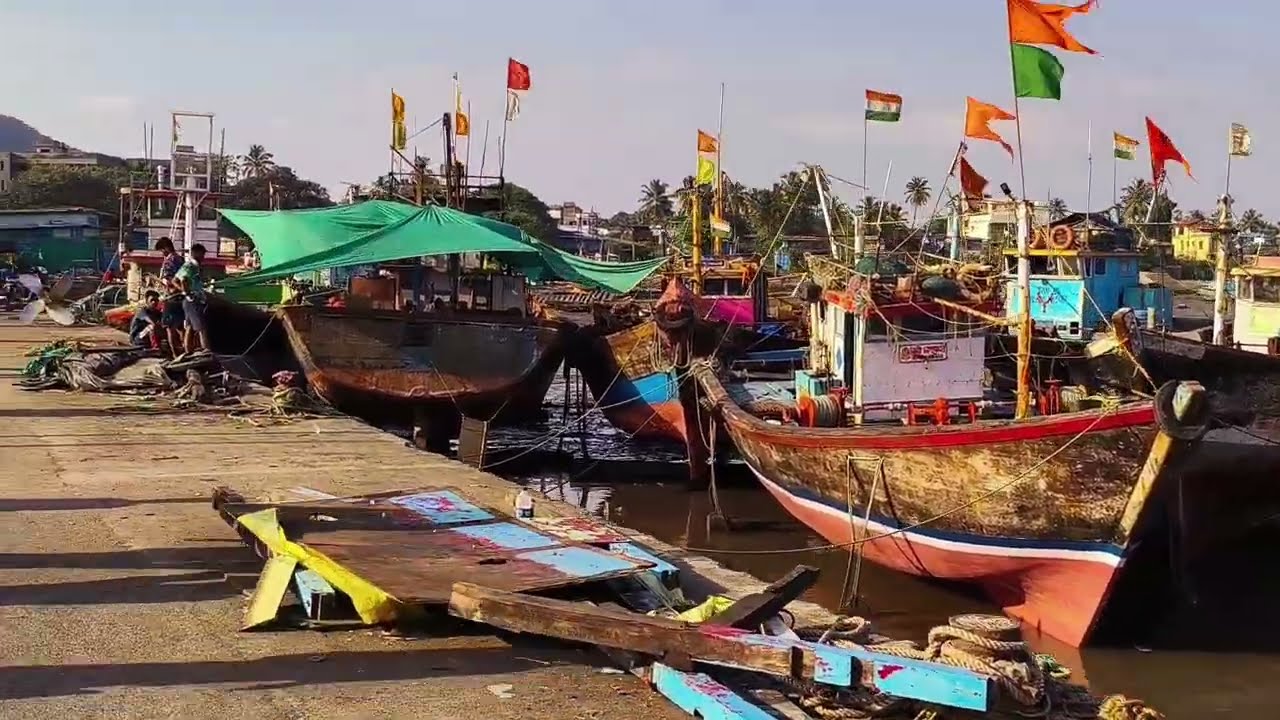
The issue has particular significance for the Uran region, where the fishing industry remains a major source of livelihood.
According to the starred question, approximately 300 purse seine and deep-sea fishing vessels operating from Mora and Karanja ports require substantial quantities of diesel for their operations.
Higher fuel prices have increased the cost of every fishing expedition, affecting profitability and placing additional financial pressure on traditional and small-scale fishermen.
The legislators also noted that the absence of pricing relief has further intensified the burden on cooperative societies responsible for arranging diesel supplies for their members.
Government Acknowledges the Challenge
In his written reply, Fisheries Minister Nitesh Rane acknowledged that diesel supplied to fishermen’s cooperative societies is presently purchased under the bulk diesel rate category.
The Minister further noted that international developments, including the disruption to global fuel markets arising from the recent conflict involving the United States and Iran, have contributed to increased fuel prices.
As a consequence, bulk diesel prices in Maharashtra have become significantly higher than retail diesel prices, increasing operating costs for the fishing community.
The Government also confirmed that fishermen’s cooperative societies have submitted representations requesting reduction of diesel prices due to the impact on their livelihoods.
Maharashtra Seeks Central Intervention
Recognising the economic implications for the fisheries sector, the Maharashtra Government informed the Legislature that it had already written to the Union Government on 23 March 2026, requesting that diesel required by fishermen be supplied under the retail pricing category rather than bulk rates.
If approved, the proposal could reduce fuel costs for fishing vessels, improve operational sustainability and provide financial relief to thousands of fishermen dependent upon marine fisheries along Maharashtra’s coastline.
The request now awaits consideration by the Central Government.
Also Read: BMCT Flyover Cleared, but Infrastructure Quality Puts Spotlight on JNPA Logistics Ecosystem
Fuel Costs Are No Longer Just a Fishing Issue—They Are a Blue Economy Challenge
The demand raised in the Maharashtra Legislature goes beyond the price of diesel.
It raises a broader question about how India supports one of the country’s oldest maritime professions during a period of volatile global energy markets.
For commercial marine fisheries, diesel is not merely an operating expense.
It is the primary input that enables fishing vessels to leave harbour, reach fishing grounds and return safely with their catch.
Any significant increase in fuel costs directly affects the economics of fishing operations, particularly for traditional fishermen and cooperative societies that operate on narrow profit margins.
The issue therefore deserves to be viewed through the wider lens of maritime policy rather than solely as a fuel pricing concern.
Global Geopolitics Meets Coastal Livelihoods
The Maharashtra Government has acknowledged that recent international developments have contributed to higher fuel prices.
In its written reply, the Fisheries Department noted that disruptions in global fuel markets associated with the recent United States–Iran conflict have resulted in increased diesel prices, particularly under the bulk consumer category.
This illustrates an important reality of today’s maritime economy.
Events occurring thousands of kilometres away can rapidly influence the daily operating costs of fishermen working along India’s coastline.
Global energy markets, international shipping routes and geopolitical tensions increasingly shape the economic realities of local fishing communities.
Why the Bulk Diesel Classification Matters
The core issue raised by MLAs Prashant Thakur and Mahesh Baldi is not the availability of diesel but its pricing classification.
Fishing cooperative societies currently procure diesel under the bulk consumer category.
According to the State Government, bulk diesel prices in Maharashtra have recently become significantly higher than retail diesel prices.
This pricing difference translates directly into higher operating costs for fishing vessels.
For fleets consuming thousands of litres of diesel each month, even modest price differences can substantially affect voyage economics, profitability and long-term sustainability.
The legislators have therefore sought a review of this classification so that fishermen may receive diesel under the retail pricing category.
Also Read: JNPA launches NIVESH, an AI-powered treasury platform
Implications for Maharashtra’s Fishing Economy
The impact extends beyond individual boat owners.
Marine fisheries support an extensive economic network comprising:
- Fishermen and crew members.
- Fishing cooperative societies.
- Fish landing centres.
- Auction markets.
- Ice suppliers.
- Transport operators.
- Seafood processors.
- Exporters.
- Local coastal communities.
An increase in fuel costs can influence every stage of this value chain by raising operational expenses and reducing margins.
For coastal districts along the Konkan region, where fishing remains a significant source of employment and income, sustained increases in diesel prices can have wider socioeconomic implications.
A Blue Economy Perspective
India’s Blue Economy strategy recognises fisheries as one of the country’s important maritime sectors alongside ports, shipping, coastal tourism and marine resources.
Supporting sustainable fisheries therefore involves more than increasing fish production.
It also requires creating an enabling policy environment in which fishing remains economically viable.
Fuel affordability, modern fishing infrastructure, harbour facilities, cold chains, safety equipment and market access collectively determine the long-term resilience of the sector.
The diesel pricing issue should therefore be viewed as one component of a broader conversation on strengthening India’s marine fisheries economy.
MaritimeNews Insight
The debate should not be framed simply as a request for cheaper fuel.
Instead, it should focus on whether the existing pricing framework appropriately reflects the unique characteristics of the fishing sector.
Unlike many commercial industries, fishing vessels cannot easily pass rising fuel costs to consumers without affecting competitiveness, market dynamics and the livelihoods of thousands of coastal families.
A review of diesel pricing for fishermen therefore represents a policy question balancing fiscal considerations, livelihood protection and maritime economic development.
Governance Reflection
The written reply confirms that the Maharashtra Government has already communicated its recommendation to the Union Government through its letter dated 23 March 2026, requesting that diesel required by fishermen be supplied under the retail pricing category.
The next phase of the issue now lies at the national policy level.
Any decision will require consideration of fuel pricing mechanisms, administrative implementation, financial implications and the broader objectives of supporting India’s fisheries sector.
The discussion therefore extends beyond Maharashtra and may have relevance for fishing communities across other coastal states facing similar operational challenges.
Also Read: JNPA’s Industrial Expansion Plan Raises Questions Over Navi Mumbai’s Port Region
Should India’s Fishing Fleet Be Treated Differently?
The question raised in the Maharashtra Legislature is ultimately about more than diesel prices.
It is about whether India’s marine fisheries sector should be recognised as a strategic component of the national maritime economy when fuel pricing policies are formulated.
The State Government has acknowledged that the current pricing mechanism has increased operational costs for fishermen and has already approached the Union Government seeking a shift from bulk diesel rates to retail pricing.
The decision that follows will have implications extending beyond Maharashtra’s coastline.
Fuel Is the Lifeline of Marine Fisheries
Every fishing voyage begins with fuel.
Unlike many industries that can adjust production schedules or transfer increased costs through pricing mechanisms, fishing operations remain highly dependent on fuel availability and affordability.
Higher diesel prices influence:
- Voyage frequency.
- Fishing range.
- Operating profitability.
- Crew earnings.
- Vessel utilisation.
- Investment in fleet maintenance.
- Long-term sustainability of fishing enterprises.
For traditional fishermen and cooperative societies, sustained increases in fuel costs can gradually erode the economic viability of marine fishing itself.
Also Read: JNPA’s Floating Waste and Oil Spill Under Scrutiny
A National Policy Question
Although the issue has emerged from Maharashtra, similar concerns may exist across India’s extensive coastline.
From Gujarat to West Bengal, and from Kerala to Tamil Nadu, thousands of marine fishing vessels depend upon diesel as their primary operational input.
If bulk diesel pricing continues to remain significantly higher than retail pricing, policymakers may eventually need to examine whether a uniform national approach would better serve the fisheries sector.
Such a review would naturally require consultation with:
- Ministry of Fisheries, Animal Husbandry and Dairying.
- Ministry of Petroleum and Natural Gas.
- Ministry of Finance.
- State Governments.
- Oil Marketing Companies.
- Fisheries Cooperative Federations.
- Marine Fishing Associations.
A coordinated approach would help balance fiscal considerations with the objective of sustaining coastal livelihoods.
Beyond Price Relief
The current discussion should not be viewed solely as a demand for lower fuel prices.
It also presents an opportunity to examine broader reforms that strengthen India’s marine fisheries sector.
Possible policy considerations include:
- Reviewing diesel supply mechanisms for registered fishing vessels.
- Strengthening digital verification through cooperative societies.
- Improving transparency in fuel distribution.
- Linking any pricing benefits to active fishing operations.
- Encouraging fuel-efficient fishing technologies.
- Supporting long-term energy transition initiatives where feasible.
Such measures could improve both accountability and operational sustainability.
MaritimeNews Insight
The diesel pricing debate reflects a larger transition taking place within India’s maritime economy.
As the country advances its Blue Economy agenda, sectors such as fisheries, ports, shipping and coastal infrastructure are becoming increasingly interconnected.
Marine fisheries contribute not only to coastal employment but also to seafood exports, food security and regional economic development.
Policies affecting operational costs therefore influence much more than individual fishing voyages.
They shape the resilience of an entire maritime value chain.
Also Read: Karanja Port Scam? ₹256 Crore Spent, 15 Years Lost
Governance Reflection
The Maharashtra Government has already taken an important administrative step by formally communicating its recommendation to the Union Government.
The next phase now depends upon national policy deliberations.
Whatever decision is ultimately taken, the process provides an opportunity to reassess whether existing fuel pricing mechanisms continue to reflect the operational realities of India’s fishing sector under changing global energy conditions.
Constructive dialogue between the Centre, States, oil companies and fishing communities will be essential in arriving at a balanced and sustainable solution.
MaritimeNews Editorial Verdict
The demand to shift fishermen from bulk diesel pricing to retail rates should not be viewed merely as a request for financial relief.
It represents a wider policy discussion on how India values and supports one of its oldest maritime industries.
As global fuel markets become increasingly volatile, coastal economies are likely to experience more frequent external shocks.
Building resilience within the fisheries sector will therefore require not only financial support where appropriate but also long-term policy reforms that improve operational sustainability, efficiency and competitiveness.
Whether through pricing reforms, targeted assistance or broader structural measures, the objective should remain clear:
To ensure that India’s fishing communities continue to contribute to the nation’s Blue Economy without being disproportionately affected by factors beyond their control.
MaritimeNews Editorial Note
This editorial is based on the starred question raised during the Maharashtra Legislature’s Monsoon Session and the written reply provided by the State Fisheries Minister. The policy observations contained herein represent MaritimeNews’ editorial analysis intended to encourage informed discussion on fisheries governance, fuel policy and the future of India’s Blue Economy. They should not be interpreted as advocacy for any specific pricing decision, which remains a matter for consideration by the appropriate government authorities.
Source: District Information Office (DIO) and MaritimeNews Analysis.
Reporting by MaritimeNews Bureaus, Writing by Harpal S Naol; Editing by Jaspal Singh Naol.