
India’s First Green Port Expands Sustainable Infrastructure with Deep-Draft Berths, Green Ship Incentives and Major Capacity Upgrades
Make us preferred source on Google
KEY TAKEAWAYS
- Mormugao has become India’s first Green Port.
- Infrastructure projects worth over ₹3,300 crore are transforming the port.
- Green Ship Incentives promote environmentally responsible shipping.
- Major upgrades include Berth No. 9, Vasco Bay Project and capital dredging.
- The expansion supports Sagarmala and Maritime India Vision 2030.
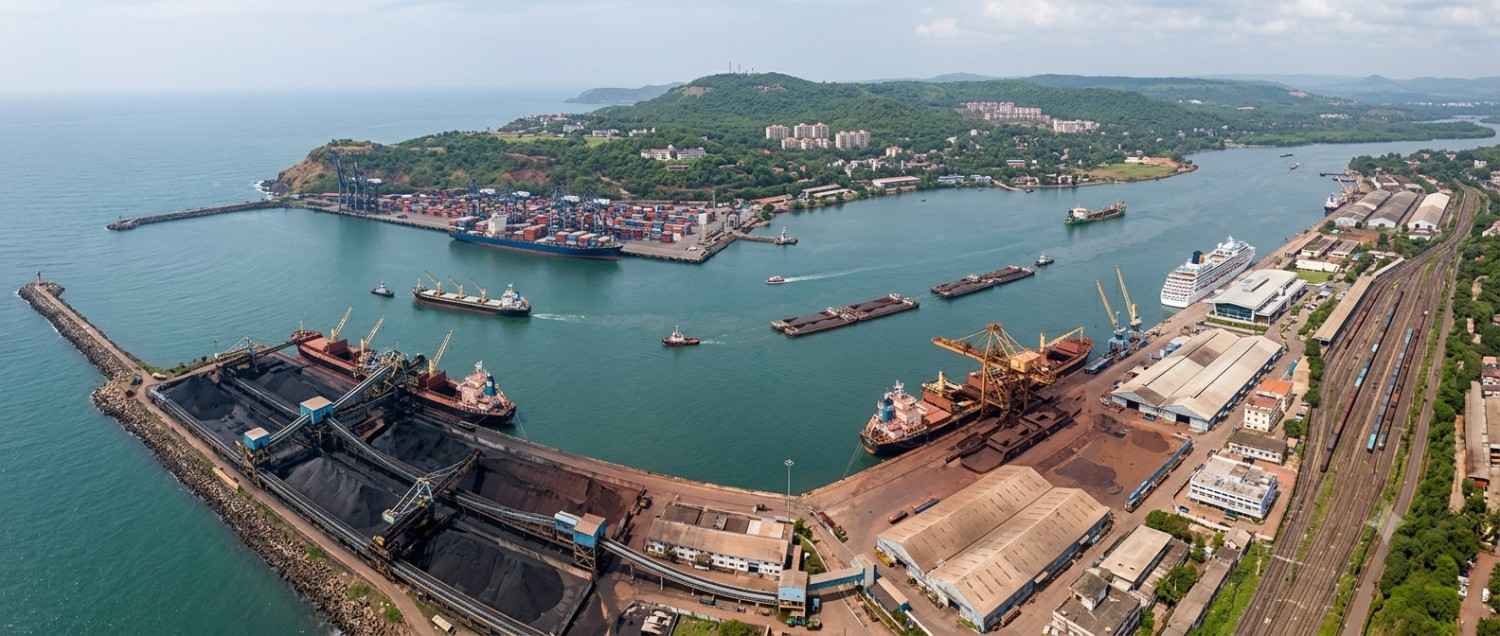
Mormugao, Goa, India, July 04 (Maritime News) – Mormugao Port Authority (MPA) is strengthening its position as one of India’s most progressive ports after emerging as the country’s first Green Port while undertaking infrastructure projects exceeding ₹3,300 crore. Highlighted by Union Minister for Ports, Shipping and Waterways Sarbananda Sonowal during his visit to Goa, the port’s transformation includes completed projects worth more than ₹1,300 crore and another ₹2,000 crore under implementation. The expansion encompasses the redevelopment of Berth No. 9, the Vasco Bay Project, capital dredging, a modern Seafarers’ Club and Green Ship Incentives that encourage environmentally responsible shipping. The developments align with the Government of India’s vision to modernise ports under Maritime India Vision 2030 and the Sagarmala Programme, positioning Mormugao as a model for sustainable and competitive port-led growth.
Also Read: Goa Opens New Captain of Ports Terminal to Strengthen Maritime Governance and River Navigation
WHY THIS MATTERS
Ports worldwide are under increasing pressure to improve operational efficiency while reducing their environmental footprint. Mormugao Port’s transition towards green infrastructure demonstrates how sustainability can be integrated into port modernisation without compromising commercial competitiveness. As global shipping moves towards decarbonisation, ports capable of supporting greener vessel operations will become increasingly attractive to international shipping lines and cargo owners.
Beyond Infrastructure: How Sustainability Is Becoming the New Measure of Port Competitiveness
For decades, ports were primarily evaluated on cargo throughput, berth capacity and vessel turnaround time.
Today, however, global maritime trade is undergoing a fundamental transformation.
Ports are increasingly judged not only by how efficiently they handle cargo, but also by how effectively they reduce emissions, protect the environment, improve energy efficiency and support the decarbonisation of global shipping.
Against this backdrop, Mormugao Port Authority’s emergence as India’s first Green Port represents more than an institutional milestone—it reflects a broader shift in India’s maritime strategy towards environmentally responsible port development.
Combined with infrastructure investments exceeding ₹3,300 crore, the port is positioning itself at the intersection of operational efficiency, sustainability and long-term competitiveness.
Also Read: Goa Water Metro Receives Phase-I Priority as Centre Accelerates Sustainable Inland Water Transport
What Is a Green Port?
A Green Port integrates environmental sustainability into every aspect of port planning, infrastructure and operations.
Rather than focusing solely on cargo handling, Green Ports seek to minimise environmental impacts while maintaining commercial efficiency.
Typical Green Port initiatives include:
- Energy-efficient infrastructure.
- Reduction of greenhouse gas emissions.
- Sustainable waste management.
- Water conservation.
- Cleaner cargo handling equipment.
- Digital port operations.
- Alternative energy adoption.
- Incentives for environmentally responsible vessels.
- Protection of surrounding coastal ecosystems.
Across Europe and Asia, Green Ports are becoming increasingly important as shipping companies pursue their own decarbonisation targets.
Why Green Ship Incentives Matter
One of the most notable initiatives announced for Mormugao Port is the introduction of Green Ship Incentives, making it the first Indian port to adopt such a programme.
Green Ship Incentives reward vessels demonstrating superior environmental performance through preferential treatment or financial benefits.
Internationally, such schemes often recognise ships that:
- Reduce greenhouse gas emissions.
- Improve fuel efficiency.
- Meet advanced environmental certification standards.
- Utilise cleaner marine fuels.
- Adopt energy-efficient technologies.
Although incentive structures vary between ports, the broader objective remains consistent—to encourage shipowners to invest in cleaner and more sustainable fleets.
For shipping companies, these programmes increasingly influence port selection, operational planning and long-term fleet investment decisions.
Also Read: Politics of Jetties in Goa: A Tug of War
Infrastructure Expansion Supports Future Growth
Environmental sustainability alone cannot transform a port.
Commercial competitiveness still depends upon modern infrastructure capable of accommodating larger vessels and improving cargo-handling efficiency.
Mormugao Port’s infrastructure programme addresses both objectives simultaneously.
Completed projects worth over ₹1,300 crore, together with more than ₹2,000 crore currently under implementation, include several strategically important developments.
Among them are:
Redevelopment of Berth No. 9
Modernising cargo handling infrastructure to improve operational efficiency and accommodate evolving trade requirements.
Vasco Bay Project
Development of a modern fishing harbour that strengthens fisheries infrastructure while supporting coastal livelihoods.
Capital Dredging
Increasing channel depth to accommodate larger deep-draft vessels, improving competitiveness and operational flexibility.
Modern Seafarers’ Club
Providing improved welfare facilities for seafarers, recognising the growing importance of human-centred maritime infrastructure.
Together, these investments demonstrate a balanced approach where sustainability and commercial capability evolve in parallel.
Ports Are Becoming ESG Assets
Environmental, Social and Governance (ESG) considerations are increasingly shaping investment decisions throughout the maritime sector.
Cargo owners, financial institutions and shipping companies now assess ports using broader sustainability indicators that extend beyond traditional operational performance.
These include:
- Carbon management.
- Environmental compliance.
- Worker welfare.
- Community engagement.
- Energy efficiency.
- Climate resilience.
- Governance standards.
Mormugao Port’s emphasis on Green Port initiatives and seafarer welfare positions it within this emerging global framework.
As ESG reporting becomes increasingly important, ports demonstrating measurable sustainability improvements may gain stronger competitive advantages.
Also Read: Port Authorities Are More Than Landlords: Kolkata Warehouse Collapse Raises New Questions
Supporting India’s Maritime Decarbonisation
India has committed itself to developing a cleaner and more sustainable maritime sector.
Port modernisation plays a central role in achieving these objectives.
Green Ports can support maritime decarbonisation by:
- Encouraging cleaner vessels.
- Improving operational efficiency.
- Reducing vessel waiting times.
- Supporting future alternative fuel infrastructure.
- Promoting digital port management.
- Lowering overall environmental impacts.
While vessel technology remains the responsibility of shipowners, ports increasingly provide the enabling ecosystem necessary for cleaner shipping.
Mormugao’s initiatives therefore complement India’s wider transition towards sustainable maritime transport.
MaritimeNews Insight
The significance of Mormugao Port’s Green Port status extends beyond environmental recognition.
It signals a broader evolution in how Indian ports are preparing for the future of global trade.
Tomorrow’s ports will compete not only through larger terminals and faster cargo handling but also through sustainability, digitalisation, resilience and environmental performance.
By integrating Green Ship Incentives with major infrastructure investments, Mormugao Port is demonstrating that environmental responsibility and commercial competitiveness are not opposing objectives—they are increasingly becoming mutually reinforcing drivers of maritime growth.
Also Read: NEED OF BALLAST WATER TREATMENT IN MARITIME SUSTAINABILITY
How Sustainable Port Development Is Reshaping India’s Position in International Shipping
The emergence of Mormugao Port Authority (MPA) as India’s first Green Port represents more than an achievement for Goa—it reflects the changing direction of India’s maritime strategy.
Around the world, ports are evolving from traditional cargo gateways into integrated logistics, sustainability and innovation hubs. Environmental performance, digitalisation, operational efficiency and stakeholder engagement have become critical indicators of competitiveness alongside cargo volumes and infrastructure capacity.
By combining green initiatives with significant infrastructure investments, Mormugao Port is positioning itself as an example of how Indian ports can remain commercially competitive while aligning with global environmental expectations.
The transformation also reinforces India’s ambition to become a leading maritime nation under Maritime India Vision 2030 and the Sagarmala Programme.
Strengthening India’s Port-Led Development Strategy
India’s maritime growth increasingly depends on ports that can support larger vessels, faster cargo movement and environmentally sustainable operations.
Projects underway at Mormugao Port—including the redevelopment of Berth No. 9, the Vasco Bay Project, capital dredging and a modern Seafarers’ Club—demonstrate a comprehensive approach to port development.
Rather than expanding capacity alone, the port is investing across multiple dimensions:
- Cargo infrastructure.
- Fishing harbour facilities.
- Marine accessibility.
- Seafarer welfare.
- Environmental sustainability.
- Operational efficiency.
This integrated development model reflects the broader philosophy of port-led economic development, where ports serve as catalysts for regional industrial growth, logistics efficiency and coastal prosperity.
Also Read: Why India’s Largest Container Port Is Bringing AI Into Treasury Management
Enhancing India’s Appeal to Global Shipping
International shipping companies increasingly evaluate ports using factors beyond location and cargo-handling capacity.
Modern shipping lines also consider:
- Environmental credentials.
- Operational reliability.
- Digital capabilities.
- Vessel turnaround time.
- Port sustainability.
- Regulatory transparency.
- Future readiness.
As decarbonisation accelerates across global shipping, ports capable of supporting cleaner operations will become increasingly attractive to international carriers.
Mormugao’s Green Ship Incentives send an important signal that Indian ports are adapting to these evolving market expectations.
Such initiatives may encourage greater engagement from environmentally responsible shipping companies seeking ports aligned with international sustainability objectives.
Investing in Seafarer Welfare
One of the often-overlooked aspects of port development is investment in seafarer welfare.
The planned Seafarers’ Club at Mormugao Port reflects growing recognition that ports must support not only cargo operations but also the wellbeing of maritime professionals.
International organisations, including the International Maritime Organization (IMO) and the International Labour Organization (ILO), have consistently emphasised the importance of improving facilities available to seafarers during port calls.
Modern welfare infrastructure contributes to:
- Better living conditions during port stays.
- Crew wellbeing.
- Mental health support.
- Recreational facilities.
- Improved overall port experience.
By incorporating seafarer welfare into its development strategy, Mormugao aligns with evolving international best practices.
Supporting Goa’s Wider Maritime Ecosystem
The port’s transformation should also be viewed within the context of Goa’s broader maritime initiatives.
Recent announcements relating to:
- The proposed Goa Water Metro.
- The new Captain of Ports Terminal.
- The proposed Goa Maritime Board.
- The Goa Shipbuilding and Ship Repair Policy.
- The Maritime Master Plan.
collectively indicate that Goa is pursuing an integrated maritime development strategy rather than isolated infrastructure projects.
Mormugao Port serves as the commercial anchor within this wider maritime ecosystem.
Its continued modernisation strengthens logistics while complementing inland waterways, tourism, shipbuilding and maritime governance initiatives taking shape across the state.
Supporting Maritime India Vision 2030
The development trajectory of Mormugao Port aligns closely with several objectives outlined under Maritime India Vision 2030, including:
- Sustainable port development.
- Increased operational efficiency.
- Port modernisation.
- Green shipping.
- Improved logistics.
- Enhanced coastal economic development.
- Technology adoption.
- Greater international competitiveness.
By integrating sustainability with infrastructure expansion, Mormugao demonstrates how these national objectives can be translated into practical port development initiatives.
Also Read: VOC Port Emerges as Model for Green Maritime Growth
MaritimeNews Insight
The future competitiveness of ports will increasingly depend on their ability to balance three priorities:
- Commercial efficiency.
- Environmental sustainability.
- Human-centred development.
Mormugao Port’s transformation suggests that Indian ports are beginning to embrace this broader definition of maritime competitiveness.
Rather than treating environmental responsibility as a regulatory obligation, the port is positioning sustainability as a strategic advantage capable of attracting investment, supporting international shipping and strengthening long-term resilience.
This approach reflects an important evolution in India’s maritime thinking—from building larger ports to building smarter, greener and more future-ready ports.
MaritimeNews Editorial Verdict
Mormugao Port’s emergence as India’s first Green Port marks a significant milestone in the country’s maritime development journey.
Combined with infrastructure investments exceeding ₹3,300 crore, the port is demonstrating that sustainable development and commercial growth can progress together.
The introduction of Green Ship Incentives, expansion of deep-draft infrastructure, redevelopment of cargo facilities and investment in seafarer welfare collectively position Mormugao as one of India’s most forward-looking ports.
As global shipping moves towards cleaner operations and higher environmental standards, ports capable of integrating sustainability with operational excellence are likely to become increasingly competitive.
For Goa, the transformation strengthens its role as a maritime state.
For India, it provides a practical example of how future-ready ports can contribute to national economic growth, international trade and sustainable maritime development.
Also Read: India Becomes World’s Top Ship Recycling Nation
Frequently Asked Questions (FAQs)
1. Why is Mormugao Port called India’s first Green Port?
Mormugao Port has introduced sustainable infrastructure, environmental initiatives and Green Ship Incentives, making it India’s first port to adopt a comprehensive Green Port approach.
2. What are Green Ship Incentives?
Green Ship Incentives encourage environmentally responsible vessels by offering benefits to ships that demonstrate improved environmental performance and sustainability standards.
3. How much is being invested in Mormugao Port?
Infrastructure projects worth more than ₹1,300 crore have already been completed, while projects exceeding ₹2,000 crore are currently under implementation, taking the total investment pipeline beyond ₹3,300 crore.
4. What major projects are underway at Mormugao Port?
Key projects include the redevelopment of Berth No. 9, the Vasco Bay Project, capital dredging, a modern Seafarers’ Club and several sustainability-focused infrastructure upgrades.
5. Why are Green Ports important?
Green Ports improve environmental performance, reduce emissions, encourage sustainable shipping, enhance operational efficiency and help ports remain competitive as the global maritime industry moves towards decarbonisation.
6. How does Mormugao Port support Maritime India Vision 2030?
The port’s infrastructure expansion, sustainability initiatives and Green Ship Incentives align with Maritime India Vision 2030 by promoting modern, efficient and environmentally responsible port development.
Make us preferred source on Google
Source: PIB Delhi
Reporting Basis: Official Government Release and MaritimeNews Analysis
Reporting by MaritimeNews Bureaus, Writing by Harpal S Naol; Editing by Jaspal Singh Naol.