Sarbananda Sonowal Announces Fast-Track Implementation, Positioning Goa’s River Network as the Next Frontier of Green Urban Mobility and Blue Economy Growth
Key Takeaways
- Goa Water Metro has been placed under Phase-I implementation priority by the Central Government.
- The project aims to utilise Goa’s river network for sustainable urban mobility and improved connectivity.
- Water-based public transport is expected to reduce road congestion while supporting tourism and the Blue Economy.
- The initiative aligns with Sagarmala and Maritime India Vision 2030.
- Goa is positioning itself as a national model for environmentally sustainable inland water transport.
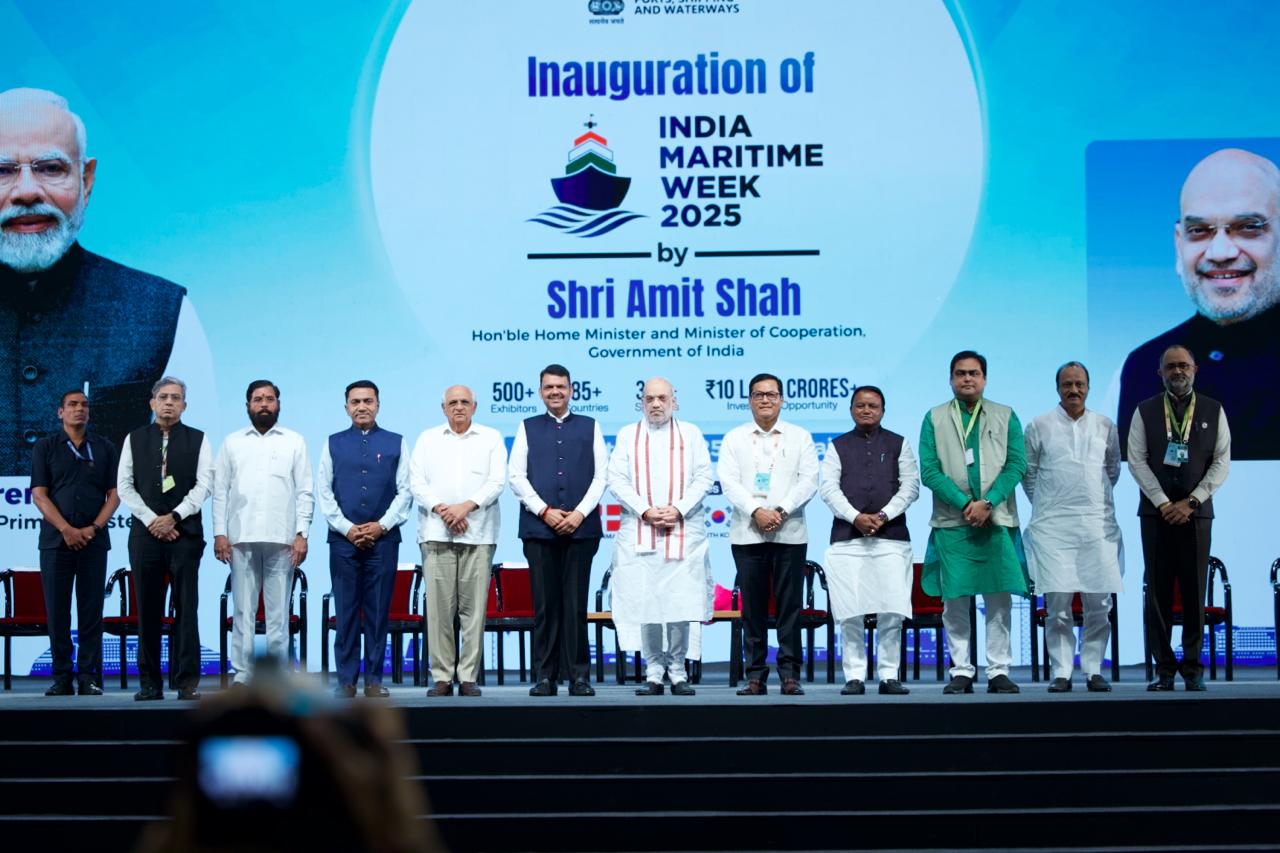
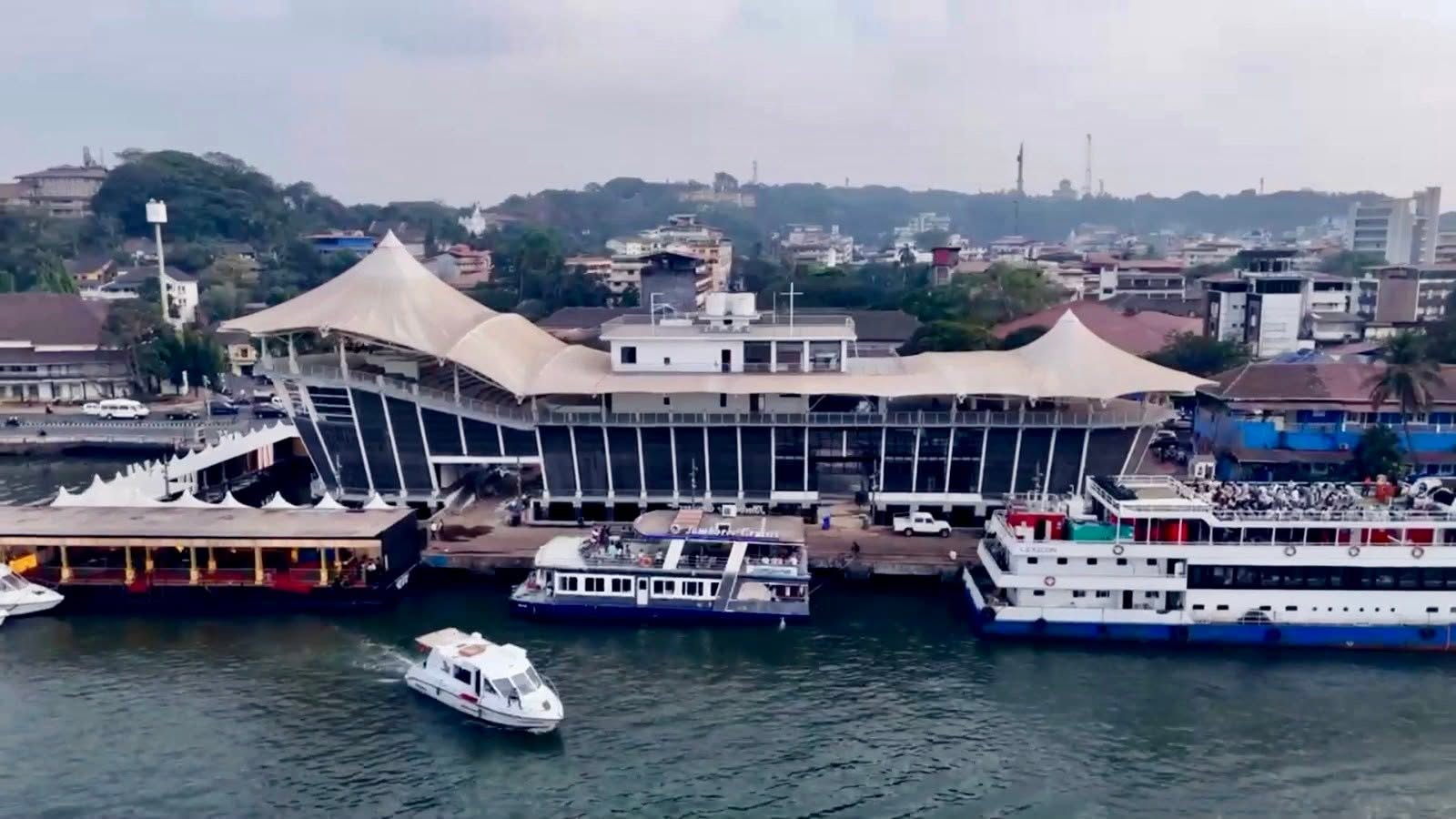
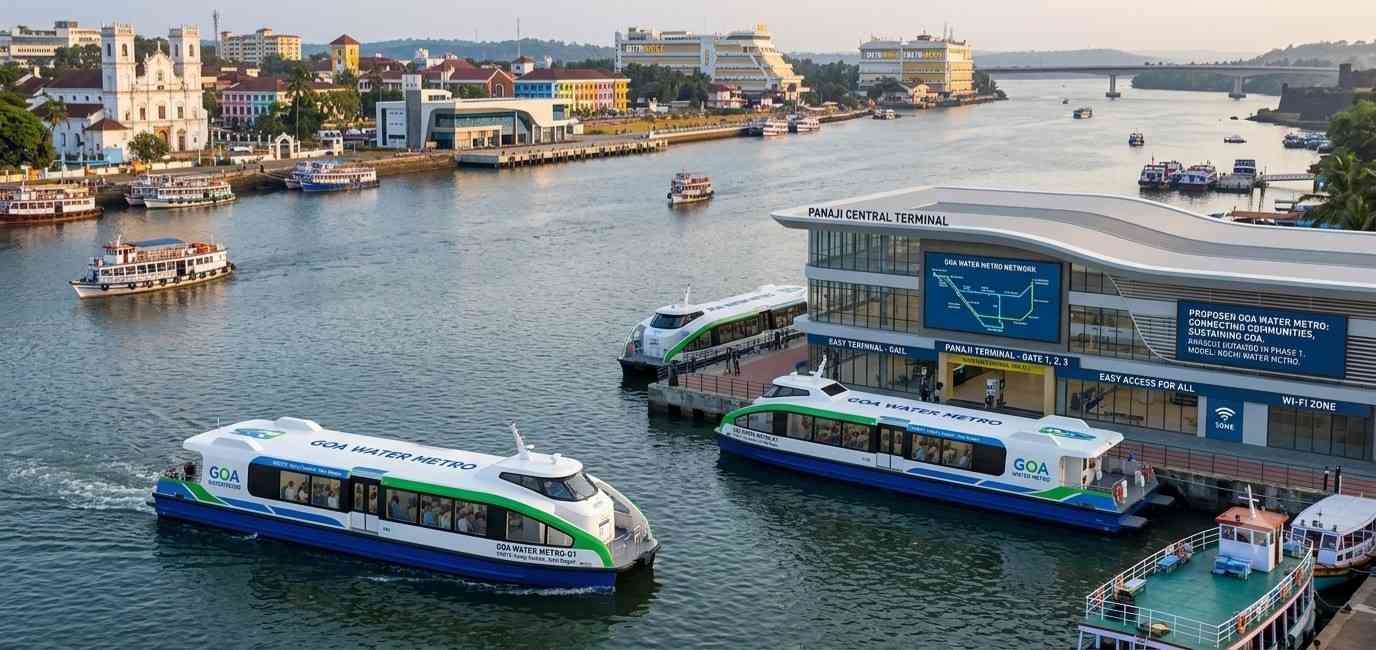
Panaji, Goa, India, July 02 (Maritime News) – The proposed Goa Water Metro has received a major boost after Union Minister for Ports, Shipping and Waterways Sarbananda Sonowal announced that the project has been accorded Phase-I implementation priority, signalling the Central Government’s commitment to developing Goa’s inland waterways as a sustainable urban transport network. The announcement was made during the inauguration of the new Captain of Ports Terminal in Panaji, where the Minister outlined a broader maritime vision centred on modern waterways, integrated transport, maritime governance and the Blue Economy.
The proposed Water Metro aims to utilise Goa’s extensive network of rivers and waterways to provide an environmentally friendly alternative to road transport while improving connectivity between riverine communities, reducing urban congestion and supporting tourism. The initiative aligns with the Government of India’s broader focus on sustainable mobility, inland waterways and multimodal transport under Maritime India Vision 2030 and the Sagarmala Programme.
If implemented successfully, the Goa Water Metro could transform daily commuting, enhance visitor experiences and strengthen the state’s position as a leader in sustainable maritime transport. The project also reflects a growing national emphasis on leveraging inland waterways to improve urban mobility while reducing emissions and supporting resilient coastal development.
Why This Matters
The Goa Water Metro represents more than a transport project—it reflects a shift in how coastal cities can integrate inland waterways into everyday mobility. By prioritising river-based transport, Goa has the opportunity to reduce pressure on road infrastructure, lower transport-related emissions and strengthen tourism through a modern, sustainable ferry network. For India’s maritime sector, the project also demonstrates how inland waterways can become an important component of the Blue Economy, complementing ports, coastal shipping and urban development while creating a more resilient and environmentally responsible transport system.
Also Read: Goa Opens New Captain of Ports Terminal to Strengthen Maritime Governance and River Navigation
Goa’s Rivers Set to Become the State’s Next Transport Corridor
Goa’s extensive river network could soon play a far greater role in the state’s public transport system following the Central Government’s decision to accord Phase-I implementation priority to the proposed Goa Water Metro.
Announcing the decision in Panaji, Union Minister Sarbananda Sonowal described Goa’s waterways as an underutilised asset capable of supporting sustainable, efficient and environment-friendly urban mobility. He said the project has the potential to transform the commuting experience while enhancing the state’s tourism offering through modern water-based transport services.
Unlike conventional road expansion projects, the Water Metro seeks to leverage existing natural waterways, reducing dependence on road infrastructure while improving connectivity between communities located along the Mandovi, Zuari and other navigable rivers.
By integrating water transport with existing urban mobility systems, the project could provide commuters and visitors with an alternative mode of travel that is both efficient and environmentally sustainable.
Sustainable Mobility, Blue Economy and Urban Connectivity Converge on Goa’s River Network
The decision to accord Phase-I implementation priority to the proposed Goa Water Metro marks more than the launch of another public transport project.
It reflects a growing recognition that India’s rivers and inland waterways can become integral components of modern urban mobility systems.
For Goa, where rivers have historically shaped trade, culture and settlement patterns, the Water Metro presents an opportunity to reconnect economic development with its natural waterways while addressing growing pressures on road infrastructure, tourism and environmental sustainability.
Unlike conventional transport projects that require extensive land acquisition and major road expansion, a Water Metro leverages existing navigable waterways, making it a potentially cost-effective and environmentally responsible solution for urban mobility.
Reimagining Goa’s River Transport
Goa is uniquely positioned for water-based public transport.
The state’s extensive network of navigable rivers, estuaries and inland waterways already supports passenger ferries, fishing activities, tourism and cargo movement.
However, much of this network remains underutilised for modern urban transportation.
The proposed Water Metro seeks to transform these waterways into an integrated passenger transport system by introducing:
- Modern passenger vessels.
- Dedicated floating terminals.
- Digital ticketing systems.
- Scheduled ferry operations.
- Multimodal transport integration.
- Safe and accessible boarding infrastructure.
If implemented effectively, the system could provide faster and more reliable connections between communities while reducing dependence on road transport.
Learning from the Kochi Water Metro Experience
The Goa Water Metro is expected to benefit from the experience gained through the Kochi Water Metro, India’s first integrated urban water transport system.
Kochi has demonstrated that modern electric ferries, well-designed terminals and integrated ticketing can successfully complement existing road and metro networks while improving passenger convenience.
Although Goa’s geography, tourism profile and transport requirements differ significantly from Kochi’s, several lessons remain relevant:
- Integrated transport planning is essential.
- Reliable service frequency encourages public adoption.
- Modern passenger amenities improve user experience.
- Digital systems enhance operational efficiency.
- Environmental sustainability can coexist with commercial viability.
Rather than replicating another city’s model, Goa has the opportunity to develop a system tailored to its own river network, tourism economy and local commuting patterns.
Also Read: NEED OF BALLAST WATER TREATMENT IN MARITIME SUSTAINABILITY
Supporting Sustainable Tourism
Tourism remains one of Goa’s most important economic sectors.
A well-planned Water Metro could create new opportunities by providing visitors with an alternative means of exploring the state’s rivers while reducing pressure on congested road corridors.
Water-based mobility can also enhance access to:
- Heritage precincts.
- Cultural attractions.
- Riverfront destinations.
- Coastal villages.
- Recreational waterfronts.
By integrating transportation with tourism, Goa could strengthen its reputation as a destination that combines environmental sustainability with unique visitor experiences.
Environmental Benefits Extend Beyond Transport
The Water Metro also supports broader environmental objectives.
Shifting a portion of passenger movement from roads to waterways may contribute to:
- Reduced road congestion.
- Lower vehicle emissions.
- Improved fuel efficiency.
- Better utilisation of existing natural infrastructure.
- Reduced pressure for road expansion in environmentally sensitive areas.
Future adoption of electric or low-emission vessels could further strengthen the project’s contribution to sustainable transport and climate resilience.
Such initiatives align closely with India’s wider commitments towards cleaner transportation and low-carbon infrastructure.
Strengthening the Blue Economy
The Goa Water Metro should also be viewed through the broader lens of the Blue Economy.
Modern inland water transport stimulates economic activity extending beyond passenger mobility.
Potential benefits include:
- Waterfront redevelopment.
- Tourism services.
- Marine engineering.
- Ferry operations.
- Vessel maintenance.
- Terminal management.
- Digital mobility services.
- Employment generation.
- Small business opportunities along riverfronts.
As river transport expands, associated maritime industries are also likely to develop, strengthening Goa’s wider maritime economy.
Challenges Will Determine Long-Term Success
While the project offers considerable promise, successful implementation will depend upon careful planning and execution.
Among the key considerations are:
- Financial sustainability.
- Passenger demand.
- Seasonal river conditions.
- Vessel selection.
- Navigational safety.
- Environmental impact assessments.
- Integration with buses and other public transport.
- Maintenance of terminals and waterways.
- Public acceptance.
International experience shows that water transport systems succeed when they are planned as part of an integrated mobility network rather than as standalone tourism attractions.
For Goa, balancing commuter needs with tourism demand will be particularly important.
MaritimeNews Insight
The Goa Water Metro is not simply about introducing ferries.
It represents a fundamental shift in urban transport planning by recognising rivers as active transport corridors rather than passive geographic features.
If implemented successfully, the project could become one of India’s most significant demonstrations of how inland waterways can support sustainable urban mobility, strengthen tourism, reduce environmental impacts and contribute to the Blue Economy.
For other coastal and riverine states, Goa’s experience may provide a practical model for integrating waterways into future transport strategies.
How Inland Waterways Could Become the Next Engine of Goa’s Blue Economy and Sustainable Urban Mobility
The announcement that the Goa Water Metro has been accorded Phase-I implementation priority carries implications that extend well beyond the introduction of a new ferry service.
For Goa, it represents an opportunity to redefine how rivers contribute to economic development, urban planning and maritime growth.
For India, it demonstrates how inland waterways can evolve from traditional transport corridors into integrated public mobility systems that support tourism, sustainability, logistics and regional development.
If successfully implemented, the Goa Water Metro could become one of the country’s most influential demonstrations of Blue Economy-led urban planning.
A New Chapter in Goa’s Blue Economy
Goa has always been intrinsically connected to its rivers.
Historically, the Mandovi, Zuari, Chapora, Sal and other waterways supported trade, fishing, agriculture and community life. Over time, however, rapid urbanisation and increasing dependence on road transport reduced the role of inland waterways in everyday mobility.
The proposed Water Metro offers an opportunity to restore these waterways as active economic assets.
Rather than viewing rivers solely as natural resources or tourism attractions, Goa is positioning them as modern transport corridors capable of supporting sustainable economic growth.
The project aligns closely with the principles of the Blue Economy, where responsible utilisation of marine and inland water resources contributes to employment, connectivity and environmental sustainability.
Reducing Pressure on Goa’s Road Network
One of the greatest challenges facing Goa is increasing traffic congestion, particularly during peak tourist seasons.
Road expansion alone cannot provide a permanent solution in a state where environmental sensitivity, heritage conservation and land availability impose practical limitations.
The Water Metro introduces an alternative approach.
By shifting a portion of commuter and visitor movement onto waterways, the project can complement existing transport systems rather than competing with them.
Potential long-term benefits include:
- Reduced road congestion.
- Lower travel times on key corridors.
- Reduced fuel consumption.
- Lower greenhouse gas emissions.
- Improved urban mobility.
- Enhanced quality of life.
Such outcomes would support Goa’s broader objectives of sustainable urban development.
Creating New Maritime Employment Opportunities
The Water Metro is expected to generate employment far beyond vessel operations.
Its implementation will require skilled professionals across multiple sectors, including:
- Vessel operations.
- Marine engineering.
- Navigation.
- Port and terminal management.
- Ferry maintenance.
- Maritime safety.
- Digital transport systems.
- Tourism services.
- Waterfront infrastructure management.
These employment opportunities complement the state’s wider maritime initiatives, including the establishment of the Goa Institute of Maritime Excellence (GIME), which aims to strengthen maritime education and workforce development.
As Goa expands its maritime ecosystem, human capital development will become an increasingly important pillar of long-term success.
Strengthening Tourism Through Water-Based Mobility
Tourism remains central to Goa’s economy.
A modern Water Metro has the potential to diversify visitor experiences by offering safe, reliable and scenic transportation connecting key destinations along the state’s waterways.
Unlike conventional sightseeing cruises, an integrated Water Metro becomes part of everyday urban life while remaining attractive to visitors seeking sustainable travel experiences.
Such integration can support:
- Heritage tourism.
- Waterfront redevelopment.
- Eco-tourism.
- Cultural circuits.
- Local businesses.
- Hospitality sectors.
Importantly, the system can distribute tourist movement more evenly across the state rather than concentrating activity on already congested road corridors.
Also Read: Maharashtra Seeks Retail Diesel Pricing for Fishermen as Bulk Fuel Rates Hit Marine Fishing Sector
Climate-Resilient Maritime Infrastructure
Climate resilience is becoming a critical consideration for coastal infrastructure worldwide.
Extreme rainfall, flooding and rising sea levels increasingly challenge conventional transport systems.
Water-based transport networks, when supported by resilient terminal infrastructure, adaptive vessel design and modern navigation systems, can enhance the flexibility of urban transport during changing climatic conditions.
Goa’s emphasis on sustainable maritime infrastructure reflects a broader recognition that future transport planning must balance economic development with environmental resilience.
Aligning with National Maritime Priorities
The Goa Water Metro also complements several national maritime initiatives.
Its objectives align with:
- Sagarmala Programme.
- Maritime India Vision 2030.
- National Logistics Policy.
- Blue Economy Framework.
- Inland waterways development initiatives.
Collectively, these programmes seek to improve multimodal connectivity, reduce logistics costs, promote sustainable transport and strengthen India’s maritime competitiveness.
Goa’s project therefore serves both regional and national strategic objectives.
Also Read: Port Authorities Are More Than Landlords: Kolkata Warehouse Collapse Raises New Questions
Could Goa Become India’s Second Water Metro Success Story?
The experience gained through the Kochi Water Metro demonstrated that integrated water transport can successfully complement existing urban mobility systems.
Goa now has the opportunity to build upon those lessons while developing a model tailored to its own geography, tourism profile and transport requirements.
If implemented efficiently, Goa could emerge as India’s second major example of successful urban water transport integration.
Such success would likely encourage other coastal and riverine cities—including Mumbai, Panaji, Mangaluru, Visakhapatnam, Guwahati and Kolkata—to further explore water-based public transport solutions.
In this sense, Goa’s Water Metro could influence future urban mobility planning well beyond the state itself.
MaritimeNews Insight
The significance of the Goa Water Metro lies not simply in the vessels that may operate on its rivers but in the planning philosophy it represents.
For decades, Indian cities have primarily expanded transport through roads and railways.
The Goa Water Metro suggests a different approach—one that recognises rivers as permanent public infrastructure capable of supporting mobility, tourism, environmental sustainability and economic development simultaneously.
If successfully implemented, the project could redefine how India’s coastal states utilise inland waterways, making water transport an integral component of future urban planning rather than a niche transport alternative.
MaritimeNews Editorial Verdict
The Centre’s decision to grant Phase-I implementation priority to the Goa Water Metro represents a significant milestone in India’s evolving inland waterways strategy.
Rather than treating waterways as secondary transport corridors, the initiative positions them as central elements of sustainable urban mobility, climate-resilient infrastructure and Blue Economy development.
For Goa, the project offers the potential to improve public transport, strengthen tourism, create skilled maritime employment and reinforce its identity as one of India’s leading maritime states.
Its ultimate success, however, will depend not only on infrastructure investment but also on effective governance, multimodal integration, environmental stewardship and long-term operational sustainability.
If these elements are successfully combined, the Goa Water Metro could become a benchmark for river-based urban mobility in India and a model for other coastal regions seeking to balance development with sustainability.
Also Read: Politics of Jetties in Goa: A Tug of War
Frequently Asked Questions (FAQs)
1. What is the Goa Water Metro project?
The Goa Water Metro is a proposed inland water transport system that aims to utilise Goa’s rivers and waterways to provide modern, safe and environmentally sustainable passenger transport. The project seeks to improve urban mobility, reduce dependence on road transport, strengthen tourism and enhance connectivity between riverine communities through a network of modern ferries and passenger terminals.
2. Why has the Goa Water Metro received Phase-I priority?
The Union Ministry of Ports, Shipping and Waterways has accorded the Goa Water Metro Phase-I implementation priority to accelerate its development as part of India’s broader strategy to promote inland waterways and sustainable transportation. The decision reflects the Centre’s recognition of Goa’s extensive river network and its potential to support green urban mobility, tourism and Blue Economy growth.
3. How will the Goa Water Metro improve public transport?
The Water Metro is expected to complement Goa’s existing road transport by providing an alternative mode of travel through its inland waterways. It can reduce travel time on selected routes, ease traffic congestion, improve connectivity between riverfront communities and offer commuters and tourists a reliable, environmentally friendly transport option integrated with other public transport services.
4. What are the benefits of inland water transport?
Inland water transport offers several advantages, including lower fuel consumption, reduced greenhouse gas emissions, improved energy efficiency and lower infrastructure costs compared to large-scale road expansion. It also helps decongest highways, supports regional economic development, promotes tourism and provides a sustainable transport alternative for coastal and riverine regions.
5. How does the Goa Water Metro support the Blue Economy?
The Goa Water Metro supports the Blue Economy by making productive and sustainable use of the state’s waterways. Beyond passenger transport, the project can stimulate waterfront development, tourism, maritime services, vessel operations, marine engineering, employment generation and local business opportunities while encouraging environmentally responsible use of aquatic resources.
6. Will the Goa Water Metro reduce traffic congestion?
The project has the potential to reduce traffic congestion by shifting a portion of daily commuter and tourist travel from roads to waterways. While its overall impact will depend on route planning, passenger demand and integration with other transport systems, the Water Metro is expected to complement existing road infrastructure and improve multimodal mobility across Goa.
7. How is the Goa Water Metro linked to the Sagarmala Programme?
The Goa Water Metro aligns with the objectives of the Sagarmala Programme by promoting coastal and inland water transport, improving multimodal connectivity and supporting port-led and waterway-led development. It also complements Maritime India Vision 2030, which encourages sustainable maritime infrastructure, efficient logistics and greater utilisation of inland waterways for economic growth.
8. What lessons can Goa learn from the Kochi Water Metro?
The Kochi Water Metro has demonstrated the importance of integrating water transport with existing public transport networks, maintaining reliable schedules, adopting digital ticketing systems and providing modern passenger facilities. Goa can build on these lessons while designing a system suited to its own geography, tourism profile and river network, ensuring that the Water Metro serves both daily commuters and visitors efficiently.
Make us preferred source on Google
Source: PIB Delhi
Reporting Basis: Official Government Release and MaritimeNews Analysis
Reporting by MaritimeNews Bureaus, Writing by Harpal S Naol; Editing by Jaspal Singh Naol.