
NHAI to empanel IITs and premier technical institutions for independent proof checking of major bridge designs, introducing a nationwide quality assurance framework aimed at enhancing structural safety, reducing long-term risks and strengthening India’s multimodal logistics network.
Key Takeaways
- NHAI will empanel IITs and other premier institutions for independent proof checking of major bridge designs.
- Around 12 IITs, including IIT Delhi, IIT Bombay, IIT Roorkee and IIT Kharagpur, have expressed willingness to participate.
- Independent reviews will cover structural design, hydraulic analysis, geotechnical investigations, engineering drawings and construction methodologies.
- The framework will apply uniformly across all project implementation models.
- The initiative aims to improve bridge safety, design reliability and long-term operational performance.
- Stronger bridge governance also supports India’s wider logistics and port connectivity objectives.
Delhi, India, June 30 (Maritime News) – India has taken an important step towards strengthening the engineering governance of its transport infrastructure by introducing independent technical proof checking of major bridge designs across future National Highway projects.
The National Highways Authority of India (NHAI) has announced that Indian Institutes of Technology (IITs) and other premier technical institutions will be empanelled to independently review hydraulic studies, structural designs, geotechnical investigations, engineering drawings and construction methodologies before major bridge projects proceed to construction.
Although the initiative has been announced within the highway sector, its significance extends well beyond road infrastructure.
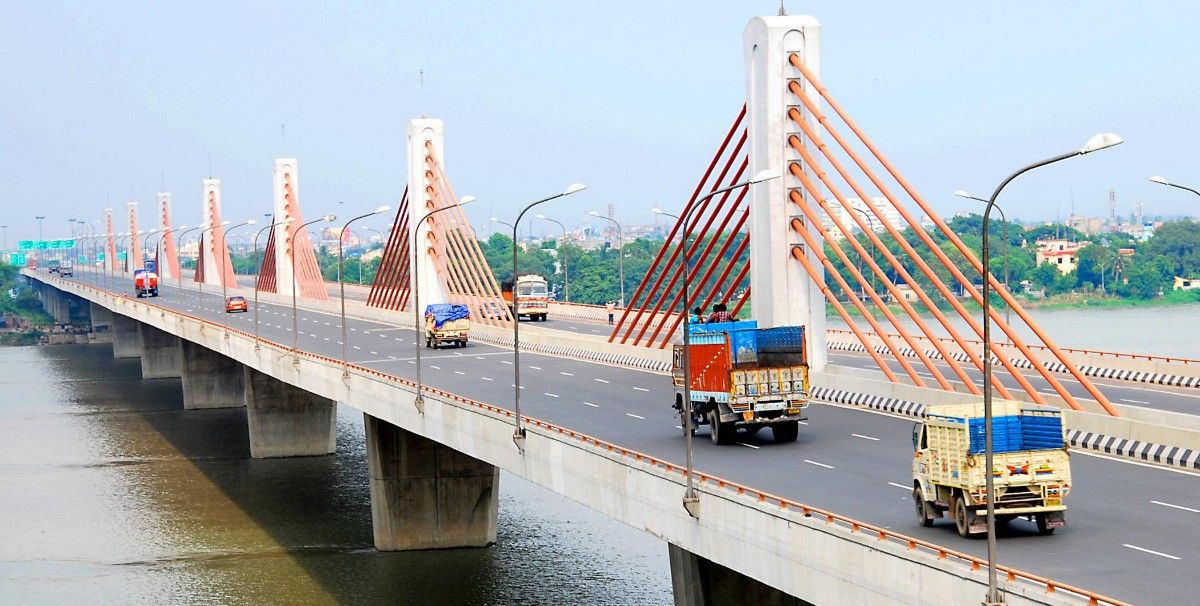
Major bridges form critical links in India’s logistics corridors connecting manufacturing centres, industrial clusters, inland freight terminals, logistics parks and ports.
Strengthening the reliability of these structures therefore contributes directly to improving the resilience of India’s maritime supply chains.
Also Read: BMCT Flyover Cleared, but Infrastructure Quality Puts Spotlight on JNPA Logistics Ecosystem
Why This Matters Beyond Highways
Bridges are often viewed simply as components of road infrastructure.
In reality, they are strategic assets supporting national logistics.
Every day, thousands of heavy commercial vehicles carrying containers, industrial equipment, agricultural products, petroleum cargo, steel, automobiles and export goods depend upon bridge infrastructure before reaching India’s ports.
A single structural failure on a critical freight corridor can interrupt supply chains, delay cargo movement, increase logistics costs and reduce port efficiency.
Viewed through this perspective, bridge reliability is not merely a highway engineering issue—it is an important element of maritime logistics resilience.
Moving from Design Approval to Independent Engineering Assurance
One of the most significant aspects of the initiative is the introduction of independent proof checking.
Rather than relying solely upon the original design consultant, major bridge projects will undergo an additional layer of technical scrutiny by independent academic institutions possessing advanced engineering expertise.
The review process will examine:
- Structural calculations.
- Hydraulic behaviour.
- Foundation design.
- Geotechnical investigations.
- Engineering drawings.
- Construction methodology.
Independent verification reduces the likelihood of design errors, improves quality assurance and strengthens confidence in long-life infrastructure expected to remain operational for more than a century.
Also Read: Port Authorities Are More Than Landlords: Kolkata Warehouse Collapse Raises New Questions
Learning from the Maritime Industry
The philosophy behind independent proof checking is already well established within global shipping.
Before a ship enters service, its design is independently verified by a classification society.
Throughout its operational life, the vessel undergoes periodic surveys to ensure continued structural integrity and compliance with technical standards.
The NHAI initiative reflects a similar engineering principle.
Critical infrastructure should not rely solely on internal design approval.
Independent technical verification strengthens public confidence, reduces long-term operational risk and improves the overall quality of infrastructure delivery.
Although highways and ships belong to different sectors, the governance philosophy underlying both systems is remarkably similar.
Supporting India’s Logistics Transformation
India is investing heavily in integrated logistics through initiatives such as PM Gati Shakti, the National Logistics Policy and port-led infrastructure development.
These programmes aim to improve freight efficiency by creating stronger connections between roads, railways, ports, inland waterways and industrial corridors.
Major bridges represent essential links within these multimodal networks.
Enhancing their design reliability therefore contributes to smoother freight movement, reduced disruptions and improved connectivity between hinterland production centres and maritime gateways.
In this sense, the initiative supports broader national objectives extending well beyond highway construction.
Also Read: JNPA launches NIVESH, an AI-powered treasury platform
Strengthening Long-Term Infrastructure Resilience
Major bridges are designed for service lives exceeding one hundred years.
Engineering decisions made during the design stage therefore influence several generations of infrastructure users.
Independent proof checking provides an opportunity to identify potential weaknesses before construction begins, reducing the likelihood of expensive corrective measures after completion.
The framework also promotes consistency in quality assurance across projects implemented through different contractual models, ensuring that engineering standards remain uniform regardless of procurement methodology.
For a rapidly expanding infrastructure network, institutionalising such practices represents an important governance reform.
Why Independent Engineering Assurance Matters Beyond the Highway Sector
The National Highways Authority of India’s decision to introduce independent proof checking for major bridge designs represents more than an engineering quality initiative.
It reflects a broader evolution in infrastructure governance—one that recognises that critical national assets should undergo rigorous technical scrutiny before construction rather than relying solely on conventional approval processes.
For the maritime sector, this distinction is particularly important.
Modern ports no longer function as isolated transport facilities.
They operate as integrated nodes within a multimodal logistics network where highways, bridges, rail corridors, inland container depots, logistics parks and industrial clusters work together to keep cargo moving efficiently.
The reliability of that network is only as strong as its weakest link.
Every Port Depends on Bridges
When discussing ports, attention is often focused on ships, terminals, cranes and cargo-handling equipment.
Yet every container exported from an inland factory and every imported cargo destined for consumers must travel across roads and bridges before reaching its final destination.
A structurally deficient bridge can therefore disrupt far more than local traffic.
It can interrupt freight movement, delay cargo deliveries, increase logistics costs and reduce supply chain reliability.
For ports handling thousands of truck movements each day, uninterrupted road connectivity is essential to maintaining operational efficiency.
Bridge resilience is therefore an important component of maritime competitiveness.
Engineering Governance as Risk Management
One of the defining characteristics of mature infrastructure systems is the presence of independent technical oversight.
Rather than depending exclusively on the original designer, complex projects benefit from objective engineering review by organisations that have no direct commercial involvement in the project.
The NHAI initiative institutionalises this principle.
Independent review of structural calculations, hydraulic studies, geotechnical investigations and construction methodologies helps identify potential weaknesses before construction begins.
Preventing design deficiencies at the planning stage is generally more effective—and considerably less expensive—than correcting them after infrastructure has entered service.
From a governance perspective, independent proof checking represents proactive risk management rather than reactive problem solving.
Also Read: JNPA’s Industrial Expansion Plan Raises Questions Over Navi Mumbai’s Port Region
A Philosophy Familiar to the Maritime Industry
For maritime professionals, the concept of independent technical verification is neither new nor unusual.
Ships operating in international trade are routinely subject to independent classification processes before entering service.
Their designs are reviewed against recognised technical standards, while construction is monitored through surveys and inspections.
Periodic assessments continue throughout a vessel’s operational life to verify structural integrity and ongoing compliance.
Although highways and ships belong to different sectors, both rely upon the same engineering philosophy:
Critical infrastructure should be independently verified because failures carry consequences extending far beyond the asset itself.
The NHAI initiative reflects a similar shift towards institutionalising engineering assurance within land transport infrastructure.
Supporting National Logistics Objectives
India has placed considerable emphasis on improving logistics efficiency through initiatives such as PM Gati Shakti, the National Logistics Policy and integrated multimodal transport planning.
These programmes seek to reduce logistics costs, strengthen connectivity and improve the competitiveness of Indian exports.
Reliable bridge infrastructure directly supports these objectives.
Every improvement in structural reliability contributes to:
- More predictable freight movement.
- Reduced disruption to supply chains.
- Lower maintenance-related closures.
- Improved heavy vehicle operations.
- Greater confidence for logistics operators.
- Better connectivity between industrial centres and ports.
Viewed collectively, these benefits extend well beyond civil engineering and contribute to strengthening India’s wider logistics ecosystem.
Also Read: VOC Port Emerges as Model for Green Maritime Growth
Long-Life Infrastructure Requires Long-Term Thinking
Major bridges are typically designed to remain in service for one hundred years or more.
The engineering decisions taken today therefore influence multiple generations of infrastructure users.
Independent proof checking encourages designers to adopt a lifecycle perspective rather than focusing solely on construction completion.
It also reinforces the principle that infrastructure quality should be measured not only by how quickly projects are delivered but by how safely and reliably they perform throughout their intended service life.
For a rapidly developing economy investing heavily in transport infrastructure, embedding independent technical review within project delivery represents a significant institutional reform.
MaritimeNews Insight
The most significant aspect of the NHAI initiative is not the involvement of IITs.
It is the institutionalisation of independent engineering assurance.
For decades, the maritime industry has relied upon independent technical verification to maintain confidence in ship safety and seaworthiness.
Applying similar principles to nationally significant bridge infrastructure demonstrates a broader shift towards governance models that prioritise verification, accountability and lifecycle performance.
As India’s logistics network becomes increasingly integrated, engineering assurance will become as important as engineering capability.
Building Infrastructure That Inspires Confidence
The National Highways Authority of India’s decision to institutionalise independent proof checking of major bridge designs represents more than a procedural improvement in project delivery.
It signals a broader evolution in how India may approach infrastructure governance over the coming decades.
As the country continues investing in highways, ports, railways, logistics parks and industrial corridors, engineering excellence alone will no longer be sufficient.
Infrastructure that is expected to remain operational for a century must also be supported by systems that verify, challenge and strengthen engineering decisions before construction begins.
Independent technical assurance therefore becomes an integral part of infrastructure resilience rather than an additional administrative step.
Moving from Construction-Led Growth to Quality-Led Development
India’s infrastructure expansion over the past decade has been characterised by unprecedented speed and scale.
Thousands of kilometres of highways, new expressways, bridges, tunnels, ports and logistics facilities have transformed national connectivity.
As this network matures, the focus naturally shifts from building more infrastructure to building infrastructure that performs reliably over its entire design life.
Independent proof checking reflects this transition.
Instead of measuring success solely by project completion, the emphasis increasingly moves towards structural reliability, lifecycle performance and long-term public confidence.
This represents a significant shift in engineering governance.
Also Read: The Growing Conflict Over Vadhvan Port
Lessons for the Maritime Sector
The maritime industry has long recognised that independent technical verification is fundamental to operational safety.
Ship classification, statutory surveys and periodic inspections are internationally accepted because they reduce uncertainty and strengthen confidence among shipowners, insurers, financiers and regulators.
The principles now being applied to bridge infrastructure closely resemble those already embedded within maritime governance.
Both sectors recognise that:
- Independent review strengthens engineering quality.
- Early identification of design risks reduces future failures.
- Long-life assets require lifecycle thinking.
- Public confidence depends upon transparent technical assurance.
While the mechanisms differ, the underlying philosophy is remarkably similar.
Implications for India’s Multimodal Logistics Network
Reliable infrastructure is essential for maintaining efficient freight movement.
Bridges carrying heavy commercial traffic often serve as critical links between:
- Manufacturing clusters.
- Industrial corridors.
- Inland Container Depots (ICDs).
- Multi-Modal Logistics Parks (MMLPs).
- Dry ports.
- Dedicated Freight Corridors.
- Major and non-major ports.
A disruption at one strategically located bridge can affect freight schedules across an entire logistics chain.
By strengthening confidence in bridge design, the NHAI initiative indirectly contributes to improving supply chain resilience, reducing operational uncertainty and supporting India’s objective of lowering national logistics costs.
For exporters and importers, infrastructure reliability is increasingly becoming as important as infrastructure availability.
Also Read: CBIC Pushes Unified Customs System as India Targets Faster Cargo Clearance and Lower Logistics Costs
Opportunities for India’s Knowledge Economy
An equally significant aspect of the initiative is the active involvement of premier technical institutions.
The participation of IITs and other reputed engineering organisations creates opportunities to strengthen the relationship between academic research and national infrastructure development.
Beyond reviewing bridge designs, such collaborations could encourage:
- Advanced structural research.
- Development of new engineering methodologies.
- Digital modelling and simulation.
- Climate resilience assessments.
- Hydraulic and geotechnical innovation.
- Capacity building for future infrastructure professionals.
Over time, this model could contribute to building India’s reputation as a centre for engineering excellence rather than merely infrastructure construction.
Challenges That Must Be Managed
The long-term success of the initiative will depend upon effective implementation.
Several considerations deserve attention:
Independence
Technical reviews must remain objective and insulated from commercial or administrative pressures.
Capacity
As infrastructure development accelerates, sufficient institutional capacity will be required to undertake timely and rigorous reviews without creating project bottlenecks.
Accountability
Clear governance frameworks should define the responsibilities of designers, independent reviewers, contractors and project authorities to avoid ambiguity if technical issues arise during construction or operation.
Knowledge Sharing
Lessons learned from independent reviews should be systematically documented and incorporated into future engineering standards, enabling continuous improvement across the sector.
Managing these challenges effectively will determine whether the initiative evolves into a lasting governance reform.
MaritimeNews Insight
The most valuable infrastructure is not necessarily the one built the fastest.
It is the one that continues serving society safely, efficiently and reliably for generations.
Independent proof checking reflects a growing recognition that engineering quality must be supported by institutional quality.
For the maritime sector, this principle is already well understood.
As India’s transport systems become increasingly integrated, extending similar governance philosophies to highways, bridges and logistics infrastructure strengthens not only individual assets but also the resilience of the entire national supply chain.
In this respect, the initiative represents a convergence of engineering practice and governance philosophy across different modes of transport.
MaritimeNews Editorial Verdict
The empanelment of IITs and other premier technical institutions for independent proof checking of major bridge designs should be viewed as a significant step towards strengthening engineering governance in India’s transport infrastructure.
Although announced within the context of National Highway development, its implications extend to logistics, freight mobility and maritime connectivity.
Reliable bridges support reliable supply chains.
Reliable supply chains strengthen ports.
Stronger ports enhance national competitiveness.
Viewed through this wider perspective, independent engineering assurance becomes more than a design review mechanism.
It becomes an investment in the long-term resilience of India’s multimodal transport network and a governance model that prioritises safety, accountability and lifecycle performance over short-term project delivery.
As India pursues integrated infrastructure development under initiatives such as PM Gati Shakti and the National Logistics Policy, such institutional reforms are likely to play an increasingly important role in ensuring that the country’s transport network remains not only larger—but also safer, more dependable and globally competitive.
MaritimeNews Editorial Note
This editorial is based on the National Highways Authority of India’s announcement regarding the empanelment of IITs and other reputed technical institutions for independent proof checking of major bridge designs. The analysis reflects MaritimeNews’ independent assessment of the broader implications for engineering governance, multimodal logistics, infrastructure resilience and maritime connectivity. The editorial seeks to encourage informed discussion on how stronger technical assurance can contribute to safer, more reliable and future-ready national transport infrastructure.
Source: PIB Delhi
Reporting Basis: Official Government Release and MaritimeNews Analysis
Reporting by MaritimeNews Bureaus, Writing by Harpal S Naol; Editing by Jaspal Singh Naol.