
Three Indian Ship Recycling Facilities Complete EU Compliance Process as India Targets Recycling 16,000 Ships with an $8 Billion Maritime Investment
Key Takeaways
- Three Indian ship recycling yards have completed the EU compliance process and are eligible to seek recognition under the EUSRR.
- India’s global ship recycling market share increased to 35.4% in 2025, reinforcing its leadership in the sector.
- The Government has committed US$8 billion to strengthen India’s shipbuilding and ship recycling ecosystem.
- India aims to recycle 16,000 ships over the next decade through environmentally sustainable practices.
- India and the European Union are expanding cooperation to advance safe, transparent and internationally compliant ship recycling.
Delhi, India, July 01 (Maritime News) – India and the European Union have taken another significant step towards strengthening cooperation in sustainable ship recycling, with three Indian ship recycling facilities successfully completing all compliance requirements necessary to seek recognition under the European Union Ship Recycling Regulation (EUSRR). The development marks an important milestone in India’s efforts to position itself as a globally trusted destination for environmentally responsible ship recycling while expanding access to one of the world’s most regulated maritime markets.
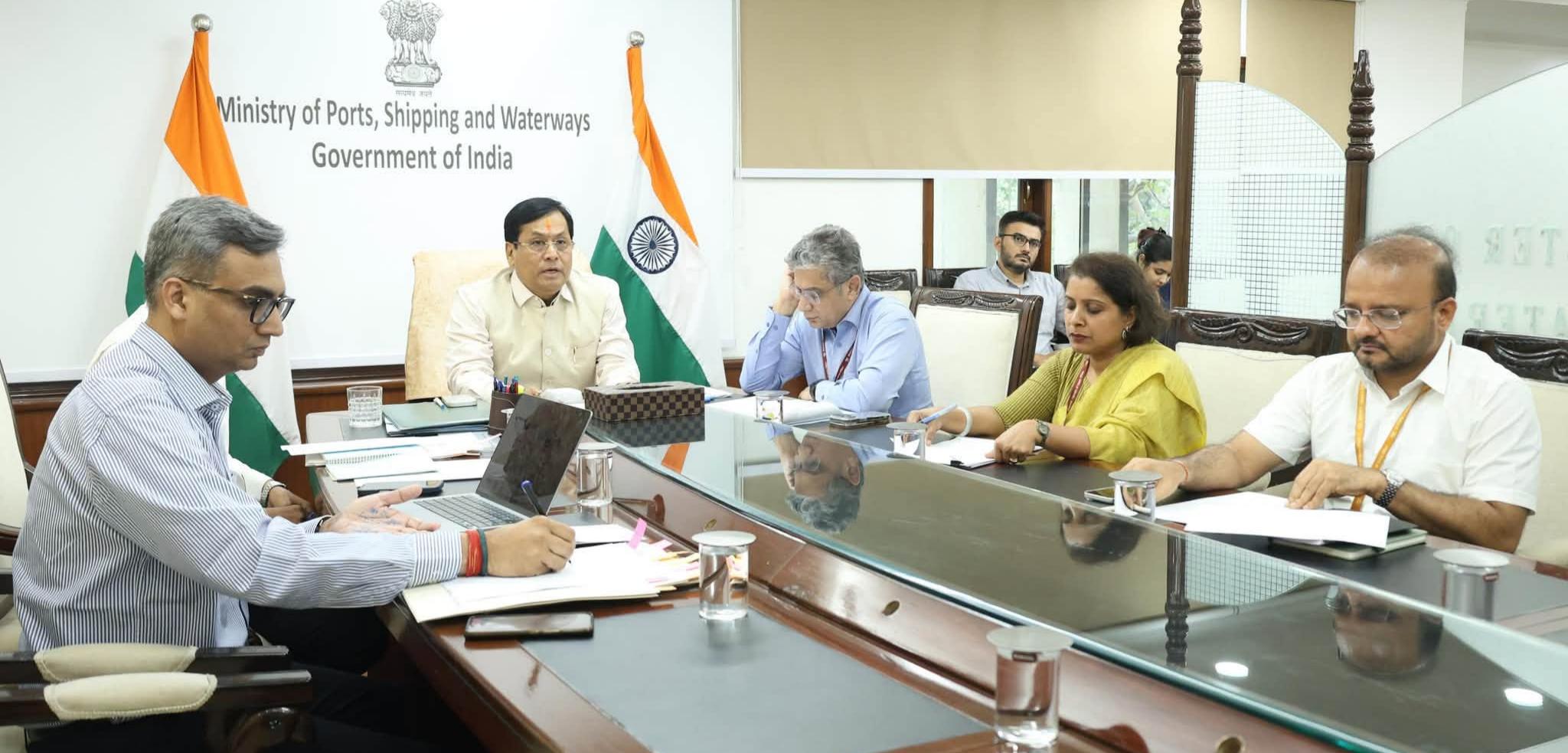
The announcement followed discussions between Union Minister for Ports, Shipping and Waterways Sarbananda Sonowal and European Commissioner for Environment, Water Resilience and a Competitive Circular Economy Jessika Roswall, during which both sides reviewed progress on the audit, inspection and regulatory compliance process for Indian recycling facilities. More than 30 Indian yards have applied for EU recognition, with six currently undergoing the approval process and three now eligible to seek formal inclusion under the EUSRR framework.
The discussions also highlighted India’s rapidly expanding role in the global ship recycling industry. According to the latest UNCTAD estimates, India’s global ship recycling market share increased from 30.1% in 2024 to 35.4% in 2025, with nearly 2.99 million gross tonnes (GT) of ships recycled during 2025—representing almost 60% growth over the previous year. Supported by an announced US$8 billion investment in shipbuilding and ship recycling, India aims to recycle approximately 16,000 ships over the next decade, reinforcing its ambition to become the world’s leading centre for sustainable maritime recycling.
Why This Matters
Recognition under the European Union Ship Recycling Regulation (EUSRR) would significantly enhance the international credibility of Indian ship recycling facilities and expand their access to European shipowners seeking compliant end-of-life recycling solutions. Beyond regulatory approval, the development reflects India’s broader transition from being viewed primarily as a high-volume recycling destination to becoming a global leader in safe, environmentally sustainable and internationally compliant ship recycling. As environmental standards tighten worldwide and the Hong Kong International Convention for the Safe and Environmentally Sound Recycling of Ships enters into force, India’s ability to meet both international regulatory expectations and commercial requirements could reshape global ship recycling markets while strengthening the country’s position within the circular maritime economy.
India and the European Union Strengthen Maritime Sustainability Cooperation
The latest engagement between India and the European Union represents more than a routine regulatory discussion. It signals the growing convergence of environmental policy, maritime commerce and industrial development as both partners work towards creating a globally recognised framework for sustainable ship recycling.
During the meeting, Union Minister Sarbananda Sonowal and European Commissioner Jessika Roswall reviewed the ongoing audit and inspection process being undertaken for Indian recycling facilities seeking inclusion under the European Union Ship Recycling Regulation. The review acknowledged the considerable progress made by Indian yards in upgrading infrastructure, strengthening worker welfare systems, improving environmental safeguards and implementing internationally recognised operational practices.
According to the Minister, more than thirty Indian recycling facilities have already submitted applications for EU recognition. Six facilities are currently progressing through the formal compliance and verification process, while three have successfully completed all technical and regulatory requirements necessary to apply for inclusion within the EU-approved list of ship recycling facilities.
If recognised, these facilities would gain access to recycling vessels covered under the European Union regulatory framework, creating new commercial opportunities while reinforcing India’s reputation as a responsible maritime recycling destination.
India’s Growing Leadership in Global Ship Recycling
The discussions also highlighted the remarkable transformation taking place within India’s ship recycling sector.
According to the latest estimates published by the United Nations Conference on Trade and Development (UNCTAD), India’s share of the global ship recycling market increased from 30.1 per cent in 2024 to 35.4 per cent in 2025, making the country the world’s largest ship recycling nation by market share.
During 2025 alone, Indian recycling facilities dismantled approximately 2.99 million gross tonnes (GT) of shipping compared with 1.86 million GT during the previous year, representing nearly 60 per cent year-on-year growth.
This growth reflects not only increased recycling volumes but also significant investments in environmental infrastructure, operational transparency, worker safety and regulatory compliance. Modern Indian recycling facilities are increasingly supported by effluent treatment plants, scientific waste management systems, healthcare facilities, worker accommodation and regular inspections designed to ensure compliance with international environmental and occupational safety standards.
For India, the objective extends beyond increasing recycling capacity.
It is about becoming the global benchmark for sustainable ship recycling.
How the European Union’s Regulatory Framework Could Reshape India’s Ship Recycling Industry
The progress made by Indian ship recycling facilities towards recognition under the European Union Ship Recycling Regulation (EUSRR) represents far more than an administrative milestone.
For the global maritime industry, it signals India’s growing ability to compete in one of the world’s most demanding regulatory environments for end-of-life ship recycling.
Unlike conventional commercial contracts, ship recycling today is increasingly governed by environmental responsibility, worker safety, waste management, transparency and international compliance. Shipowners, financiers, insurers and regulators are placing greater emphasis on ensuring that vessels reaching the end of their operational lives are dismantled in facilities that meet internationally accepted environmental and occupational safety standards.
Recognition under the EUSRR is therefore not simply about market access.
It is about international credibility.
Also Read: BMCT Flyover Cleared, but Infrastructure Quality Puts Spotlight on JNPA Logistics Ecosystem
Understanding the European Union Ship Recycling Regulation
The European Union Ship Recycling Regulation establishes strict requirements governing where EU-flagged vessels may be recycled at the end of their service life.
Under the regulation, eligible vessels can only be dismantled at ship recycling facilities included on the European List of Approved Ship Recycling Facilities, following detailed assessments covering:
- Environmental protection measures.
- Hazardous waste management.
- Worker health and safety.
- Infrastructure standards.
- Operational transparency.
- Regulatory compliance.
- Monitoring and inspection systems.
Only facilities that successfully demonstrate compliance with these requirements are eligible for inclusion on the approved list.
For Indian recycling yards, achieving this recognition would represent international validation of years of investment in upgrading facilities and strengthening operational standards.
Why European Recognition Is Commercially Important
Europe remains one of the world’s most influential maritime regions, with a substantial fleet of merchant vessels operating under European Union flags or subject to European regulatory requirements.
Recognition under the EUSRR enables compliant recycling facilities to compete for vessels that would otherwise be unavailable to yards lacking EU approval.
For Indian ship recyclers, this creates several strategic advantages.
It expands potential access to a premium international market.
It strengthens confidence among global shipowners and financial institutions.
It reinforces India’s reputation as a responsible recycling destination.
It also encourages further investment in environmental infrastructure and sustainable industrial practices.
In today’s shipping industry, regulatory credibility has become a competitive advantage.
Also Read: Port Authorities Are More Than Landlords: Kolkata Warehouse Collapse Raises New Questions
Compliance Is Becoming a Business Requirement
Ship recycling has undergone a profound transformation during the past two decades.
Historically, commercial considerations often focused primarily on recycling capacity and steel recovery.
Today, international stakeholders evaluate a much broader range of performance indicators.
Modern recycling facilities are expected to demonstrate:
- Safe handling of hazardous materials.
- Proper treatment of waste streams.
- Protection of coastal and marine environments.
- Comprehensive worker welfare programmes.
- Medical support and emergency preparedness.
- Transparent operational procedures.
- Continuous regulatory compliance.
These expectations increasingly influence decisions made by shipowners, insurers, banks and investors.
Environmental performance is no longer separate from commercial performance.
The two have become closely interconnected.
India’s Investments Reflect Long-Term Maritime Strategy
The Government of India’s support for upgrading ship recycling infrastructure reflects a broader vision extending beyond regulatory compliance.
According to Union Minister Sarbananda Sonowal, Indian facilities have invested substantially in:
- Modern environmental infrastructure.
- Effluent treatment systems.
- Scientific waste management.
- Worker housing.
- Multi-speciality healthcare facilities.
- Occupational safety measures.
- Periodic and surprise inspections to maintain compliance.
These improvements are designed not merely to satisfy regulatory requirements but to establish India as a preferred destination for sustainable ship recycling within the global maritime industry.
As international environmental expectations continue to evolve, such investments are expected to become increasingly important for maintaining competitiveness.
Also Read: JNPA launches NIVESH, an AI-powered treasury platform
The Hong Kong Convention Strengthens the Global Framework
The discussions between India and the European Union also reaffirmed support for the Hong Kong International Convention for the Safe and Environmentally Sound Recycling of Ships, which establishes globally harmonised standards for ship recycling.
The Convention seeks to ensure that ships reaching the end of their operational life are recycled in a manner that protects:
- Human health.
- Worker safety.
- Marine ecosystems.
- Coastal environments.
- Public health.
- Hazardous material management.
India has consistently aligned its domestic reforms with internationally recognised standards, positioning the country’s recycling industry to benefit from growing demand for environmentally responsible recycling solutions.
The increasing convergence between the Hong Kong Convention and regional regulatory frameworks such as the EUSRR may gradually contribute to greater consistency across the international ship recycling industry.
Joint Working Group Signals Long-Term Cooperation
One of the most significant outcomes of the discussions was the European Union’s proposal to establish a Joint Working Group (JWG) involving representatives from the Ministry of Environment and other relevant institutions.
Rather than viewing recognition as a one-time regulatory exercise, both sides appear committed to developing an institutional mechanism capable of supporting continuous dialogue, technical cooperation and regulatory coordination.
Such a framework could facilitate:
- Exchange of technical expertise.
- Regulatory cooperation.
- Audit coordination.
- Capacity building.
- Continuous improvement of recycling standards.
- Stronger India–EU maritime environmental cooperation.
For both India and the European Union, this reflects a shared understanding that sustainable ship recycling requires ongoing collaboration rather than isolated compliance exercises.
MaritimeNews Insight
Recognition under the European Union Ship Recycling Regulation is about much more than adding Indian facilities to an approved list.
It represents international recognition of India’s broader transformation from a volume-driven recycling industry into a standards-driven maritime sector built upon environmental responsibility, worker welfare and regulatory transparency.
As shipowners increasingly evaluate environmental performance alongside commercial competitiveness, compliance itself is becoming an economic asset.
For India, successful EU recognition could therefore serve as both a regulatory achievement and a strategic commercial advantage within the evolving global circular maritime economy.
From the World’s Largest Recycling Destination to a Global Leader in Sustainable Maritime Circular Economy
For much of its history, India’s ship recycling industry was recognised primarily for its capacity.
Today, it is increasingly being recognised for its compliance.
The distinction is significant.
Global ship recycling is undergoing a structural transformation. Shipowners, regulators, financiers and insurers are no longer evaluating recycling facilities solely on their ability to dismantle vessels efficiently. Increasingly, they are assessing environmental performance, occupational safety, regulatory transparency and alignment with international conventions.
India’s recent progress reflects this changing reality.
The country’s ambition is no longer limited to maintaining leadership in recycling volumes. It is to become the preferred global destination for environmentally responsible, internationally compliant and commercially competitive ship recycling.
The latest discussions with the European Union demonstrate that this transition is already underway.
Also Read: JNPA’s Industrial Expansion Plan Raises Questions Over Navi Mumbai’s Port Region
India’s Growing Share of the Global Ship Recycling Market
India’s position within the global ship recycling industry has strengthened considerably over the past two years.
According to the latest estimates from the United Nations Conference on Trade and Development (UNCTAD), India’s share of worldwide ship recycling increased from 30.1 per cent in 2024 to 35.4 per cent in 2025.
During the same period, Indian recycling facilities dismantled approximately 2.99 million gross tonnes (GT) of shipping, compared with 1.86 million GT during the previous year—representing nearly 60 per cent growth.
These figures illustrate more than expanding industrial activity.
They demonstrate increasing international confidence in India’s recycling ecosystem as shipping companies seek facilities capable of meeting evolving environmental and regulatory expectations.
Alang Remains the Centrepiece of India’s Ship Recycling Industry
At the heart of India’s ship recycling success lies Alang, located along the Gujarat coastline.
Recognised as one of the world’s largest ship recycling clusters, Alang has played a central role in supplying recycled steel, generating employment and supporting India’s circular economy for several decades.
In recent years, however, the focus has shifted from scale alone to quality.
Many facilities have invested extensively in:
- Impermeable working floors.
- Hazardous waste management.
- Scientific material segregation.
- Effluent treatment infrastructure.
- Worker accommodation.
- Occupational healthcare.
- Emergency response systems.
- Environmental monitoring.
These improvements have significantly strengthened the industry’s ability to comply with international environmental and occupational safety standards.
Rather than replacing Alang’s traditional strengths, sustainability initiatives are redefining them.
Also Read: VOC Port Emerges as Model for Green Maritime Growth
Sustainability Is Becoming a Competitive Advantage
The international ship recycling market is increasingly influenced by environmental, social and governance (ESG) considerations.
Shipowners now face growing expectations from:
- Regulators.
- Investors.
- Financial institutions.
- Cargo interests.
- Classification societies.
- Insurance providers.
- Sustainability reporting frameworks.
As a result, responsible recycling has become an important component of corporate environmental performance.
Facilities capable of demonstrating internationally recognised standards may enjoy stronger commercial opportunities than those competing primarily on cost.
India’s investments in sustainable recycling infrastructure therefore represent not merely regulatory compliance but long-term industrial competitiveness.
Environmental performance is increasingly becoming an economic differentiator.
Supporting the Circular Maritime Economy
Ship recycling occupies a unique position within the maritime value chain.
Unlike conventional waste disposal, responsible ship recycling enables valuable materials to re-enter industrial production.
Steel recovered from dismantled vessels supports construction, manufacturing and infrastructure development.
Reusable machinery, equipment and marine components extend product lifecycles while reducing demand for virgin raw materials.
Proper management of hazardous materials protects coastal ecosystems and public health.
This circular approach aligns closely with broader international objectives promoting resource efficiency, climate resilience and sustainable industrial development.
India’s growing leadership in this sector therefore contributes not only to maritime sustainability but also to the wider global circular economy.
Also Read: The Growing Conflict Over Vadhvan Port
Government Investment Signals Long-Term Confidence
The Government of India’s announcement of an US$8 billion commitment to strengthen the shipbuilding and ship recycling ecosystem reflects a long-term industrial strategy rather than a short-term policy initiative.
The investment aims to create an integrated maritime manufacturing ecosystem where:
- Shipbuilding expands.
- Ship repair grows.
- Ship recycling modernises.
- Maritime employment increases.
- Industrial capability strengthens.
- Environmental standards improve.
Viewed together, these initiatives support India’s ambition to become a comprehensive maritime nation capable of serving ships throughout their entire lifecycle—from construction and operation to maintenance and environmentally responsible recycling.
This lifecycle approach represents an important evolution in India’s maritime industrial policy.
Competition Will Continue to Intensify
Although India currently leads the global ship recycling market, international competition remains strong.
Other recycling nations continue investing in infrastructure, regulatory reforms and environmental compliance to attract shipowners seeking responsible end-of-life solutions.
Future competitiveness will therefore depend not only upon recycling capacity but also upon:
- Regulatory credibility.
- International recognition.
- Skilled workforce.
- Environmental performance.
- Operational transparency.
- Technological innovation.
- Consistent enforcement of standards.
Maintaining leadership will require continuous investment rather than relying upon existing market share.
Also Read: JNPA’s Floating Waste and Oil Spill Under Scrutiny
MaritimeNews Insight
India’s ship recycling industry is entering a defining phase of its evolution.
For decades, success was measured primarily by the number of ships dismantled.
Today, success is increasingly measured by the quality of recycling.
Facilities that demonstrate environmental responsibility, worker welfare, operational transparency and international compliance are becoming central to the future of the global maritime circular economy.
India’s growing market share, combined with its investments in modern recycling infrastructure and its pursuit of international recognition, suggests that the country’s competitive advantage will increasingly be built upon trust as much as industrial capacity.
In the global maritime economy, credibility has become a strategic asset.
How Ship Recycling Is Becoming the Foundation of India’s Integrated Maritime Economy
The significance of India’s growing leadership in sustainable ship recycling extends far beyond dismantling ageing vessels.
It represents an important shift in the country’s broader maritime strategy.
For decades, India’s maritime sector has been largely viewed through individual components—ports, shipping, inland waterways, logistics or coastal infrastructure. The Government’s latest policy direction indicates a more integrated approach in which shipbuilding, ship repair, ship recycling, port development and maritime manufacturing are increasingly being developed as interconnected pillars of a single maritime industrial ecosystem.
The announcement of an US$8 billion investment to strengthen both shipbuilding and ship recycling reflects this long-term vision.
Rather than treating ship recycling as the final stage of a vessel’s lifecycle, India is positioning it as an essential component of a circular maritime economy where ships can be built, operated, maintained, repaired and eventually recycled within an integrated industrial framework.
Building a Complete Maritime Lifecycle Economy
The global maritime industry is gradually moving towards lifecycle-based industrial planning.
Ships are no longer viewed simply as transport assets.
Instead, governments increasingly recognise that every vessel generates economic value throughout its operational life—from design and construction to maintenance, retrofitting, repair and environmentally responsible recycling.
India’s evolving maritime policy aligns with this approach.
A stronger shipbuilding industry creates demand for domestic manufacturing.
Ship repair expands technical capability.
Modern recycling facilities recover valuable steel and reusable marine equipment.
Together, these sectors reduce dependence on imported raw materials while strengthening industrial resilience.
The result is a maritime ecosystem capable of supporting sustainable economic growth across multiple sectors.
Strengthening India’s Global Maritime Competitiveness
The maritime industry is entering an era in which environmental compliance and industrial competitiveness increasingly go hand in hand.
International shipowners are looking beyond cost when selecting ship recycling facilities.
They now consider:
- Regulatory compliance.
- Environmental performance.
- Worker safety.
- Transparency.
- Operational reliability.
- International recognition.
India’s progress towards EU recognition enhances its reputation as a trusted maritime partner capable of meeting these evolving expectations.
This is particularly important as global shipping transitions towards stricter environmental regulations and greater emphasis on Environmental, Social and Governance (ESG) performance.
A reputation for responsible recycling strengthens India’s competitiveness across the wider maritime sector, including shipbuilding, ship repair and marine engineering.
Also Read: Centre Approves ₹797 Crore Green Hydrogen Jetty at Paradip Port
Employment, Skills and Coastal Economic Growth
The expansion of sustainable ship recycling also has important socioeconomic implications.
Modern recycling facilities require a workforce with specialised skills in engineering, environmental management, hazardous material handling, occupational safety and industrial operations.
As facilities continue upgrading to international standards, demand for trained professionals is expected to increase.
Beyond direct employment, the sector supports a broad network of ancillary industries, including:
- Steel processing.
- Waste management.
- Marine engineering.
- Equipment recovery.
- Logistics.
- Industrial services.
- Environmental monitoring.
These activities contribute to economic development in coastal regions while strengthening India’s maritime industrial base.
Supporting Global Supply Chain Resilience
Sustainable ship recycling contributes to international supply chain resilience in ways that often receive limited public attention.
Recovered steel reduces demand for primary raw materials.
Reusable marine equipment extends the lifecycle of valuable industrial assets.
Responsible hazardous waste management protects coastal ecosystems while reducing environmental liabilities.
As demand for sustainable industrial practices grows, efficient recycling systems become increasingly important components of global maritime supply chains.
India’s expanding capacity therefore supports not only domestic economic objectives but also international efforts to strengthen circular manufacturing and resource efficiency.
India’s Maritime Diplomacy Gains New Momentum
The discussions with the European Union demonstrate how maritime cooperation is becoming an increasingly important element of India’s international engagement.
Traditionally, maritime diplomacy focused primarily on shipping, ports and trade.
Today, it also encompasses:
- Environmental governance.
- Circular economy.
- Climate resilience.
- Sustainable industrial development.
- International regulatory cooperation.
- Green maritime technologies.
India’s engagement with the European Union on ship recycling illustrates this evolution.
By aligning domestic reforms with internationally recognised standards while maintaining constructive regulatory dialogue, India strengthens both its commercial opportunities and its credibility as a responsible maritime nation.
This approach supports India’s broader ambition of becoming a leading global maritime power.
Beyond Recycling: Towards Maritime Sustainability Leadership
Ship recycling should no longer be viewed as an isolated industrial activity.
It forms part of a much larger transformation within global shipping.
The future maritime economy will increasingly depend upon industries capable of combining:
- Economic competitiveness.
- Environmental responsibility.
- Resource efficiency.
- Worker welfare.
- Regulatory compliance.
- Technological innovation.
India’s recent progress indicates that the country is positioning itself to compete on all of these fronts simultaneously.
If current investments continue and more Indian facilities receive international recognition, India could emerge not only as the world’s leading ship recycling nation but also as one of the principal drivers of sustainable maritime industrial development.
Also Read: NEED OF BALLAST WATER TREATMENT IN MARITIME SUSTAINABILITY
MaritimeNews Insight
The discussions between India and the European Union should be viewed as more than a regulatory exercise.
They reflect the emergence of a new maritime industrial model where shipbuilding, ship repair, ship recycling, environmental stewardship and international cooperation are becoming increasingly interconnected.
India’s competitive advantage will not be determined solely by the number of ships it recycles.
It will increasingly depend upon its ability to deliver safe, transparent, environmentally responsible and internationally trusted maritime services across the entire lifecycle of a vessel.
That transition has already begun.
MaritimeNews Editorial Verdict
The progress made by Indian ship recycling facilities towards European Union recognition marks an important milestone in the evolution of India’s maritime sector.
While regulatory approval under the European Union Ship Recycling Regulation will provide greater commercial opportunities for compliant recycling yards, its broader significance lies in what it represents.
India is steadily transforming from a country known primarily for ship recycling capacity into one recognised for quality, sustainability, regulatory compliance and international credibility.
Supported by an ambitious US$8 billion investment, growing global market share and closer cooperation with the European Union, India is laying the foundations for an integrated maritime ecosystem that extends from shipbuilding and repair to environmentally responsible recycling.
As global shipping embraces higher environmental standards and the principles of the circular economy, India’s ability to align industrial growth with sustainability could become one of its greatest maritime strengths.
The future of ship recycling will not be defined solely by the number of vessels dismantled.
It will be defined by how responsibly those ships are recycled, how effectively valuable resources are recovered, and how successfully maritime nations balance economic growth with environmental stewardship.
India now has the opportunity to lead on all three fronts.
Make us preferred source on Google
Source: PIB Delhi
Reporting Basis: Official Government Release and MaritimeNews Analysis
Reporting by MaritimeNews Bureaus, Writing by Harpal S Naol; Editing by Jaspal Singh Naol.