
₹48.87-Crore Waterfront Facility to Modernise Vessel Monitoring, Maritime Administration and Public Services Along the Mandovi River
Key Takeaways
- Goa has inaugurated a ₹48.87-crore Captain of Ports Terminal to modernise maritime administration.
- The new facility strengthens vessel monitoring, navigational control and inland waterway governance.
- The terminal integrates administrative offices, marine operations, passenger facilities and public amenities under one roof.
- The project supports Goa’s long-term maritime infrastructure strategy under Sagarmala and Maritime India Vision 2030.
- The building reflects Goa’s maritime heritage while preparing the state for future growth in inland waterways and coastal transport.
Panaji, Goa, India, July 03 (Maritime News) – Goa has strengthened its maritime governance infrastructure with the inauguration of a new Captain of Ports Terminal Building in Panaji, marking a significant investment in river navigation, maritime administration and public service delivery. Inaugurated by Union Minister for Ports, Shipping and Waterways Sarbananda Sonowal, the ₹48.87-crore waterfront facility has been designed to improve vessel monitoring, navigational control and operational coordination while supporting Goa’s long-term vision of sustainable maritime development.
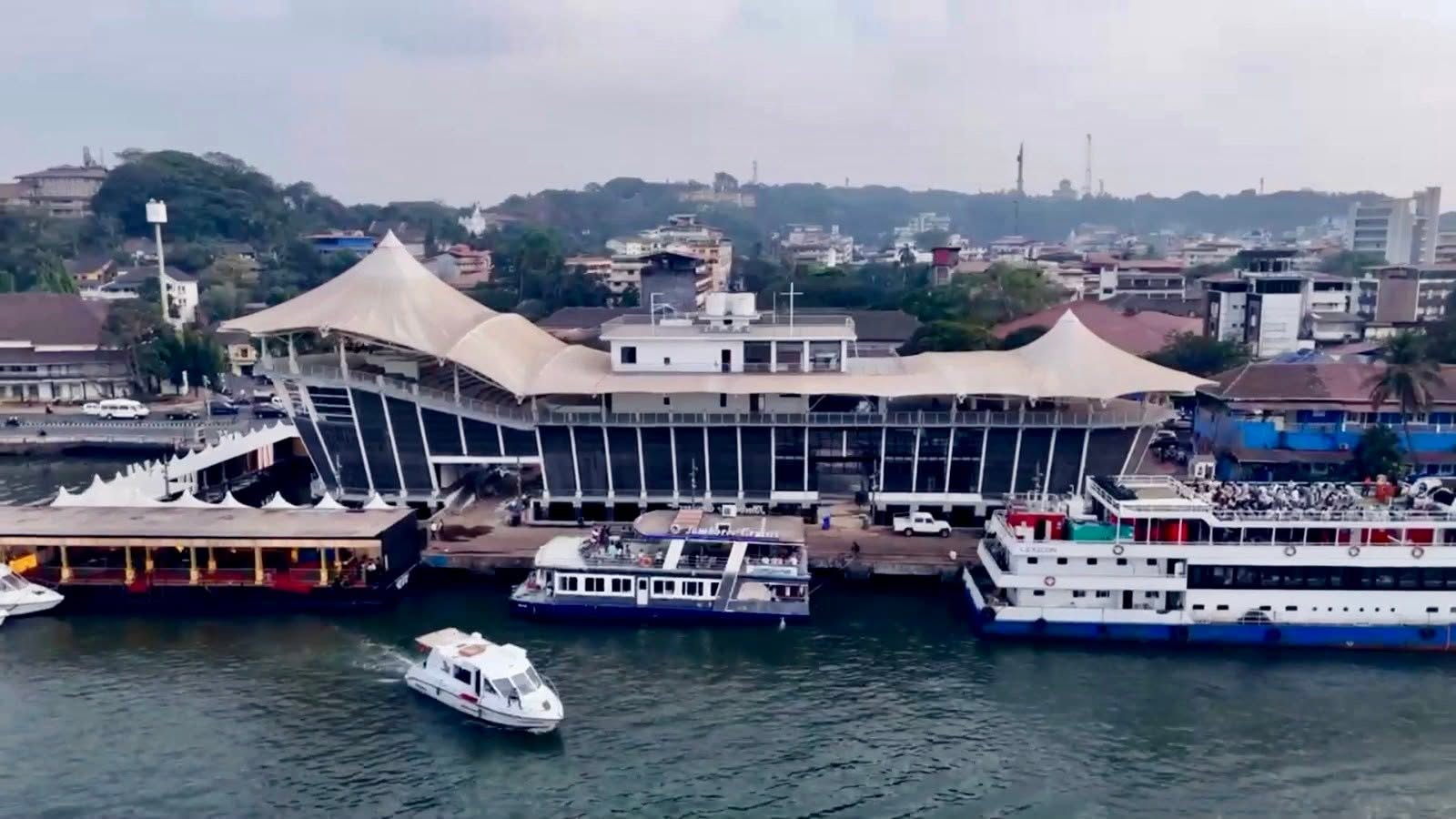
Developed by the Goa State Infrastructure Development Corporation (GSIDC), the G+3 terminal replaces the existing Captain of Ports office, providing modern administrative infrastructure, hydrographic and marine offices, a radio communication centre, passenger amenities and public facilities. Inspired by the silhouette of a ship alongside the riverbank, the building overlooks the Mandovi River, combining functional maritime operations with an architectural tribute to Goa’s rich maritime heritage.
The project forms part of Goa’s broader efforts to modernise its maritime ecosystem through improved governance, safer inland waterways and upgraded public infrastructure. It also complements the Government of India’s Sagarmala Programme and Maritime India Vision 2030, both of which seek to strengthen maritime infrastructure, enhance coastal connectivity and support sustainable economic development. By creating a centralised operational hub for the Captain of Ports Department, the new terminal is expected to improve river traffic management, maritime safety and passenger services while reinforcing Goa’s position as one of India’s leading maritime states.
Also Read: Goa Water Metro Receives Phase-I Priority as Centre Accelerates Sustainable Inland Water Transport
Why This Matters
Maritime infrastructure extends beyond ports and ships—it also depends on strong governance, efficient navigation management and modern administrative systems. The new Captain of Ports Terminal provides Goa with a centralised operational hub capable of supporting river traffic management, maritime safety, vessel regulation and passenger services. As inland waterways assume a greater role in transport and tourism, investments in governance infrastructure such as this terminal will become increasingly important for ensuring safe, efficient and sustainable maritime operations.
Goa Strengthens Maritime Administration with Modern Waterfront Facility
Goa has entered a new phase in the development of its maritime administration with the inauguration of the Captain of Ports Terminal Building on the banks of the Mandovi River in Panaji.
Constructed at a cost of ₹48.87 crore, the modern G+3 facility replaces the existing Captain of Ports office, which had become inadequate to meet the department’s expanding operational responsibilities. Developed by the Goa State Infrastructure Development Corporation (GSIDC), the new terminal has been designed to support the growing demands of river navigation, vessel monitoring, maritime regulation and public service delivery.
Speaking at the inauguration, Union Minister Sarbananda Sonowal described the project as more than a government office, calling it a symbol of Goa’s maritime identity and its commitment to modernisation, sustainability and people-centric development. The event was attended by Goa Chief Minister Dr. Pramod Sawant, Union Minister of State Shripad Naik, Goa Ministers Digambar Kamat and Subhash Phal Dessai, Members of Parliament, legislators and senior officials from the maritime sector.
A Modern Operational Hub for Maritime Governance
Designed with a distinctive ship-inspired architectural form overlooking the Mandovi River, the new terminal combines operational efficiency with public accessibility.
The building spans more than 4,405 square metres and houses a range of specialised facilities, including:
- Captain of Ports administrative offices.
- Marine and hydrographic divisions.
- Vessel monitoring and navigational control infrastructure.
- Radio communication centre.
- Conference and meeting facilities.
- Passenger amenities.
- Public service counters.
The facility also features a rooftop amphitheatre with seating for approximately 450 people, an indoor restaurant and an open terrace capable of hosting maritime exhibitions, community programmes and public events.
These features transform the terminal from a purely administrative building into a multifunctional waterfront landmark serving both operational and civic purposes.
Why Administrative Infrastructure Is as Important as Physical Maritime Infrastructure
Ports, terminals and waterways are often the most visible components of a maritime economy.
However, behind every safe vessel movement, passenger ferry operation and navigable waterway lies an administrative system responsible for regulation, monitoring, licensing, enforcement and coordination.
The inauguration of Goa’s new Captain of Ports Terminal Building therefore represents far more than the construction of a government office.
It strengthens the institutional capacity responsible for managing one of Goa’s most valuable natural assets—its inland waterways.
As Goa expands river transport, tourism, water sports and projects such as the proposed Goa Water Metro, the effectiveness of maritime governance will become increasingly critical.
The Role of the Captain of Ports Department
The Captain of Ports Department serves as Goa’s principal maritime regulatory authority for inland waterways and river navigation.
Its responsibilities extend across multiple operational areas that are essential for maintaining safe and efficient maritime activities throughout the state.
These include:
- Regulation of inland vessel operations.
- Navigation safety.
- Vessel registration and licensing.
- River traffic management.
- Ferry services oversight.
- Maritime safety compliance.
- Hydrographic coordination.
- Public passenger facilities.
- Water sports regulation.
- Emergency coordination during maritime incidents.
As maritime activity continues to grow, these responsibilities become increasingly complex, requiring modern infrastructure capable of supporting efficient administration and decision-making.
Why Governance Infrastructure Matters
Modern maritime governance depends not only on skilled personnel but also on appropriate operational infrastructure.
The new terminal consolidates several critical functions under one roof, enabling faster communication and improved coordination between departments responsible for navigation, hydrography, vessel regulation and public services.
The integration of:
- Marine offices.
- Hydrographic divisions.
- Navigation control.
- Radio communication systems.
- Conference facilities.
- Public service areas.
creates an environment where operational decisions can be made more efficiently while improving service delivery for maritime stakeholders.
For vessel operators, ferry services and government agencies, this translates into a stronger institutional framework capable of supporting growing maritime activity.
Also Read: NEED OF BALLAST WATER TREATMENT IN MARITIME SUSTAINABILITY
Supporting Safe River Navigation
Goa’s rivers are becoming increasingly important transportation corridors.
Passenger ferries, tourism vessels, fishing boats, recreational craft and commercial operators frequently share the same waterways.
Managing these activities requires continuous monitoring, effective communication and coordinated navigation management.
The upgraded terminal strengthens the Captain of Ports Department’s ability to:
- Monitor vessel movements.
- Improve navigational safety.
- Coordinate emergency responses.
- Enhance communication with vessel operators.
- Support safe passenger transport.
- Facilitate efficient river traffic management.
These capabilities become particularly important as Goa prepares for larger-scale inland water transport initiatives.
Preparing for the Future of Inland Waterways
The proposed Goa Water Metro demonstrates that inland waterways will play a much greater role in the state’s future transport network.
Such systems require more than passenger vessels and floating terminals.
They depend upon:
- Efficient regulatory oversight.
- Modern navigation control.
- Reliable communication systems.
- Coordinated vessel scheduling.
- Passenger safety management.
- Real-time operational monitoring.
The new Captain of Ports Terminal provides the institutional infrastructure capable of supporting these evolving operational requirements.
In this context, governance infrastructure becomes an essential prerequisite for future maritime infrastructure projects.
Maritime Heritage Meets Modern Administration
One of the distinguishing features of the new terminal is its architectural concept.
Inspired by the profile of a ship berthed along the riverbank, the building reflects Goa’s centuries-old maritime heritage while embracing contemporary operational requirements.
Its location overlooking the Mandovi River symbolises the enduring relationship between Goa’s waterways and its economic development.
The inclusion of public spaces such as a rooftop amphitheatre, restaurant and open terrace also reinforces the building’s civic role, allowing it to function as both a working maritime administration centre and a public waterfront destination.
This dual-purpose design strengthens public engagement with Goa’s maritime identity while creating opportunities for educational, cultural and community events.
Digital Governance Will Shape the Next Phase
Around the world, maritime administrations are increasingly adopting digital technologies to improve operational efficiency.
Future enhancements may include:
- Digital vessel registration.
- Electronic permits.
- Smart river traffic management.
- Integrated communication platforms.
- Geographic Information Systems (GIS).
- Real-time navigation monitoring.
- Digital public services.
While the current terminal provides the physical infrastructure, it also creates the opportunity for Goa to gradually integrate modern digital governance systems that improve transparency, efficiency and service delivery.
MaritimeNews Insight
The significance of the Captain of Ports Terminal lies not in its architecture alone but in the institutional capability it represents.
As Goa’s maritime ambitions expand through inland waterways, sustainable transport and Blue Economy initiatives, governance infrastructure becomes just as important as physical infrastructure.
Modern terminals, ports and ferries can only operate effectively when supported by efficient regulatory institutions capable of ensuring safety, coordination and public confidence.
The new terminal therefore serves as the administrative foundation upon which many of Goa’s future maritime initiatives are likely to depend.
How Modern Maritime Governance Will Support Inland Waterways, Tourism and the Blue Economy
The inauguration of the new Captain of Ports Terminal Building is more than the completion of an infrastructure project.
It represents the creation of a modern maritime governance centre that will support the next phase of Goa’s maritime transformation.
While ports, jetties and waterways often receive greater public attention, the institutions responsible for regulating and managing maritime activities are equally important in ensuring that maritime infrastructure functions safely, efficiently and sustainably.
As Goa prepares to expand inland waterways, introduce the proposed Goa Water Metro, strengthen coastal tourism and implement its long-term maritime roadmap, the Captain of Ports Department will play a central role in coordinating these developments.
The new terminal therefore becomes not merely an administrative headquarters but one of the key enablers of Goa’s maritime future.
Supporting the Blue Economy Through Strong Institutions
The success of the Blue Economy depends on more than investment in infrastructure.
It requires capable institutions that can regulate maritime activities, ensure navigational safety, facilitate investment and balance economic development with environmental protection.
The Captain of Ports Department occupies this critical position within Goa’s maritime ecosystem.
From regulating ferry operations and inland vessel movements to managing navigation channels and enforcing safety standards, the department forms the operational backbone of the state’s inland waterways.
The new terminal significantly enhances this institutional capability by providing modern operational facilities designed to support an expanding maritime sector.
As Goa’s Blue Economy grows, effective governance will become one of its greatest competitive advantages.
Enhancing River Tourism and Waterfront Development
Goa’s rivers are among the state’s most distinctive natural assets.
The Mandovi, Zuari, Chapora, Sal and other waterways support tourism, passenger transport, fishing and recreational activities throughout the year.
Modern maritime administration contributes directly to improving visitor confidence by ensuring:
- Safe navigation.
- Efficient passenger services.
- Better vessel regulation.
- Improved emergency response.
- Higher operational standards.
The inclusion of public spaces within the new terminal—including a rooftop amphitheatre, restaurant and open terrace—also transforms the facility into an attractive waterfront destination capable of hosting maritime exhibitions, cultural events and educational programmes.
Rather than functioning solely as a government office, the building contributes to Goa’s broader waterfront experience.
Also Read: Politics of Jetties in Goa: A Tug of War
Preparing for Integrated Maritime Mobility
The Captain of Ports Terminal is expected to become increasingly important if the proposed Goa Water Metro moves into implementation.
Large-scale passenger water transport systems require continuous coordination between:
- Vessel operators.
- Navigation authorities.
- Emergency services.
- Ferry terminals.
- Hydrographic agencies.
- Passenger management systems.
The centralisation of these functions within a modern operational headquarters provides the institutional support necessary for managing increasingly complex inland water transport operations.
In this way, today’s administrative investment becomes tomorrow’s operational infrastructure.
Strengthening Climate-Resilient Maritime Infrastructure
Climate resilience is becoming a defining consideration in coastal infrastructure planning.
Goa regularly experiences heavy monsoon rainfall, fluctuating river conditions and changing coastal dynamics that require robust maritime oversight.
Modern governance infrastructure supports resilience by improving:
- Emergency preparedness.
- Incident coordination.
- Navigation management.
- Communication systems.
- Operational continuity.
The new terminal strengthens the state’s capacity to respond more effectively to maritime emergencies while maintaining essential river transport services during challenging conditions.
Also Read: Maharashtra Seeks Retail Diesel Pricing for Fishermen as Bulk Fuel Rates Hit Marine Fishing Sector
A Symbol of Goa’s Maritime Identity
Beyond its operational functions, the terminal has also been designed to celebrate Goa’s maritime heritage.
Its ship-inspired architecture overlooking the Mandovi River reflects the state’s centuries-old relationship with the sea, river trade and navigation.
Historically, Goa served as one of India’s most significant maritime gateways.
Today, the new terminal symbolises a renewed commitment to that legacy through modern governance rather than historical preservation alone.
The building demonstrates how contemporary public infrastructure can combine functionality, architectural identity and community engagement.
MaritimeNews Insight
Across the world, maritime nations are increasingly recognising that effective governance infrastructure is as important as ports, ships and waterways.
Without efficient institutions, even the most advanced maritime infrastructure cannot achieve its full potential.
The new Captain of Ports Terminal reflects this understanding.
It strengthens Goa’s ability to regulate, coordinate and manage an increasingly sophisticated maritime ecosystem while preparing the state for future investments in inland waterways, sustainable transport and maritime tourism.
In many respects, the building serves as the administrative anchor for Goa’s wider maritime ambitions.
MaritimeNews Editorial Verdict
The inauguration of the ₹48.87-crore Captain of Ports Terminal represents an important milestone in Goa’s maritime development journey.
While the facility provides modern office space and upgraded operational infrastructure, its true significance lies in the institutional capacity it creates.
As Goa advances projects such as the Goa Water Metro, expands river transport, strengthens tourism and pursues a comprehensive maritime development strategy, the effectiveness of maritime governance will become increasingly important.
The new terminal equips the Captain of Ports Department with the infrastructure needed to support these ambitions while improving navigational safety, operational coordination and public service delivery.
Viewed in this broader context, the project is not simply about replacing an old building.
It is about creating the governance foundation for Goa’s next generation of maritime growth.
Also Read: Port Authorities Are More Than Landlords: Kolkata Warehouse Collapse Raises New Questions
Frequently Asked Questions (FAQs)
1. What is the Captain of Ports Terminal in Goa?
The Captain of Ports Terminal is Goa’s new maritime administration headquarters in Panaji. Built at a cost of ₹48.87 crore, it serves as the operational hub for vessel monitoring, river navigation, maritime governance and public services related to inland waterways.
2. Why was a new Captain of Ports Terminal built?
The previous office had become inadequate for the department’s expanding responsibilities. The new facility provides modern infrastructure to improve maritime administration, navigation safety, operational coordination and public service delivery.
3. What facilities are available in the new terminal?
The terminal includes administrative offices, marine and hydrographic divisions, navigation control infrastructure, a radio communication centre, conference facilities, passenger amenities, a rooftop amphitheatre, restaurant and public spaces.
4. How will the terminal improve river navigation?
The new facility enhances vessel monitoring, communication systems and navigation management, enabling the Captain of Ports Department to coordinate river traffic more efficiently and improve maritime safety.
5. How does the project support Goa’s Blue Economy?
By strengthening maritime governance and inland waterway management, the terminal provides the institutional foundation needed to support sustainable tourism, river transport, future Water Metro operations and broader Blue Economy initiatives.
6. Is the Captain of Ports Terminal connected to the Goa Water Metro?
While it is a separate infrastructure project, the terminal is expected to support future Water Metro operations through improved navigation management, regulatory oversight and operational coordination.
Make us preferred source on Google
Source: PIB Delhi
Reporting Basis: Official Government Release and MaritimeNews Analysis
Reporting by MaritimeNews Bureaus, Writing by Harpal S Naol; Editing by Jaspal Singh Naol.