
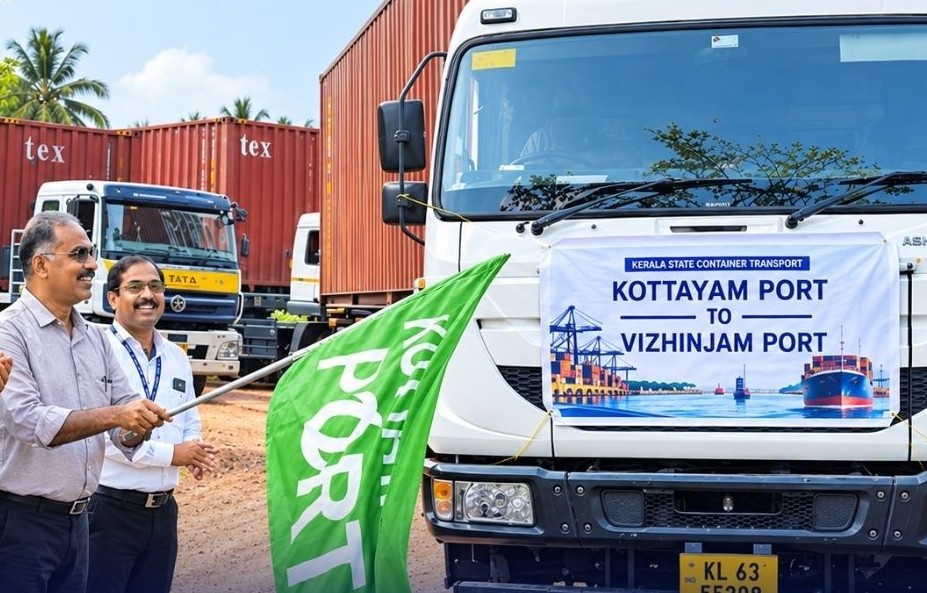
Kottayam Port has begun its first container movement to Vizhinjam International Seaport, creating a new connection between Kerala’s inland cargo network and the state’s deep-water transshipment gateway
Make us preferred source on Google
Key Takeaways
- Kottayam Port has commenced its first container movement to Vizhinjam International Seaport.
- The container carried more than 19 tonnes of rubber mats.
- The movement began at around 6:30 PM on September 11 and reportedly reached Vizhinjam the same night.
- The route reportedly generated savings of around US$3,000 (approximately ₹2.75 lakh) compared with routing the cargo through Kochi Port.
- Kottayam Port officials said the new connection could provide exporters and importers with a more cost-effective route to international markets.
- Exporters and importers from neighbouring states are also reportedly showing interest in using the facility.
- The movement marks another step towards strengthening Kottayam–Vizhinjam connectivity and expanding Kerala’s EXIM network.
Also Read: Modi’s BRICS Bilateral Push Deepens India’s Engagement Across Africa, ASEAN and Central Asia
Kottayam / Vizhinjam, Thiruvananthapuram, India September 14, 2026 (Maritime News): Kottayam Port has started its first container movement to Vizhinjam International Seaport, establishing a new cargo connection between Kerala’s inland logistics network and the deep-water transshipment port.
The first container, carrying more than 19 tonnes of rubber mats, was dispatched at approximately 6:30 PM on September 11 and reportedly reached Vizhinjam later that night.
The movement creates an additional logistics pathway for cargo originating from Kottayam and surrounding areas.
Route Reportedly Saves Around ₹2.75 Lakh
The first movement is reported to have generated savings of approximately US$3,000, or around ₹2.75 lakh, compared with routing the cargo through Kochi Port.
For exporters and importers, the potential cost advantage could become an important consideration when selecting logistics routes for international cargo.
The significance of the new connection will ultimately depend on whether similar cost and transit-time advantages can be consistently achieved across different commodities, shipment volumes and destinations.
Also Read: India and Vietnam Reaffirm Stronger Maritime and Defence Ties for Regional Security
Rubber Mats Form First Container Cargo
The inaugural container movement carried more than 19 tonnes of rubber mats, providing an initial demonstration of the potential for Kottayam-area cargo to connect with Vizhinjam.
The movement also highlights the importance of establishing efficient inland links to a major transshipment port.
For cargo owners, the availability of an alternative route can provide greater flexibility when planning international shipments.
Exporters and Importers Show Interest
Kottayam Port officials said the new connection could offer exporters and importers a more cost-effective route to international markets.
Interest is also reportedly emerging among exporters and importers from neighbouring states.
If this interest translates into regular cargo movements, Kottayam Port could potentially serve a wider hinterland beyond its immediate cargo base.
That would make the development relevant not only to Kottayam but also to Kerala’s broader regional logistics network.
Why the Kottayam–Vizhinjam Connection Matters
The development connects an inland cargo point with one of India’s major emerging transshipment gateways.
Instead of treating inland cargo movement and transshipment as separate logistics activities, the Kottayam–Vizhinjam connection can create a more integrated movement:
Cargo origin → Kottayam Port → Vizhinjam → International shipping network
The effectiveness of this chain will depend on reliable road connectivity, documentation, container availability, handling efficiency, customs processes, vessel connectivity and competitive overall logistics costs.
Opportunity for Kerala’s EXIM Network
Kerala’s exporters and importers depend on efficient connections between production centres, inland logistics facilities, ports and international shipping services.
A stronger Kottayam–Vizhinjam connection could therefore create opportunities for:
- rubber and rubber-based products;
- agricultural commodities;
- manufacturing cargo;
- small and medium enterprises;
- exporters in neighbouring districts;
- importers requiring containerised cargo movement; and
- logistics and transport service providers.
The first container movement is therefore more than an individual shipment if the route develops into a regular commercial service.
Also Read: Hormuz Crisis Reshapes Gulf Shipping: What It Means for Indian Trade, Freight and Seafarers
People and the Last Mile
The potential benefits ultimately depend on businesses being able to use the route conveniently and competitively.
For exporters, lower logistics costs can improve the competitiveness of products in international markets.
For importers, an efficient inland connection can influence the delivered cost of goods.
For transport operators, regular cargo flows can create new business opportunities.
For logistics companies, the Kottayam–Vizhinjam link could create demand for container transport, documentation, warehousing and related services.
The next stage will be ensuring that these potential benefits reach businesses beyond the first movement.
The Question of Scale
The first container movement demonstrates feasibility, but sustained cargo volumes will determine the commercial significance of the connection.
Key factors to watch include:
- Number of containers moved regularly.
- Cost per container compared with alternative ports.
- Transit time.
- Availability of return cargo.
- Container availability.
- Road connectivity between Kottayam and Vizhinjam.
- Customs and documentation efficiency.
- Shipping-line connectivity from Vizhinjam.
- Participation by exporters and importers from neighbouring states.
- Whether the initial cost advantage is maintained at larger volumes.
From First Movement to Regular EXIM Corridor
The first movement provides a starting point for Kottayam–Vizhinjam connectivity.
The next challenge is to convert an inaugural movement into a predictable, commercially viable and scalable cargo corridor.
For exporters and importers, the real value will come when the route can offer competitive costs, dependable transit times and regular access to international shipping services.
For Kerala’s maritime economy, stronger inland-port integration could help expand the hinterland served by Vizhinjam while giving businesses another option for moving international cargo.
MaritimeNews Insight
The first container movement from Kottayam Port to Vizhinjam represents a small but potentially important development in Kerala’s logistics network.
The reported ₹2.75 lakh saving on the first shipment, if sustained across regular movements, could become a meaningful commercial advantage for exporters and importers.
But the real test is not the first container.
It is whether Kottayam–Vizhinjam can develop into a regular EXIM logistics connection, attract cargo from a wider hinterland and consistently deliver competitive cost and transit-time advantages.
If that happens, Vizhinjam’s role would extend beyond being a transshipment port: its economic influence would increasingly depend on how effectively it is connected to Kerala’s inland production and consumption centres and neighbouring states.
Way Forward
The immediate priority should be to build on the first movement by encouraging regular containerised cargo between Kottayam and Vizhinjam.
Port authorities, logistics operators, exporters, importers and other stakeholders will need to work together to address:
- cargo aggregation;
- container availability;
- competitive inland transport rates;
- documentation and customs coordination;
- reliable transit schedules; and
- connections with international shipping services.
The first container has established the connection.
The next milestone should be regular cargo.
Frequently Asked Questions (FAQs)
What cargo was carried in the first Kottayam–Vizhinjam container movement?
The container carried more than 19 tonnes of rubber mats.
When did the first movement take place?
The container was dispatched at around 6:30 PM on September 11 and reportedly reached Vizhinjam the same night.
How much was reportedly saved?
The movement reportedly saved around US$3,000, approximately ₹2.75 lakh, compared with routing the cargo through Kochi Port.
Why is the connection important?
It provides an additional route connecting inland cargo from Kottayam with Vizhinjam International Seaport and potentially with international shipping networks.
Could exporters from other states use the route?
Kottayam Port officials have reportedly indicated interest from exporters and importers in neighbouring states.
What will determine the success of the route?
Regular cargo volumes, competitive costs, transit reliability, container availability, road connectivity and access to international shipping services will determine whether the connection develops into a sustainable EXIM corridor.
What does this mean for Vizhinjam?
The development could strengthen Vizhinjam’s hinterland connectivity by linking the port with inland cargo generated in Kottayam and potentially neighbouring regions.
Make us preferred source on Google
Reporting by MaritimeNews Bureaus, Writing by Harpal S Naol; Editing by Jaspal Singh Naol.