

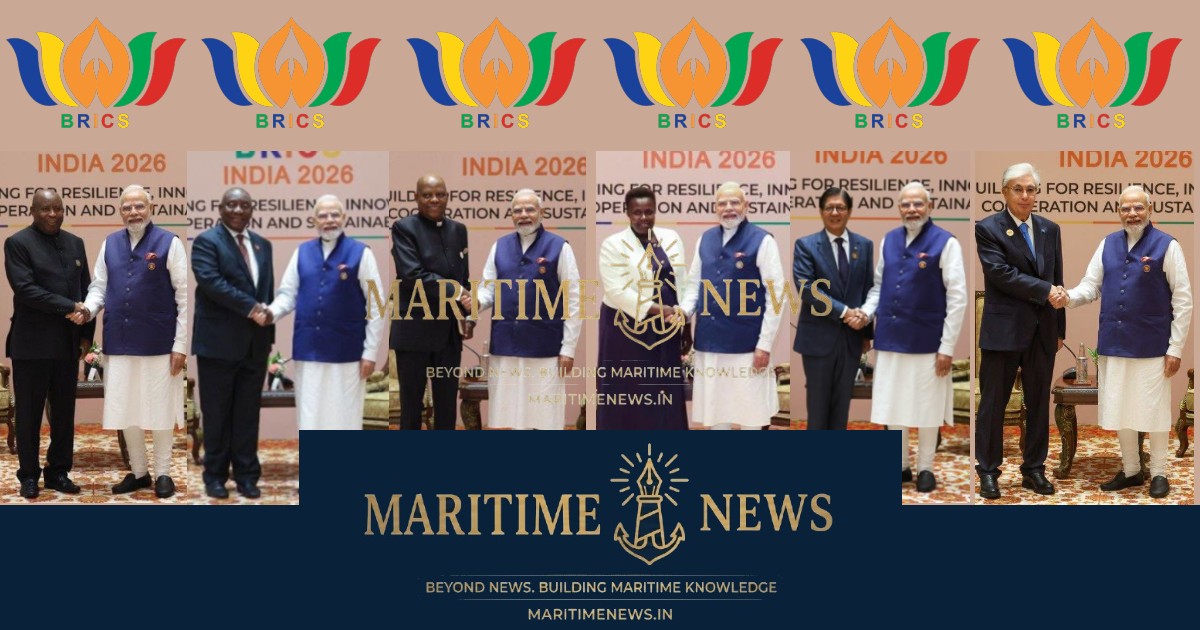
Prime Minister Narendra Modi held a series of bilateral meetings on the sidelines of the 18th BRICS Summit in New Delhi with leaders from Africa, ASEAN and Central Asia, reviewing cooperation in trade, investment, defence, energy, technology, connectivity, infrastructure and development while reinforcing India’s wider engagement with the Global South
Make us preferred source on Google
Key Takeaways
- PM Modi held separate bilateral meetings with leaders from South Africa, Nigeria, Uganda, the Philippines and Kazakhstan, besides the Chairperson of the African Union and President of Burundi.
- India and South Africa reviewed their multifaceted strategic partnership and agreed to maintain close coordination in multilateral forums.
- India and Nigeria discussed trade, investment, defence, security, energy, agriculture, health and digital technologies.
- India and Uganda focused on technology partnerships, capacity building, knowledge sharing, investment facilitation and private-sector collaboration.
- India and the Philippines agreed to deepen cooperation in defence, security, trade, space, railways, fintech, education, tourism, science and technology and innovation.
- The Philippines’ participation at BRICS came as the current ASEAN Chair, adding importance to the India-Philippines engagement.
- India and Kazakhstan reviewed cooperation covering trade, defence and security, connectivity, energy, critical minerals and emerging technologies.
- The separate engagements with African leaders reinforce India’s continuing Africa and Global South outreach.
- Across the meetings, trade, energy, connectivity, technology and security emerged as important pillars with implications for India’s wider economic and maritime ecosystem.
Also Read: India and Vietnam Reaffirm Stronger Maritime and Defence Ties for Regional Security
New Delhi, India September 14, 2026 (Maritime News): The 18th BRICS Summit in New Delhi provided Prime Minister Narendra Modi with an opportunity to hold a series of bilateral meetings with leaders from strategically important countries and regions.
On September 13, Modi met South African President Cyril Ramaphosa, Nigerian Vice President Kashim Shettima Mustapha, Ugandan Vice President Jessica Rose Epel Alupo, Philippine President Ferdinand R. Marcos Jr. and Kazakhstan President Kassym-Jomart Tokayev.
He also met the Chairperson of the African Union and President of Burundi H.E. Évariste Ndayishimiye.
The meetings covered different bilateral priorities, but collectively they reflected India’s effort to strengthen partnerships across Africa, ASEAN and Central Asia, while working with countries of the Global South on shared regional and international concerns.
India-Africa Engagement Expands Around BRICS
The African dimension of the meetings was particularly significant, with engagements involving South Africa, Nigeria, Uganda and the African Union/Burundi.
The engagement with the Chairperson of the African Union and President of Burundi added a continental dimension to India’s outreach. PIB — PM meets Chairperson of African Union and President of Burundi
The meetings with South Africa, Nigeria and Uganda addressed different aspects of India’s bilateral relationships with these countries.
India-South Africa: Strategic Partnership and Multilateral Coordination
Prime Minister Modi met President Cyril Ramaphosa of South Africa on the sidelines of the BRICS Summit.
The two leaders reviewed progress across diverse areas of cooperation and exchanged views on the multifaceted strategic partnership between India and South Africa.
They reaffirmed the longstanding relationship between the two countries, which is rooted in shared historical struggles, cultural affinities, economic ties and people-to-people connections. PIB — India-South Africa bilateral meeting
The leaders also discussed global issues of mutual interest and agreed to maintain close coordination in multilateral forums.
Cheetah Cooperation
The meeting also included cooperation arising from the successful translocation of cheetahs from South Africa to India.
Prime Minister Modi invited South Africa to consider joining the International Big Cat Alliance. PIB — India-South Africa bilateral meeting
The issue demonstrates that the India-South Africa partnership extends beyond conventional economic and strategic areas into environmental and conservation cooperation.
Also Read: Hormuz Crisis Reshapes Gulf Shipping: What It Means for Indian Trade, Freight and Seafarers
India-Nigeria: Trade, Energy, Defence and Digital Technologies
Modi also met Nigerian Vice President Kashim Shettima Mustapha, who was heading Nigeria’s delegation to the BRICS Summit.
The two leaders reviewed the multifaceted India-Nigeria relationship and expressed satisfaction at steady progress across diverse sectors.
Their discussions covered:
- trade and investment;
- defence and security;
- energy;
- agriculture;
- health; and
- digital technologies.
Both leaders reaffirmed their commitment to further strengthening the India-Nigeria Strategic Partnership. PIB — India-Nigeria bilateral meeting
The Nigerian delegation included ministers handling foreign affairs, industry, trade and investment, communication and digital technology, humanitarian affairs and poverty reduction, women affairs, and science and technology.
The composition of the delegation reflected the breadth of the bilateral relationship being discussed.
India-Nigeria and the Global South
Modi and Shettima also exchanged views on regional and global issues of mutual interest, including the priorities and concerns of the Global South.
Both sides emphasised the importance of stronger cooperation in multilateral forums and working towards a more representative, inclusive and multipolar international order.
Modi reiterated India’s commitment to strengthening its partnership with Nigeria and deepening India’s engagement with Africa. PIB — India-Nigeria bilateral meeting
India-Uganda: Technology, Capacity Building and Investment
Prime Minister Modi held a bilateral meeting with Ugandan Vice President Jessica Rose Epel Alupo.
The two leaders reviewed bilateral ties and emphasised the need to enhance cooperation in priority areas through:
- technology partnerships;
- capacity building;
- knowledge sharing;
- investment facilitation; and
- private-sector collaboration.
They also underlined that the development partnership between India and Uganda remains a source of strength for both countries.
Modi reaffirmed India’s support for Uganda’s Vision 2040 for a transformed and prosperous Uganda. PIB — India-Uganda bilateral meeting
The two leaders also emphasised the importance of close people-to-people ties and called for closer bilateral engagement to strengthen the voice of the Global South.
India-Philippines: Strategic Partnership Meets ASEAN Leadership
The Philippines engagement carries particular regional significance.
Prime Minister Modi met President Ferdinand R. Marcos Jr. of the Philippines and welcomed the country’s participation in the BRICS Summit as the current ASEAN Chair.
The two leaders expressed satisfaction at progress across bilateral cooperation and agreed to further deepen collaboration in:
- defence and security;
- trade and investment;
- space;
- railway infrastructure;
- fintech;
- education;
- tourism;
- science and technology;
- innovation; and
- people-to-people ties.
Both leaders agreed to advance bilateral relations under the Strategic Partnership established during President Marcos’ State Visit to India in August 2025. PIB — India-Philippines bilateral meeting
Disaster Resilience
Modi also welcomed the Philippines’ decision to join the Coalition for Disaster Resilient Infrastructure.
This adds an infrastructure-resilience dimension to a relationship that already spans defence, trade, technology, connectivity and other sectors. PIB — India-Philippines bilateral meeting
For the Indo-Pacific, resilient infrastructure has implications for connectivity, logistics and economic continuity.
India-Kazakhstan: Connectivity, Energy and Critical Minerals
Prime Minister Modi met President Kassym-Jomart Tokayev of Kazakhstan during the BRICS Summit.
The two leaders reviewed cooperation across political, economic and strategic areas.
Their discussions included:
- political cooperation;
- trade;
- defence and security;
- connectivity;
- energy;
- critical minerals;
- emerging technologies;
- creative economy; and
- people-to-people ties.
They also exchanged perspectives on regional and international developments.
Both leaders reaffirmed their commitment to further strengthening the India-Kazakhstan strategic partnership for mutual benefit and for peace, stability, development and prosperity in the region. PIB — India-Kazakhstan bilateral meeting
Also Read: India Moves to Build a Global Hub for Ship Ownership, Leasing and Maritime Finance Through GIFT City
Why Connectivity and Critical Minerals Matter
The inclusion of connectivity, energy and critical minerals is important for India’s longer-term economic and strategic interests.
Connectivity supports movement of goods between economic centres and markets, while critical minerals have increasing relevance for emerging technologies and industrial supply chains.
The PIB release does not announce a new specific connectivity or critical-minerals project from the meeting. These therefore remain areas of bilateral cooperation to be developed further.
Six Engagements, Three Strategic Regions
The bilateral meetings collectively connect India’s BRICS diplomacy with three important geographical spaces.
| Region | Engagements | Major Areas |
|---|---|---|
| Africa | African Union/Burundi, South Africa, Nigeria, Uganda | Trade, development, energy, technology, multilateral cooperation |
| Southeast Asia | Philippines | Defence, trade, space, infrastructure, technology, ASEAN |
| Central Asia | Kazakhstan | Connectivity, energy, critical minerals, defence, technology |
The meetings demonstrate that India’s BRICS engagement is being accompanied by wider bilateral diplomacy.
Also Read: Cochin Shipyard and Drydocks World Sign 50:50 JV to Build India’s Global Ship Repair Ambition
What This Means for India’s Maritime Economy
The meetings did not announce specific new maritime agreements.
However, several of the areas discussed have a direct relationship with India’s maritime and logistics ecosystem.
Trade and Investment
Stronger trade and investment relationships require efficient logistics networks connecting producers, inland economic centres, ports and international markets.
Energy
Energy cooperation with countries such as Nigeria and Kazakhstan has wider implications for India’s energy security and international supply chains.
Connectivity
Connectivity was specifically discussed with Kazakhstan, while railway infrastructure formed part of the India-Philippines discussions.
These networks can complement maritime connectivity by connecting inland production and consumption centres with ports and shipping corridors.
Defence and Security
Defence and security were discussed with Nigeria, the Philippines and Kazakhstan.
The Philippines engagement is particularly relevant to India’s wider Indo-Pacific engagement because of the country’s ASEAN role and geographical position in Southeast Asia.
The individual PIB releases, however, do not announce specific new naval or maritime-security agreements arising from these meetings.
From Political Commitment to Last-Mile Outcomes
The announcements made during high-level bilateral meetings establish political direction.
The next stage is implementation.
For businesses, this means whether trade and investment discussions lead to actual commercial opportunities.
For technology institutions, it means whether technology partnerships lead to projects and knowledge transfer.
For workers and students, it means whether capacity-building and people-to-people initiatives create tangible opportunities.
For maritime and logistics stakeholders, it means whether stronger international relationships translate into increased trade, cargo movement, investment, connectivity and resilient supply chains.
The impact therefore needs to be assessed beyond the meeting itself.
People and the Global South
A recurring theme across the African engagements was India’s commitment to strengthening its partnership with the Global South.
The Nigeria meeting explicitly addressed the priorities and concerns of developing countries, while the Uganda engagement emphasised capacity building and development partnership.
For people in developing economies, the value of international partnerships is ultimately determined by whether they improve access to:
- markets;
- technology;
- skills;
- investment;
- infrastructure;
- healthcare;
- education; and
- employment opportunities.
This makes implementation and capacity building central to the long-term value of these relationships.
Maritime and Logistics Stakeholders
India’s growing international partnerships also create potential opportunities for the maritime ecosystem.
Shipping companies can benefit from increased bilateral trade.
Ports may see opportunities if trade volumes and supply chains expand.
Freight forwarders and logistics companies can support increasingly complex international supply chains.
Customs brokers will remain important as trade flows develop.
Seafarers and maritime workers are part of the human infrastructure supporting India’s international trade.
Technology companies can contribute to digital logistics, trade facilitation and emerging technology partnerships.
These opportunities, however, depend on actual trade and investment flows rather than diplomatic announcements alone.
What MaritimeNews Should Track
The September 13 engagements create several areas for continued tracking:
- New trade and investment projects arising from the bilateral meetings.
- India-Nigeria energy cooperation and its commercial outcomes.
- Technology and capacity-building programmes with Uganda.
- Defence and security cooperation with Nigeria and the Philippines.
- India-Philippines cooperation under the Strategic Partnership.
- India’s engagement with the Philippines as ASEAN Chair.
- Connectivity and energy cooperation with Kazakhstan.
- Critical-minerals cooperation with Kazakhstan.
- Development cooperation with African partners.
- Whether commitments announced at the BRICS Summit translate into projects, investments, jobs, trade and measurable outcomes.
Accountability Tracker
| Engagement | Immediate Commitment | What Should Be Tracked |
|---|---|---|
| African Union/Burundi | Continued engagement | Follow-up initiatives |
| South Africa | Strategic and multilateral cooperation | Bilateral outcomes and projects |
| Nigeria | Trade, investment, defence, energy, technology | Agreements, investments and implementation |
| Uganda | Technology and capacity building | Programmes and beneficiary outcomes |
| Philippines | Strategic Partnership expansion | Defence, trade, infrastructure and technology outcomes |
| Kazakhstan | Connectivity, energy, critical minerals | Projects, investments and supply-chain outcomes |
This provides a basis for moving from announcement to implementation and outcome.
MaritimeNews Insight
The significance of Prime Minister Modi’s BRICS-sideline meetings is not contained in any single bilateral engagement.
Taken together, they show India strengthening relationships across Africa, ASEAN and Central Asia while connecting strategic cooperation with trade, investment, energy, technology, connectivity, defence and development.
For MaritimeNews, the maritime significance lies in what comes next.
Trade relationships require shipping. Energy partnerships require reliable supply chains. Connectivity requires ports, railways and logistics networks. Technology partnerships increasingly support maritime and industrial operations.
But none of these outcomes should be assumed simply because leaders have agreed to cooperate.
The real measure will be whether these diplomatic commitments translate into cargo, investment, connectivity, technology, capacity building, jobs and stronger economic linkages.
The BRICS Summit has created the political platform. The next stage is implementation.
Way Forward
India’s next priority should be sustained institutional follow-up with each partner.
With African countries, trade, investment, energy, technology and development cooperation remain important.
With the Philippines, defence, security, trade, infrastructure, technology and ASEAN engagement provide a broad agenda.
With Kazakhstan, connectivity, energy, critical minerals and emerging technologies provide strategic areas for continued cooperation.
The value of the BRICS bilateral engagements will ultimately depend on the ability of governments and institutions to convert broad commitments into specific programmes, investments, partnerships and measurable benefits for people and businesses.
Frequently Asked Questions (FAQs)
Which countries did Prime Minister Modi meet on the sidelines of the BRICS Summit?
PM Modi met leaders from South Africa, Nigeria, Uganda, the Philippines and Kazakhstan, as well as the Chairperson of the African Union and President of Burundi.
What did India and South Africa discuss?
The two leaders reviewed their multifaceted strategic partnership, global issues and coordination in multilateral forums. Cooperation connected with cheetah conservation was also discussed. PIB — India-South Africa meeting
What were the main areas discussed with Nigeria?
Trade and investment, defence and security, energy, agriculture, health and digital technologies. PIB — India-Nigeria meeting
What did India and Uganda discuss?
Technology partnerships, capacity building, knowledge sharing, investment facilitation and private-sector collaboration. PIB — India-Uganda meeting
Why is the Philippines meeting significant?
The Philippines participated in the BRICS Summit as the current ASEAN Chair, and India and the Philippines agreed to deepen their Strategic Partnership across defence, trade, space, infrastructure, technology and other sectors. PIB — India-Philippines meeting
What did India and Kazakhstan discuss?
The two leaders discussed trade, defence and security, connectivity, energy, critical minerals, emerging technologies, the creative economy and people-to-people ties. PIB — India-Kazakhstan meeting
Did these meetings announce new maritime agreements?
The individual PIB releases do not announce specific new maritime agreements. Their maritime relevance comes through broader areas such as trade, energy, connectivity, defence, security and regional cooperation.
Why do these bilateral engagements matter to India’s maritime industry?
India’s international trade, energy supplies and supply chains depend heavily on transport and logistics networks. Stronger bilateral economic relationships can therefore create opportunities across shipping, ports, freight forwarding, logistics and related maritime services.
What should happen next?
The next stage is implementation — converting diplomatic commitments into specific projects, investments, technology partnerships, capacity-building programmes and measurable outcomes.
Sources & External References
- Prime Minister meets the Chairperson of the African Union and President of Republic of Burundi on the sidelines of the BRICS Summit in New Delhi
- Prime Minister meets with the President of South Africa on the sidelines of the BRICS Summit in New Delhi
- Prime Minister meets with the Vice President of Nigeria on the sidelines of the 18th BRICS Summit in New Delhi
- Prime Minister meets the Vice President of Uganda on the sidelines of the 18th BRICS Summit in New Delhi
- Prime Minister meets with the President of the Republic of the Philippines on the sidelines of the BRICS Summit in New Delhi
- Prime Minister meets with the President of the Republic of Kazakhstan on the sidelines of the BRICS Summit in New Delhi
Make us preferred source on Google
Reporting by MaritimeNews Bureaus, Writing by Harpal S Naol; Editing by Jaspal Singh Naol.


2 thoughts on “Modi’s BRICS Bilateral Push Deepens India’s Engagement Across Africa, ASEAN and Central Asia”