
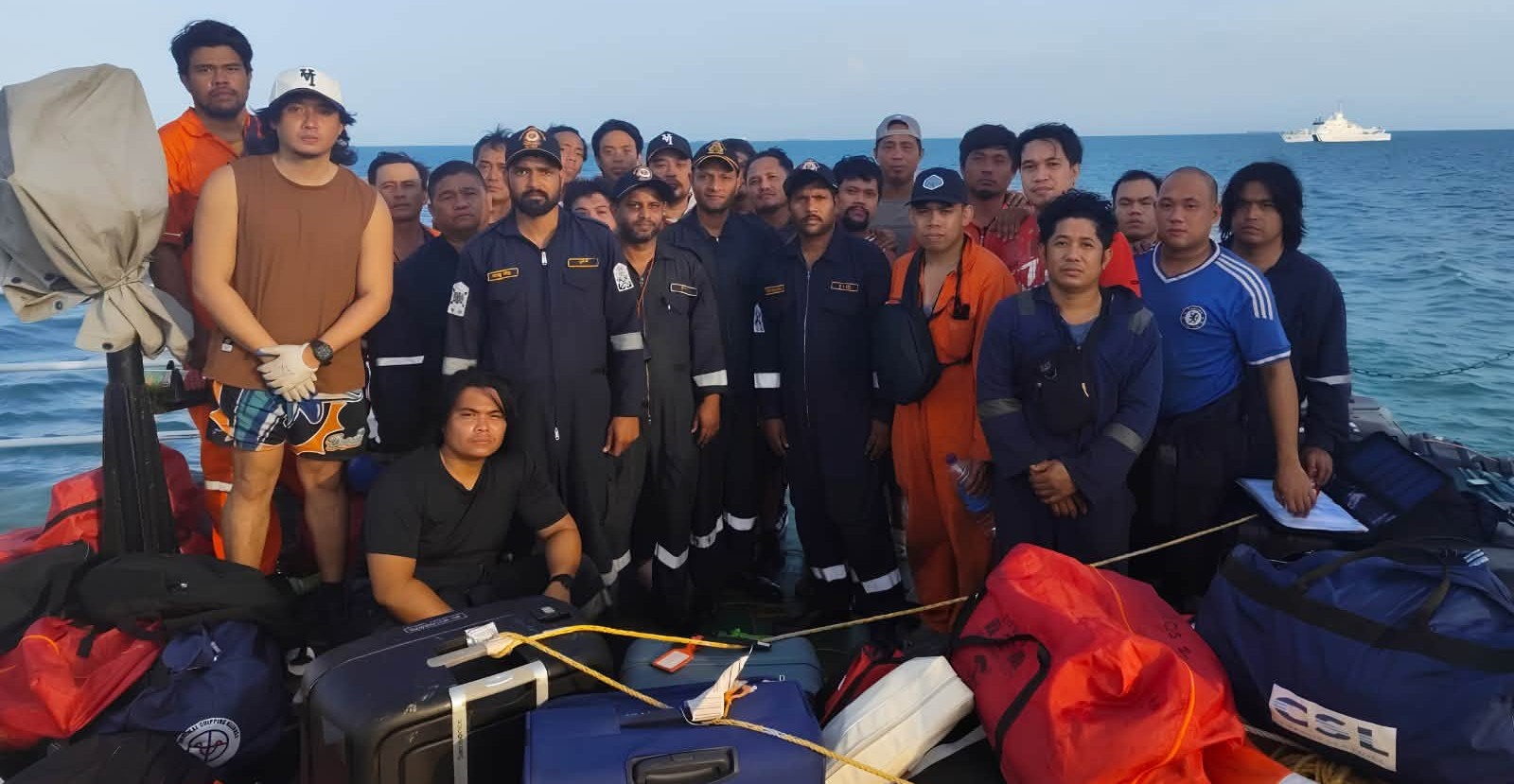
The Indian Coast Guard rescued 21 of 24 crew members after bulk carriers KMAX Emperor and True Mariner collided at the Outer Tuna Buoy anchorage off Kandla, with pollution-response measures activated as the authorities assess the maritime and environmental risks
Make us preferred source on Google
Key Takeaways
- KMAX Emperor (IMO: 9477426) and True Mariner (IMO: 9599822) collided on September 11 near the Outer Tuna Buoy (OTB) anchorage at Kandla.
- The Indian Coast Guard evacuated 21 of the 24 crew members aboard KMAX Emperor.
- Three crew members remained aboard KMAX Emperor to support ongoing operations.
- KMAX Emperor subsequently began sinking after sustaining damage.
- The crew of True Mariner released their anchor and moved away from the casualty area.
- True Mariner’s crew also assisted in rescuing seven KMAX Emperor crew members.
- The Indian Coast Guard activated pollution-response measures and is coordinating with the Directorate General of Shipping, central agencies and the Gujarat administration.
- The casualty occurred at the outer anchorage serving Deendayal Port, making anchorage safety, vessel traffic management and emergency preparedness important areas for investigation.
- The incident follows the August sinking of MV Ocean Winner off Odisha, in which only two of 24 crew members were rescued.
- The causes of both casualties should be treated as under investigation; no conclusion about navigational fault, vessel condition, cargo or other contributing factors should be drawn without official findings.
Also Read: Hormuz Crisis Reshapes Gulf Shipping: What It Means for Indian Trade, Freight and Seafarers
Kandla, Kutch, Gujarat, India September 13, 2026 (Maritime News): A maritime emergency unfolded off Gujarat on Friday September 11, 2026 after two bulk carriers collided near the Outer Tuna Buoy (OTB) anchorage at Kandla. The vessels involved were KMAX Emperor, a Liberian-flagged bulk carrier, and True Mariner, a Barbados-flagged bulk carrier.
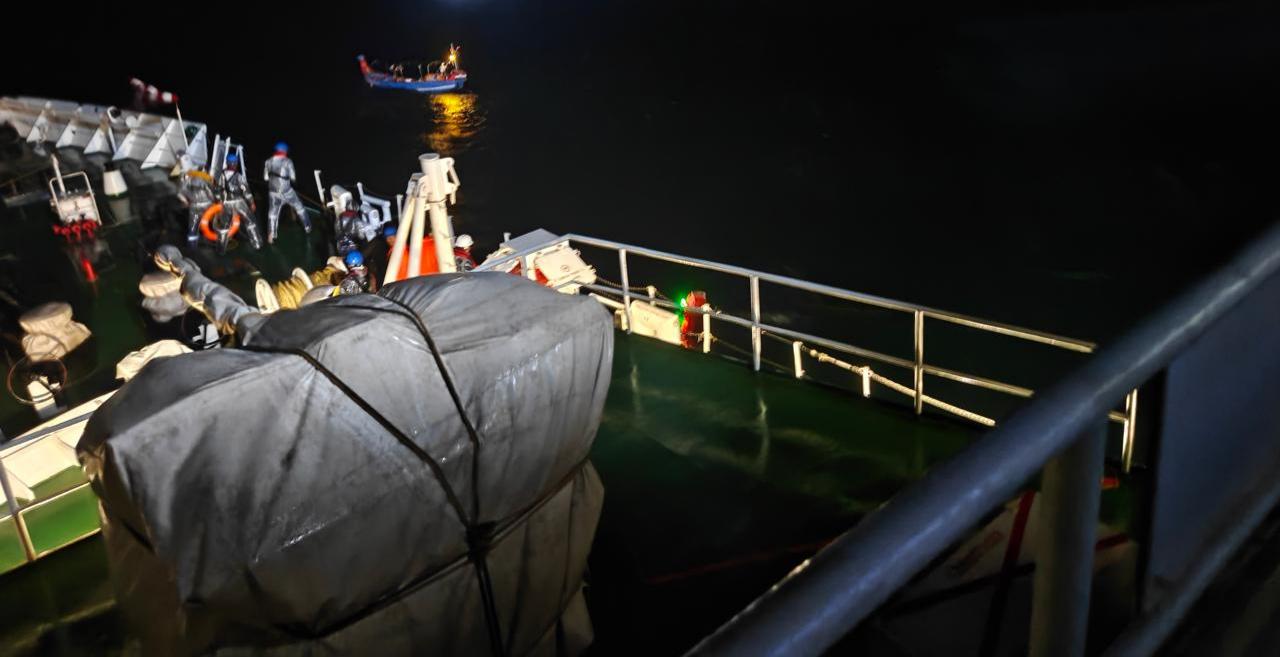
The Indian Coast Guard said it launched a swift rescue operation following the collision and safely evacuated 21 of the 24 crew members aboard KMAX Emperor. Three crew members remained aboard the vessel to support ongoing operations. (Indian Coast Guard report via India Today)
The incident occurred at the outer anchorage associated with Deendayal Port, one of India’s major maritime gateways on the Gulf of Kutch.
KMAX Emperor Began Sinking After the Collision
Following the collision, KMAX Emperor suffered serious damage and began to sink.
Available casualty information indicates that the vessels became entangled during the incident, with the damaged KMAX Emperor subsequently dragging True Mariner before the latter’s crew managed to release its anchor and move away from the immediate danger area. (VesselTracker casualty report)
The crew of True Mariner also participated in the rescue effort and assisted in bringing seven crew members from KMAX Emperor to safety. (VesselTracker)
The distinction is important: the Coast Guard’s overall rescue operation resulted in 21 of KMAX Emperor’s 24 crew members being evacuated, while the True Mariner crew itself assisted with the rescue of seven.
Indian Coast Guard Activates Pollution Response
The incident immediately raised another concern beyond crew safety: marine pollution.
The Indian Coast Guard activated comprehensive pollution-response measures and began coordinating with the Directorate General of Shipping, central agencies and the Gujarat state administration.
The Coast Guard said its response remained focused on maritime safety and protection of Gujarat’s coastal ecosystem. (India Today)
This is particularly important when a bulk carrier is damaged or sinks at an anchorage.
Potential environmental concerns can include:
- fuel oil;
- marine diesel;
- lubricants;
- cargo leakage;
- floating debris;
- underwater wreckage;
- navigational hazards; and
- contamination of sensitive coastal waters.
At this stage, however, the extent of any pollution from the casualty should not be assumed. The Coast Guard has activated preventive and response measures, while the authorities continue to assess the situation.
The Outer Anchorage Is an Important Part of Kandla’s Maritime Operations
The location of the casualty is significant.
The Outer Tuna Buoy (OTB) area functions as an outer anchorage associated with Kandla and Deendayal Port.
Anchorages are critical components of port operations. Ships may wait there for:
- berthing;
- cargo operations;
- port clearance;
- pilotage;
- weather-related reasons;
- documentation;
- cargo availability; or
- other operational instructions.
This means anchorage safety is not simply a matter concerning two ships.
It involves the wider system of:
vessel traffic → anchoring → pilotage → port control → communications → navigation → weather → tug availability → emergency response.
The investigation will therefore be important in establishing exactly how the collision occurred.
Also Read: Cabinet Approves Development of National Maritime Heritage Complex at Lothal, Gujarat
What Happened Between the Two Ships?
At present, the available information establishes the collision and subsequent rescue operation, but does not establish responsibility for the collision.
That distinction is important.
A maritime casualty investigation would normally need to examine issues such as:
- vessel movements before the collision;
- anchor status;
- weather and visibility;
- currents and wind;
- pilotage, if applicable;
- bridge watchkeeping;
- communications;
- engine and steering status;
- vessel traffic;
- anchorage density;
- port instructions;
- navigation equipment;
- VTS/VTMIS information;
- crew actions; and
- the sequence of events immediately before impact.
Any conclusion about whether the collision resulted from navigational error, anchor dragging, mechanical failure, environmental conditions or another factor should wait for the competent investigation.
The Role of the True Mariner Crew in the Rescue
The response also highlights an important principle of maritime safety: merchant vessels can become first responders during a casualty.
True Mariner’s crew managed to release their anchor and move away from the immediate danger zone.
They then assisted the Coast Guard in rescuing seven members of KMAX Emperor’s crew.
The episode demonstrates the importance of:
- crew emergency training;
- communication between vessels;
- situational awareness;
- emergency preparedness;
- life-saving equipment; and
- cooperation between commercial shipping and government rescue agencies.
The Coast Guard’s rapid response then enabled the evacuation of the remaining affected crew.
Also Read: Cochin Shipyard and Drydocks World Sign 50:50 JV to Build India’s Global Ship Repair Ambition
A Second Major Bulk Carrier Casualty in Indian Waters
The Kandla collision comes only weeks after another serious bulk-carrier casualty in Indian waters.
On August 22, MV Ocean Winner (IMO: 9145530) sank in the Bay of Bengal after departing Paradip.
The Panama-flagged bulk carrier had 24 crew members aboard: 20 Chinese nationals, three from Myanmar and one from Bangladesh.
The Indian Coast Guard and Indian Navy mounted a search-and-rescue operation, and two Chinese crew members were rescued from life rafts. The remaining 22 were initially reported missing. (Indian Coast Guard reporting via India Today)
The vessel had departed Paradip carrying iron ore and was bound for Singapore.
The cause of Ocean Winner’s sinking remains unresolved in the available reporting, and the casualty should not be conflated with the Kandla collision.
However, the close succession of two serious bulk-carrier casualties in Indian waters makes maritime safety and casualty prevention a particularly important subject for India’s shipping industry.
Kandla and Paradip Are Different Casualties — But Both Raise Safety Questions
It is important not to suggest that the two incidents have the same cause.
They do not.
KMAX Emperor
Collision → structural damage → sinking → mass evacuation
Ocean Winner
Loss of contact/distress → rapid sinking → search and rescue
The circumstances are different.
But both incidents involve bulk carriers and resulted in major risks to seafarers.
That creates a legitimate industry-wide question:
Are there lessons that India’s maritime safety system should examine across different types of bulk-carrier casualties?
Those lessons can include:
- emergency preparedness;
- crew survival;
- search-and-rescue response;
- port and anchorage safety;
- vessel condition;
- cargo safety;
- navigation;
- communication;
- casualty reporting; and
- post-incident investigation.
The correct approach is to investigate each casualty independently while looking for systemic lessons across the wider industry.
Why Anchorage Safety Deserves Greater Attention
The Kandla incident also brings the safety of port anchorages into focus.
Anchorages can contain multiple large ships operating in relatively confined waters.
Risk can increase when there are:
- high vessel density;
- changing weather;
- strong currents;
- restricted manoeuvring space;
- anchor dragging;
- poor visibility;
- simultaneous arrivals and departures;
- communication gaps; or
- inadequate separation.
The incident therefore provides an opportunity for Deendayal Port and the relevant maritime authorities to examine the effectiveness of existing anchorage-management systems.
This does not mean that a deficiency existed.
It means that the casualty should provide evidence for reviewing whether the existing system adequately manages the risks associated with large bulk carriers at anchor.
VTS, VTMIS and Port Control Become Critical
Modern ports increasingly rely on technology to monitor vessel movements.
The investigation could examine the available data from:
- AIS;
- radar;
- VTS;
- VTMIS;
- port control communications;
- bridge equipment;
- vessel voyage data;
- anchor alarms; and
- weather monitoring systems.
Such digital records can help investigators reconstruct the sequence of events.
They can also help determine whether the vessels were moving, anchored, dragging anchor or responding to an emergency before the collision.
Also Read: India Moves to Build a Global Hub for Ship Ownership, Leasing and Maritime Finance Through GIFT City
The Human Element Cannot Be Ignored
Technology alone does not prevent maritime accidents.
The people operating ships remain at the centre of maritime safety.
The investigation may therefore need to examine:
- bridge-team management;
- lookout arrangements;
- fatigue;
- watchkeeping;
- communication;
- emergency drills;
- decision-making;
- language and communication issues; and
- adherence to navigation procedures.
The fact that 21 crew members were evacuated from KMAX Emperor demonstrates the value of having trained personnel and an effective emergency-response system.
The role of True Mariner’s crew in helping rescue seven seafarers further demonstrates why crew preparedness is itself a safety asset.
Pollution Response Is the Second Emergency After Rescue
In a casualty involving a sinking merchant vessel, the emergency does not end when the crew reaches safety.
The response can move through several stages:
Rescue → stabilisation → pollution prevention → wreck assessment → navigation safety → salvage/removal → environmental monitoring
The Coast Guard’s activation of pollution-response measures therefore represents an important second layer of the emergency operation.
The authorities will need to determine:
- whether fuel has escaped;
- whether cargo has been released;
- the location and condition of the vessel;
- whether the wreck creates a navigational hazard;
- whether further containment is required; and
- whether environmental monitoring needs to continue.
What About the Cargo?
The vessels are bulk carriers, but the available initial reports do not establish the complete cargo details or whether any cargo has entered the sea.
That information should come from the vessel’s cargo documentation and official authorities.
It is important not to speculate about cargo-related pollution until the cargo is identified and the environmental response team establishes whether any material has escaped.
What This Means for Deendayal Port
For Deendayal Port, the immediate priorities are likely to be:
- Ensure the safety of personnel and vessels in the affected area.
- Support Coast Guard pollution-response operations.
- Assess the navigational implications of the casualty.
- Coordinate with DG Shipping and other agencies.
- Determine whether port operations or anchorage arrangements need temporary modification.
- Preserve relevant operational and digital records for investigation.
- Assess any underwater obstruction or wreck-related risk.
Any longer-term operational changes should follow the findings of the competent authorities.
People First: The 24 Crew Members Matter More Than the Ships
The numbers can easily dominate a casualty report:
Two bulk carriers.
One vessel sinking.
One anchorage.
But the central story is the people.
Twenty-four seafarers were aboard KMAX Emperor.
Twenty-one were evacuated.
Three remained aboard to support ongoing operations.
Behind every crew member is a family waiting for information.
That is why casualty reporting must continue beyond the initial rescue announcement.
The next questions should include:
- Are all crew members safe?
- Have the three remaining crew members been evacuated?
- Were there any injuries?
- What medical support was required?
- What happened to the vessel?
- What environmental impact occurred?
- What caused the collision?
- What lessons will prevent recurrence?
MaritimeNews Accountability Questions
The incident warrants a transparent follow-up from the relevant authorities.
For DG Shipping
- What is the status of the formal casualty investigation?
- What preliminary findings, if any, have been established?
- What information is being examined regarding navigation, anchoring and bridge watchkeeping?
For Deendayal Port
- What was the vessel traffic and anchorage situation at the time?
- What VTS/VTMIS and AIS records are available?
- Are any temporary restrictions or safety measures being introduced?
For the Indian Coast Guard
- What is the latest status of the pollution-response operation?
- Has any pollution been detected?
- What is the status of the sunken vessel and any navigational hazard?
For the shipowners/managers
- What was the condition of the vessels before the incident?
- Were both vessels compliant with statutory and class requirements?
- What emergency procedures were activated?
These are not allegations.
They are the questions required to turn a casualty into maritime safety knowledge.
MaritimeNews Insight
The Kandla collision should not become another casualty that disappears from public attention once the rescue operation ends.
The successful evacuation of 21 crew members demonstrates the value of a capable maritime emergency-response system.
The assistance provided by True Mariner’s crew to seven seafarers is another reminder that maritime safety is a collective responsibility.
But rescue is only the first stage.
The industry must also understand why two bulk carriers collided at an Indian port anchorage and why one vessel subsequently sank.
That requires evidence, not speculation.
The investigation should examine the complete chain:
navigation → anchorage management → vessel condition → human factors → communications → port control → emergency response → pollution prevention.
And the lessons should not remain confined to Kandla.
They should be shared across India’s ports and shipping industry.
Because the ultimate measure of a maritime casualty investigation is not simply establishing what happened.
It is ensuring that the next crew, on the next vessel, at the next anchorage, faces a safer operating environment because the industry learned from what happened here.
Frequently Asked Questions (FAQs)
What happened at Kandla?
Two bulk carriers, KMAX Emperor and True Mariner, collided near the Outer Tuna Buoy anchorage off Kandla on September 11, 2026.
How many crew members were rescued?
The Indian Coast Guard evacuated 21 of the 24 crew members aboard KMAX Emperor. Three remained aboard to support ongoing operations. (India Today)
What happened to KMAX Emperor?
The vessel sustained serious damage and began sinking following the collision.
What happened to True Mariner?
Its crew released the anchor and moved the vessel away from the immediate casualty area. The crew also assisted in rescuing seven KMAX Emperor crew members. (VesselTracker)
Has the cause of the collision been established?
Not in the available initial reporting. The cause should be determined through the competent maritime casualty investigation.
Was there pollution?
The Indian Coast Guard activated comprehensive pollution-response measures. The extent of any actual pollution should be established by the ongoing response and assessment. (India Today)
What is the Outer Tuna Buoy?
The Outer Tuna Buoy is an outer anchorage area associated with Kandla and Deendayal Port, where vessels can wait before or during port operations.
Was this India’s second major maritime casualty of 2026?
It is the second serious bulk-carrier casualty in Indian waters highlighted in the available reporting after the August sinking of MV Ocean Winner off Odisha. However, the two incidents had different circumstances and should be investigated independently.
Also Read: Mumbai Port Showcases Cruise Infrastructure, Marina Plans to Seychelles Parliamentary Delegation
The collision between KMAX Emperor and True Mariner at Kandla’s outer anchorage has been contained first and foremost as a human rescue emergency, with 21 of KMAX Emperor’s 24 crew members evacuated by the Indian Coast Guard.
The response now enters a second phase.
The authorities must establish what happened, protect Gujarat’s coastal environment, manage any wreck or navigation risks and determine whether the incident reveals lessons for India’s port-anchorages and bulk-carrier operations.
The recent Ocean Winner casualty in the Bay of Bengal makes the need for those lessons even more pressing, although there is currently no basis to suggest that the two casualties share a common cause.
For MaritimeNews, the responsibility is therefore not simply to report that another ship has sunk.
It is to follow the casualty until the questions of safety, accountability, environmental protection and lessons learned are answered.
Sources & External References
Primary / Official Response
- Indian Coast Guard — Rescue and pollution-response statement, reported through India Today
Kandla Collision
- India Today — 21 rescued as two merchant vessels collide off Gujarat coast
- Economic Times — Two merchant vessels collide off Gujarat coast; ICG rescues 21 crew
- Moneycontrol — 21 rescued after two merchant vessels collide off Gujarat coast
- Hindustan Times — Collision near Gujarat coast and pollution-response measures
- The Week — Double bulker collision off Gujarat coast
Vessel Information / Casualty Details
- VesselTracker — KMAX Emperor / True Mariner casualty report
- Maritime Optima — True Mariner, IMO 9599822
- MyShipTracking — True Mariner, IMO 9599822
Ocean Winner — Earlier 2026 Casualty
- Indian Coast Guard reporting via India Today — Ocean Winner sinking and rescue operation
- Reuters — Panama-flagged cargo ship sinks off eastern India
- Associated Press — Search for missing Ocean Winner crew
- New Indian Express — No trace of Ocean Winner and crew
Editorial Note: The Kandla collision, vessel damage, rescue and Coast Guard response are established by the available reporting. The cause of the collision, responsibility, extent of pollution and any underlying vessel/operational deficiencies remain matters for official investigation.
Make us preferred source on Google
Reporting by MaritimeNews Bureaus, Writing by Harpal S Naol; Editing by Jaspal Singh Naol.

4 thoughts on “Kandla Anchorage Collision: 21 Crew Evacuated as KMAX Emperor Sinks After Collision With True Mariner”